

Tangier: The Old Medina
Tangier: The Old Medina
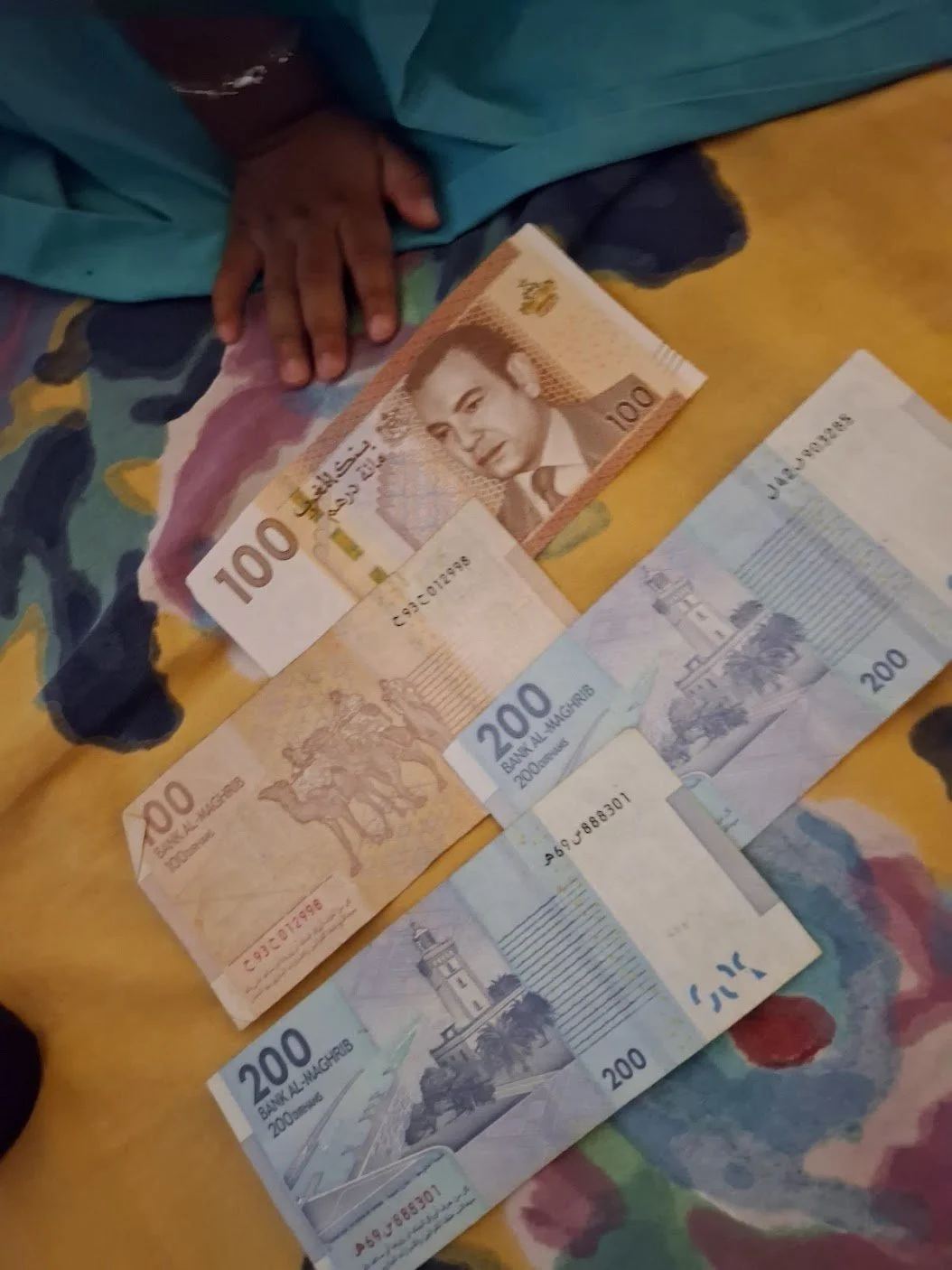
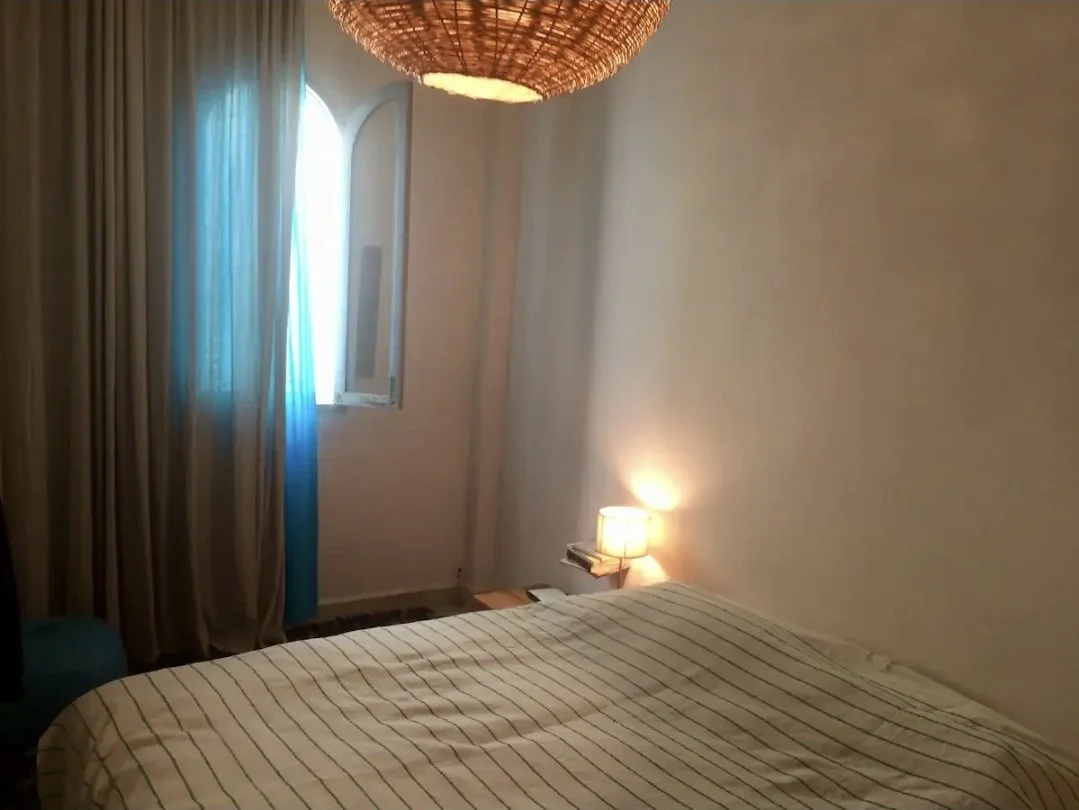
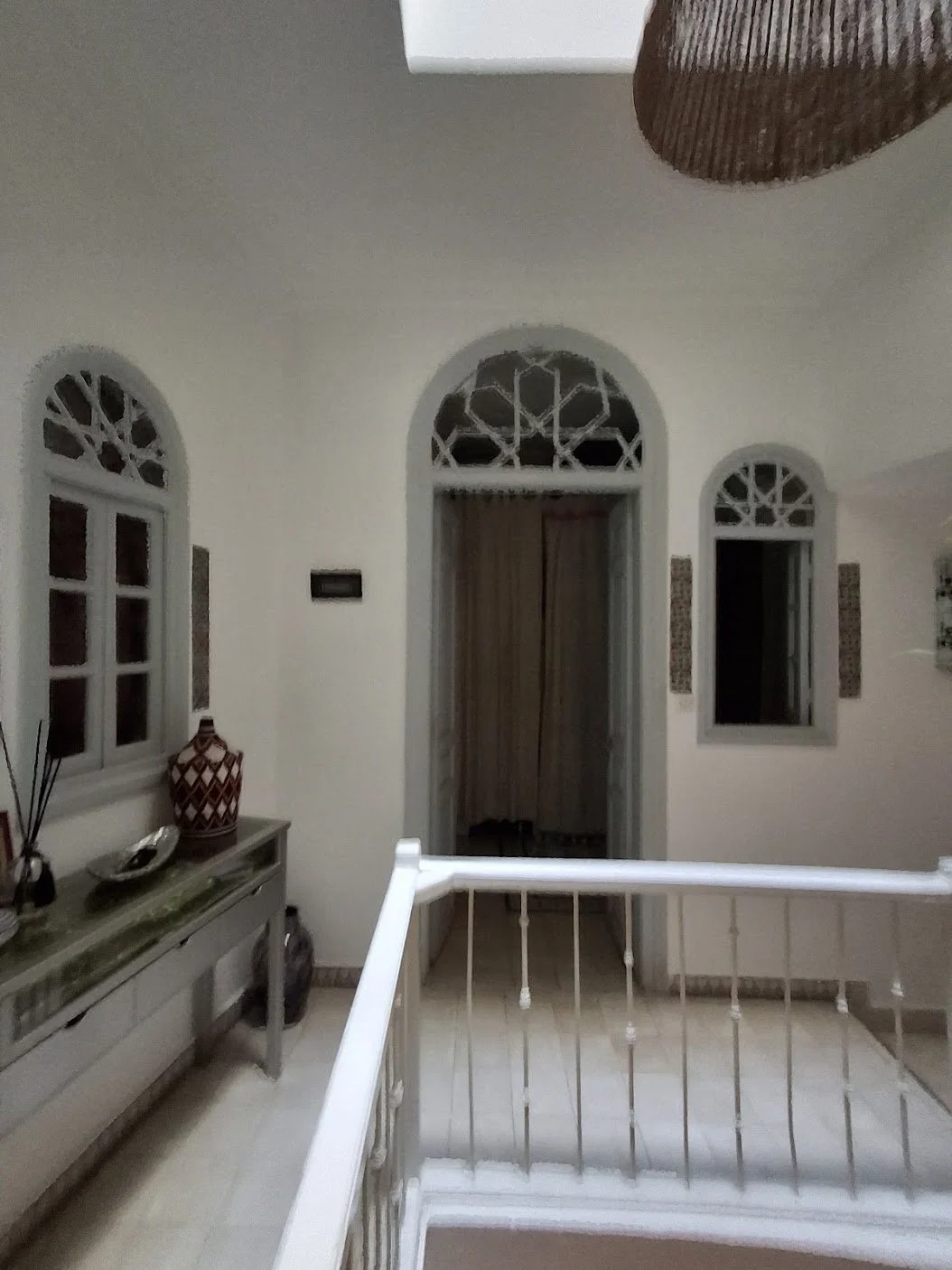
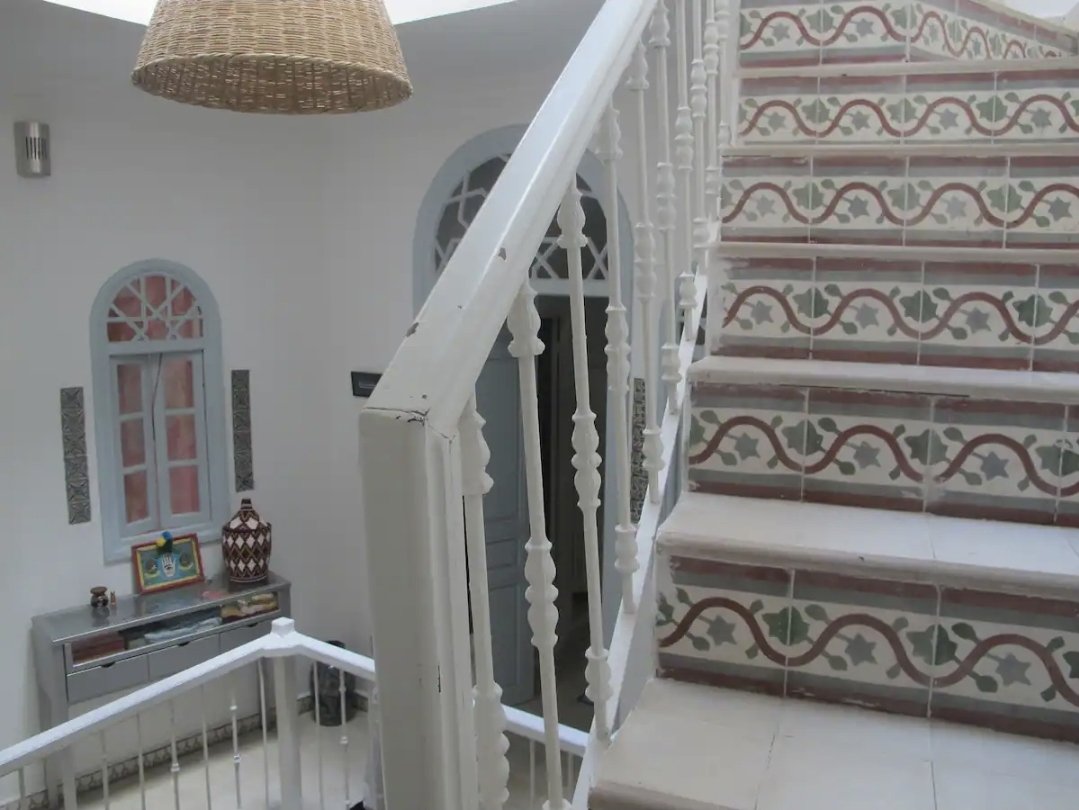
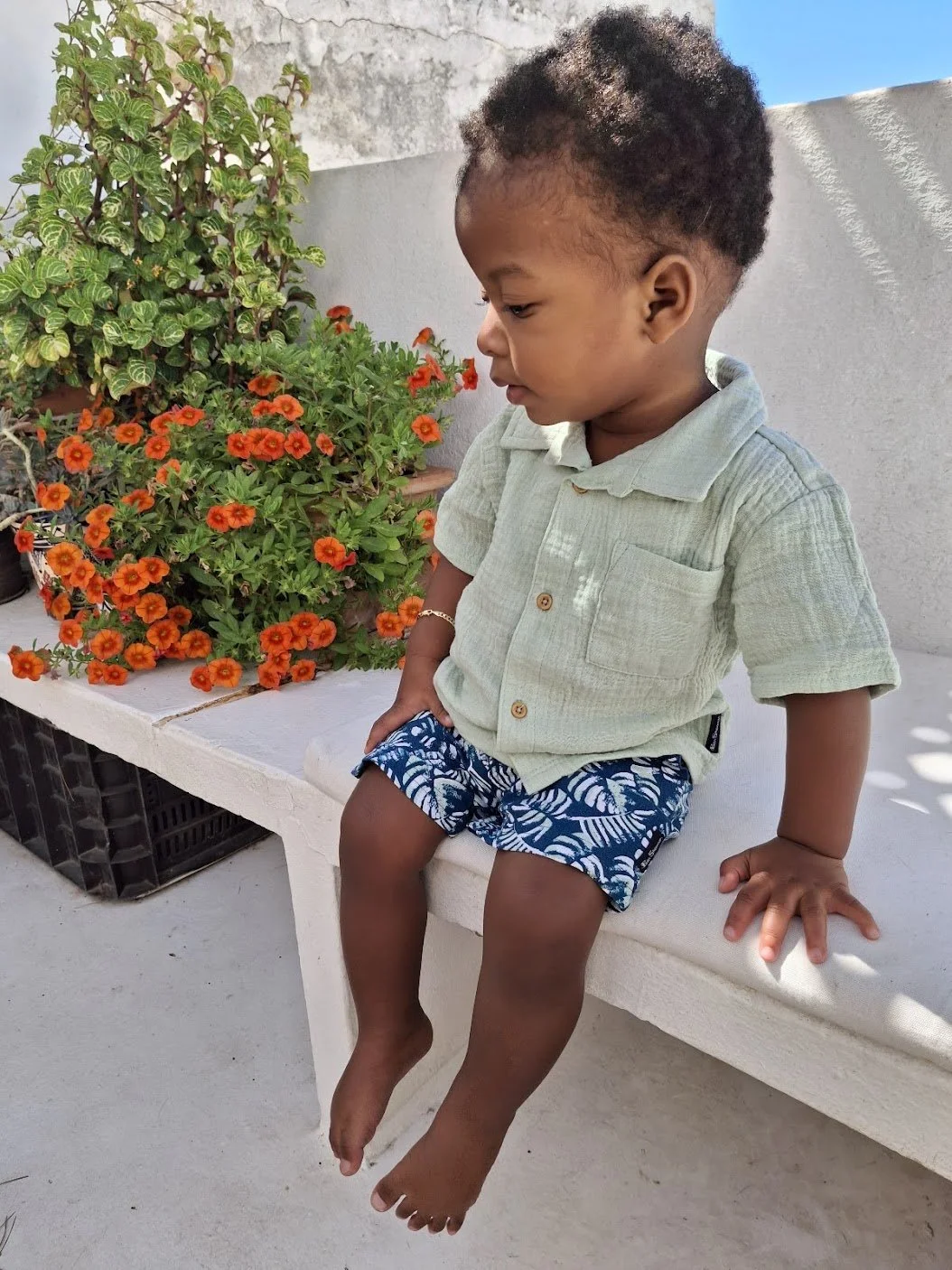
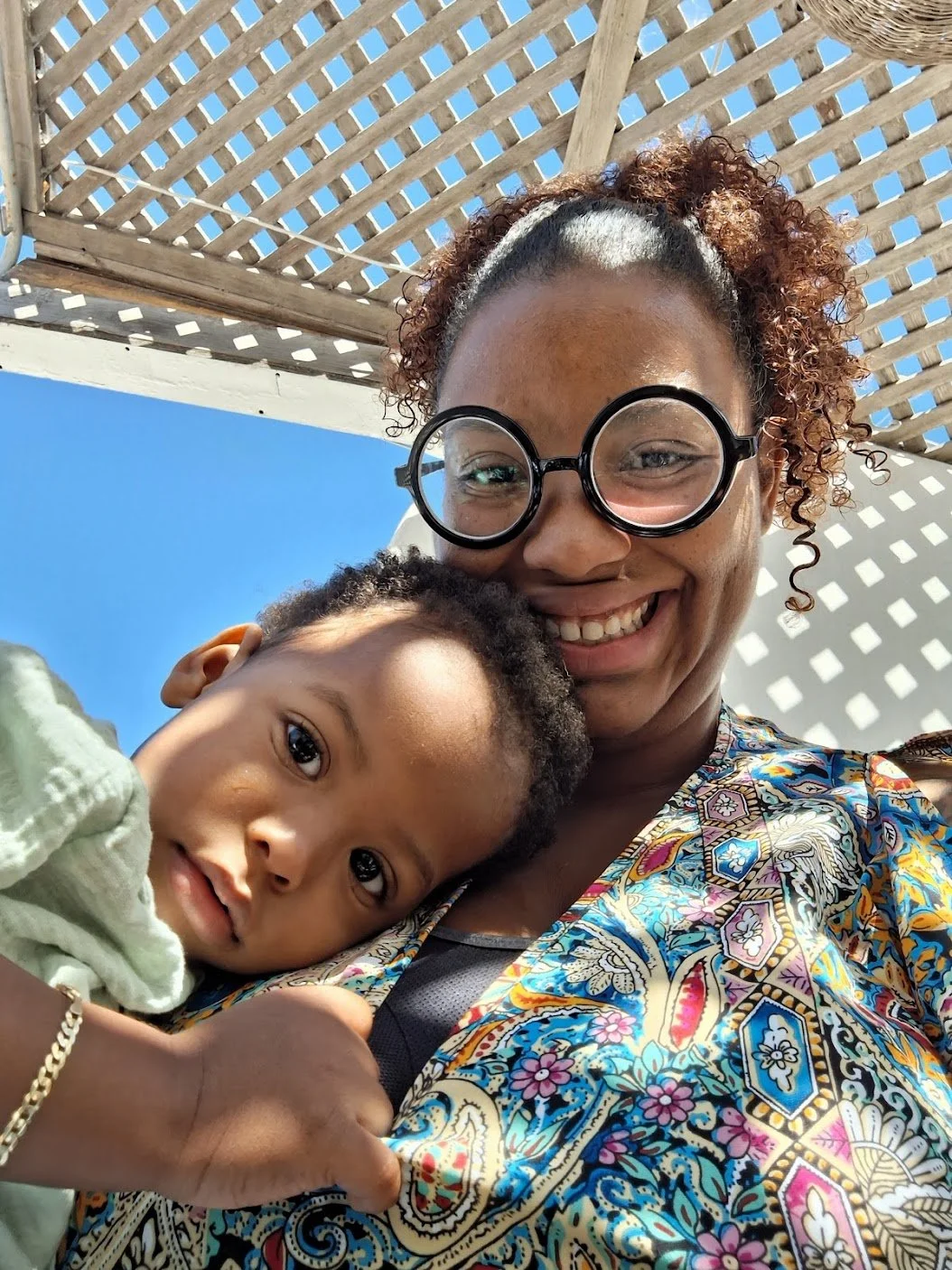
I woke up that morning well rested on the firm, inviting bed that welcomed me in the night. I sat up, looking at Titian still asleep, and grabbed my phone to check the time. I thought that I slept through the day, but it was only 8 am. I got out of bed, unzipped our bag, and pulled out our outfits for the day, nice and warm with a high in the 80’s Fahrenheit according to my phone. After I got out the outfits and looked at my few Moroccan bills, little man woke up as I was counting and wanted in on it.
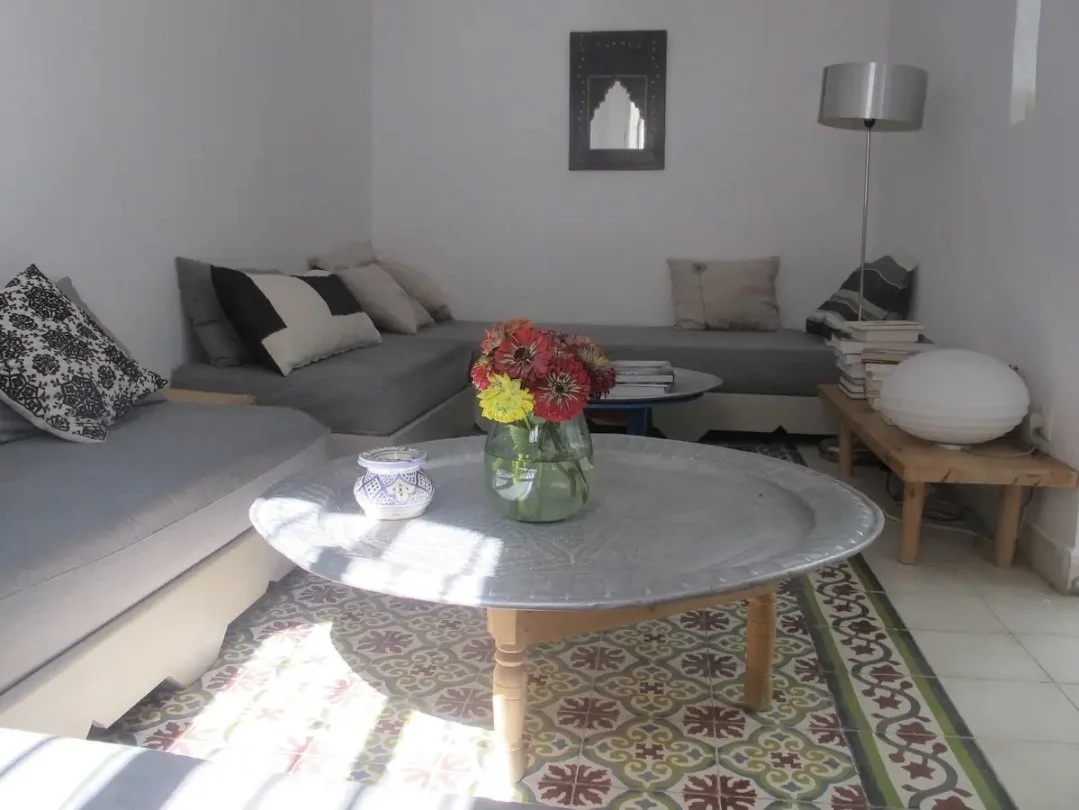
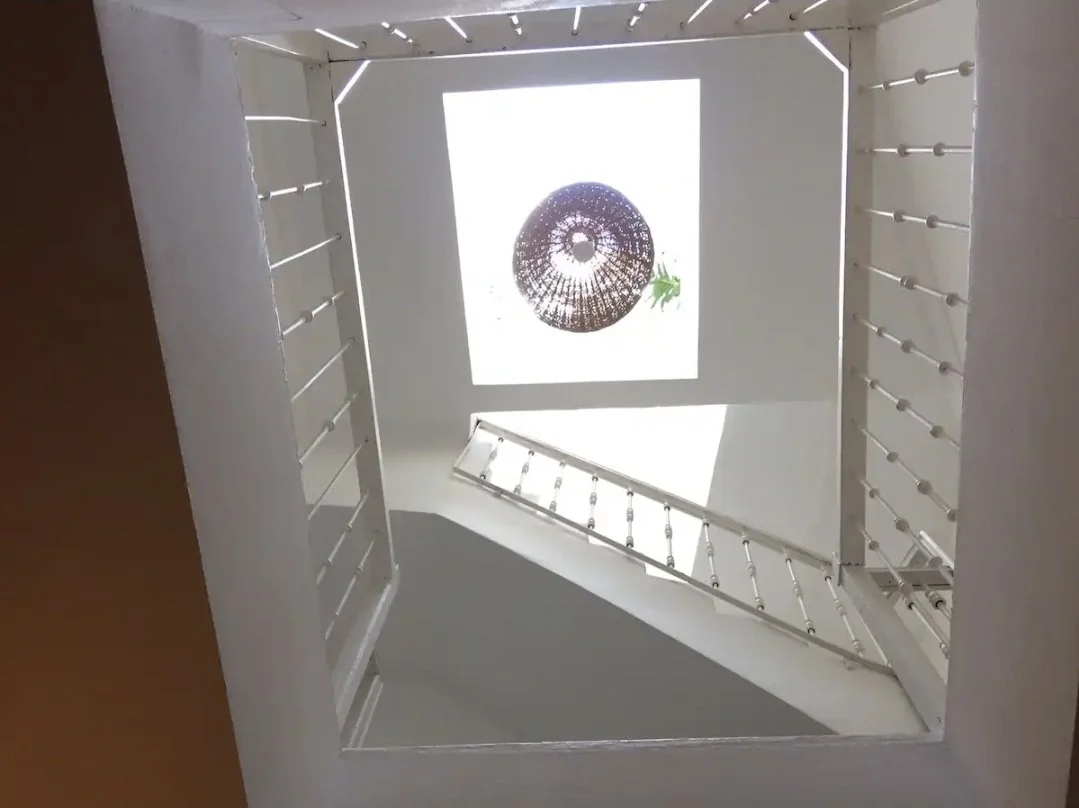
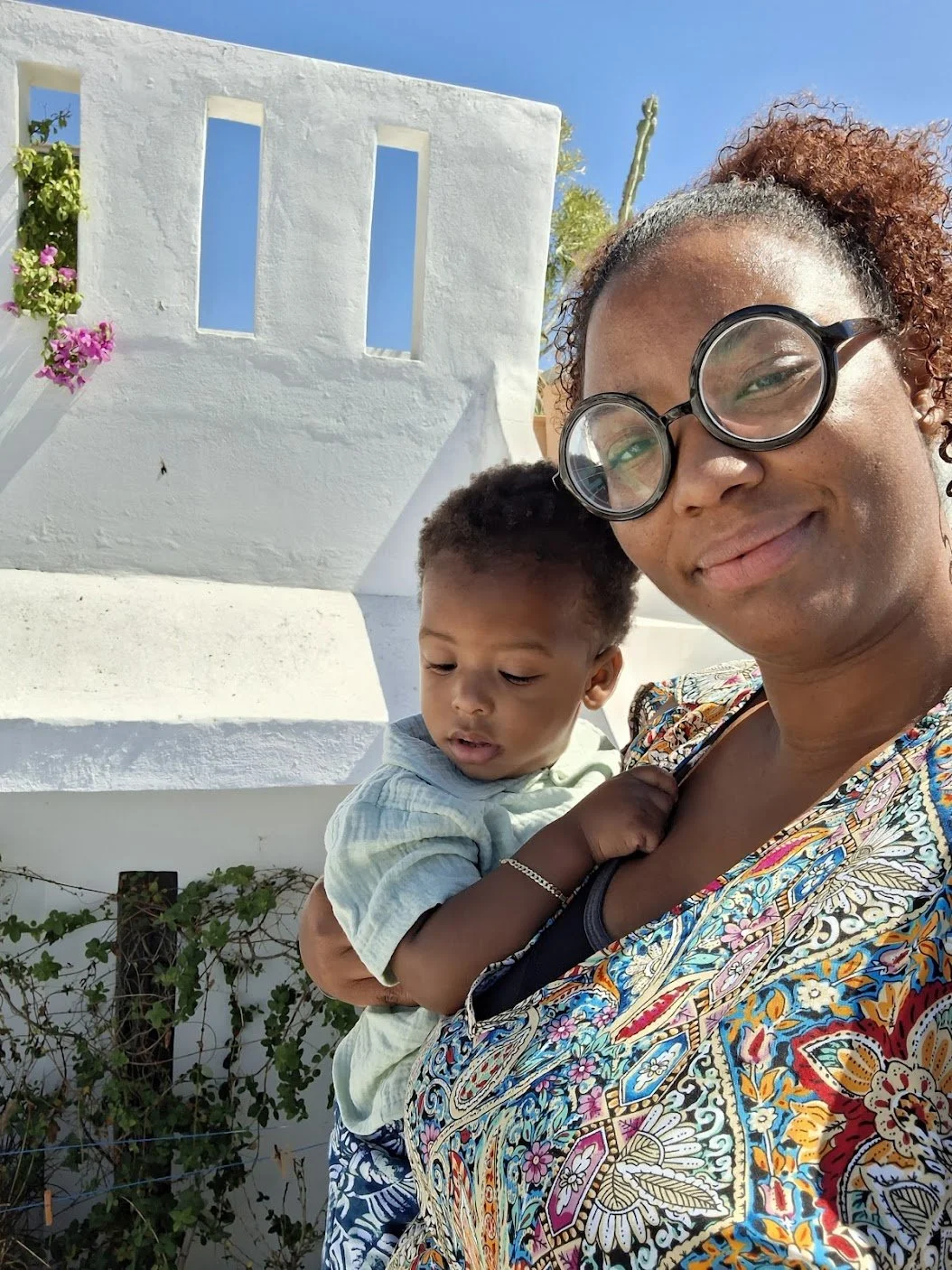
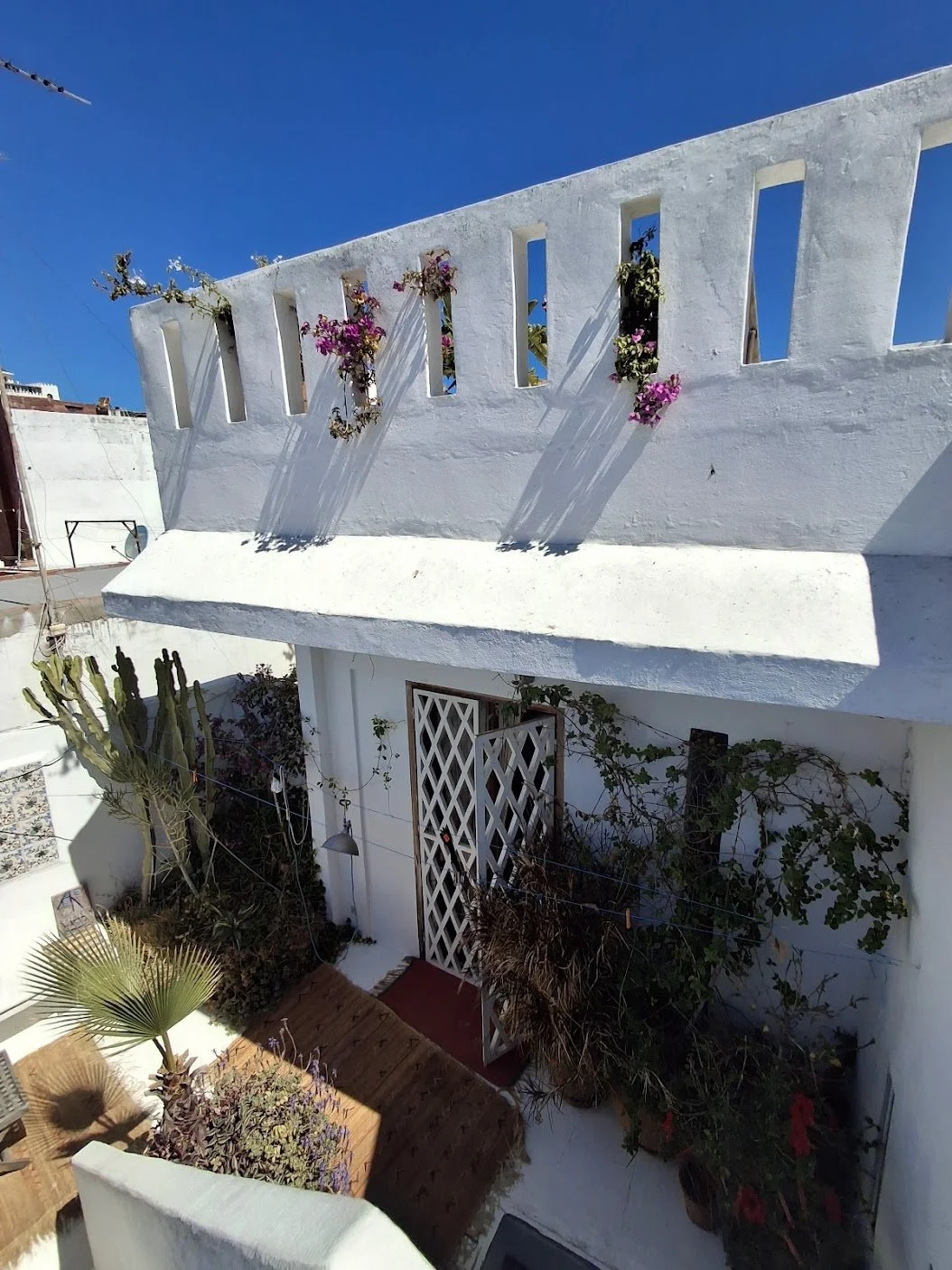
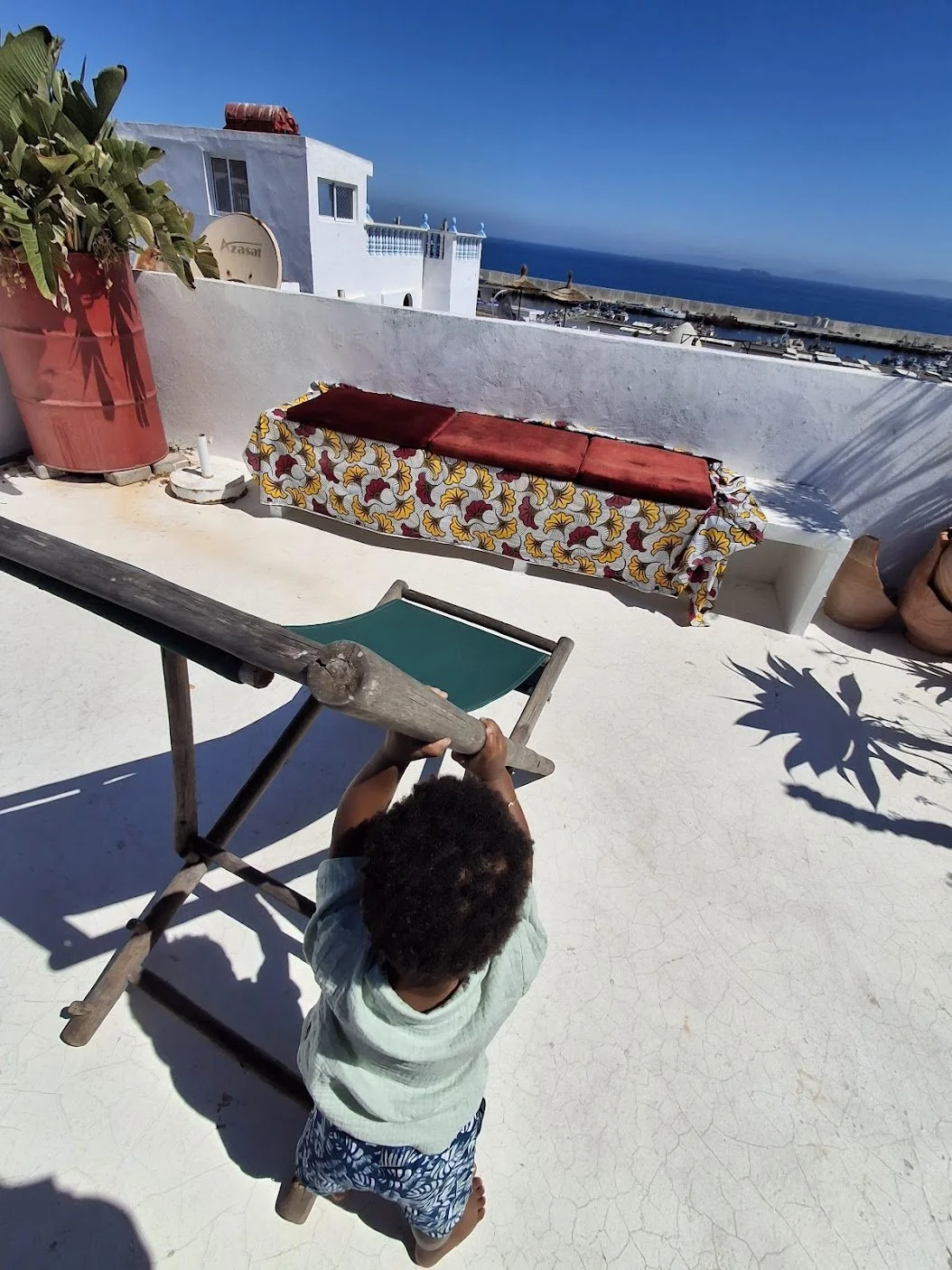
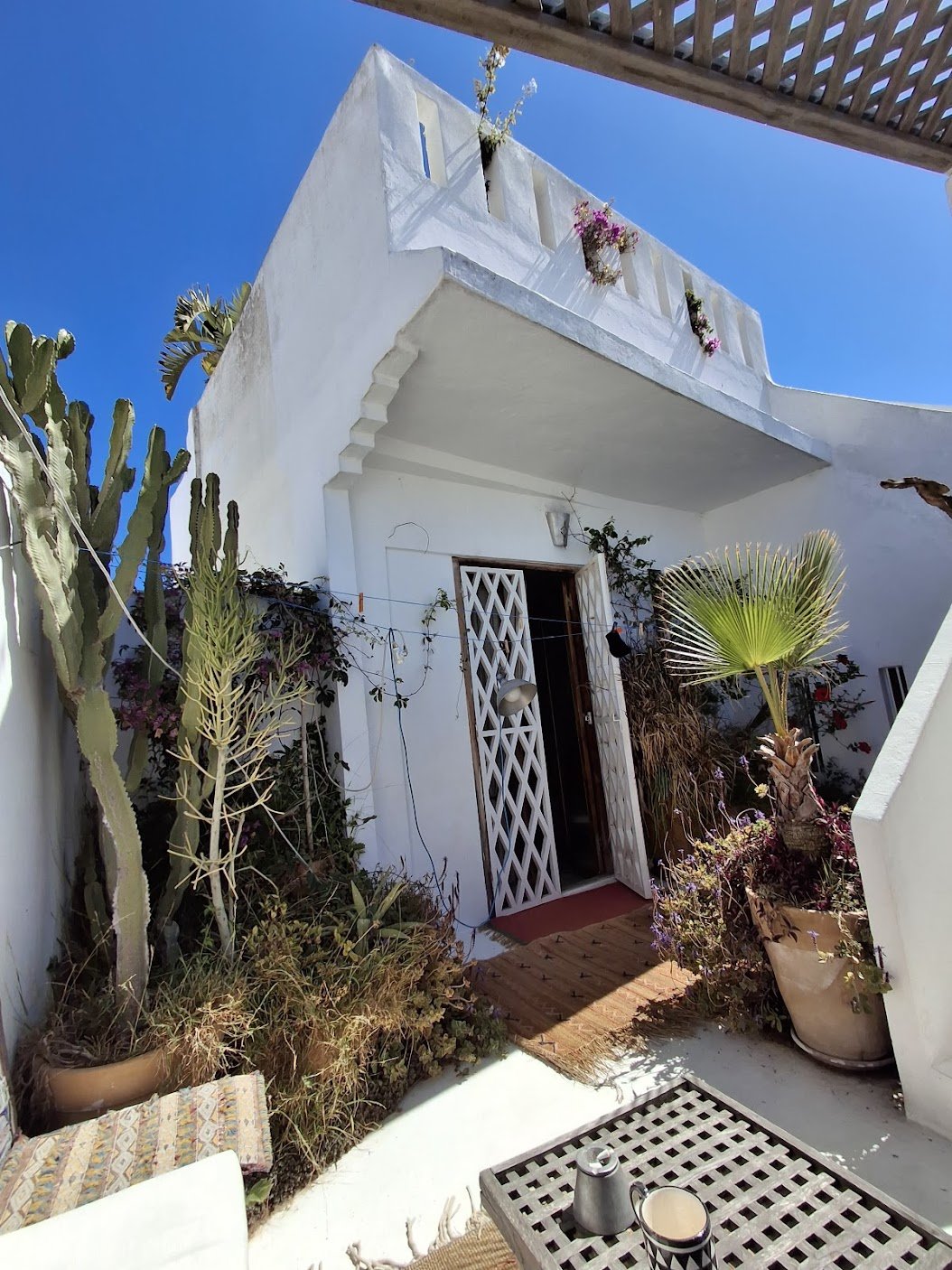
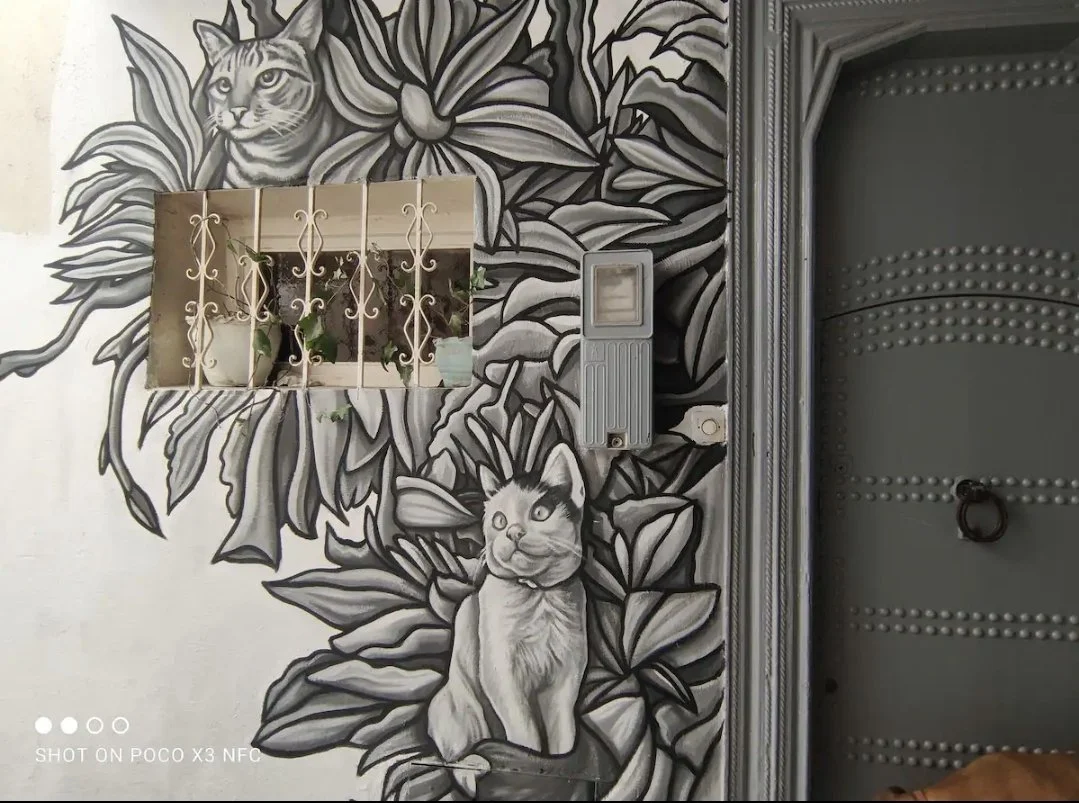
We took a shower, got dressed, and I went upstairs to see our host Gillio. He was in the sitting room. We chatted for a bit, and he told me he was going to take us out for tea. But suggested I go see the roof first. I carried Titian up more stairs to Gillio’s room and out the door to the roof garden. It was beautiful. Gillio’s place had a view of the port, the Strait of Gibraltar, and Spain. I enjoyed the warm morning sun, took several shots, and went back downstairs to get our day bag ready, and grabbed the stroller on the ground floor. Outside the door, I saw the black, white, and gray cat mural. That was a great identifying feature to find the house later.
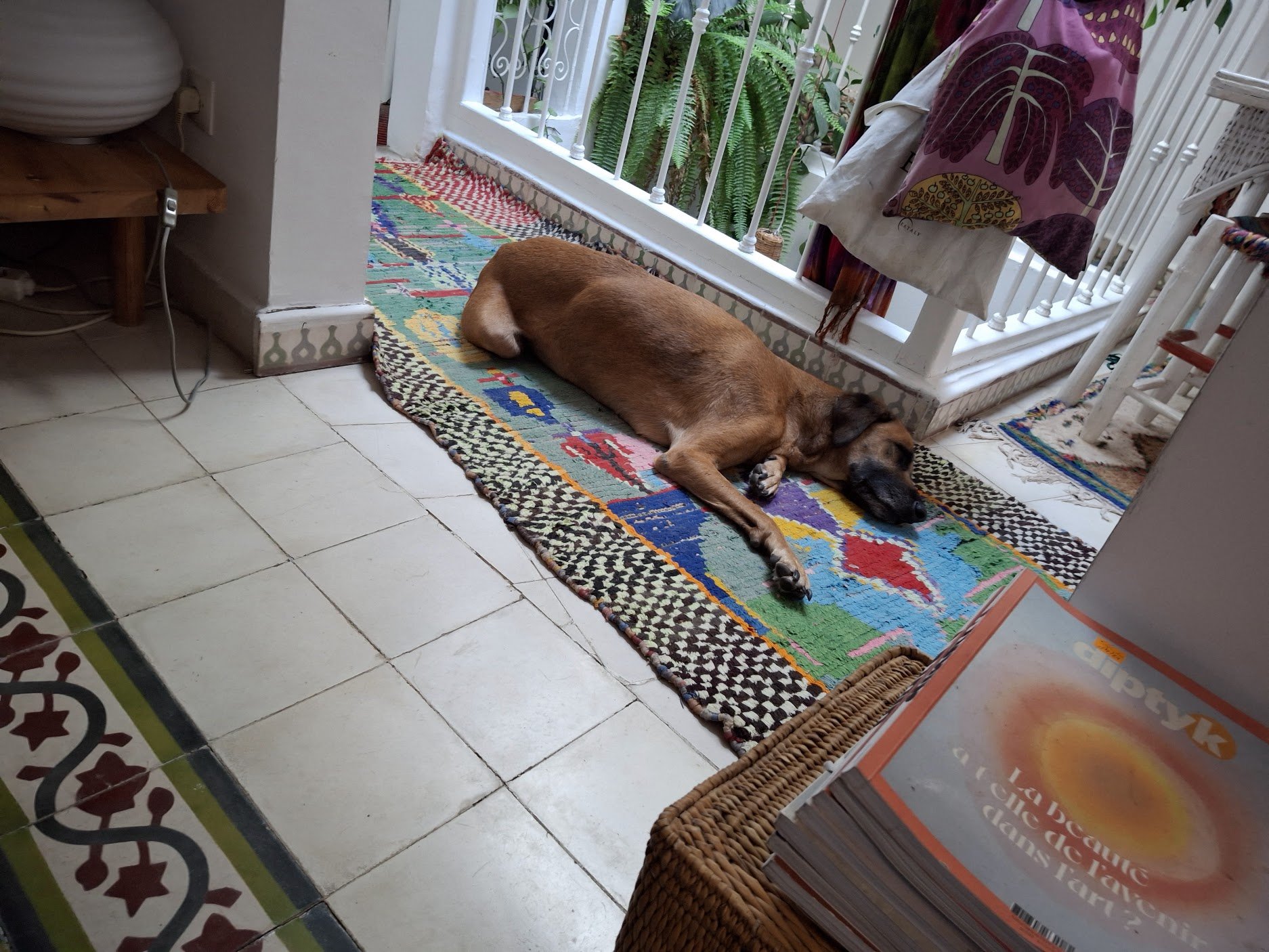
I pushed Titian and followed Gillio and his dog through the old medina. I saw Gillio greet several people along the walk. He mentioned some highlights to look for on the walk as a way to get back to his riad. I took a few pics to remember how to get back. We entered a little plaza Souk Dakhel, and he lead us to a restaurant. The seats were outside and faced outwards in the French style. I parked Titian alongside me and had a glass of mint tea and some bread.
Getting out early with Titian felt like a gift. The medina in the morning moved at a different pace—unrushed, softer, almost contemplative. Titian sat contentedly in his stroller, eyes wide, taking everything in as if he understood we were somewhere special. The bumps didn’t faze him at all. He was along for the ride ,and all smiles.
The Medina
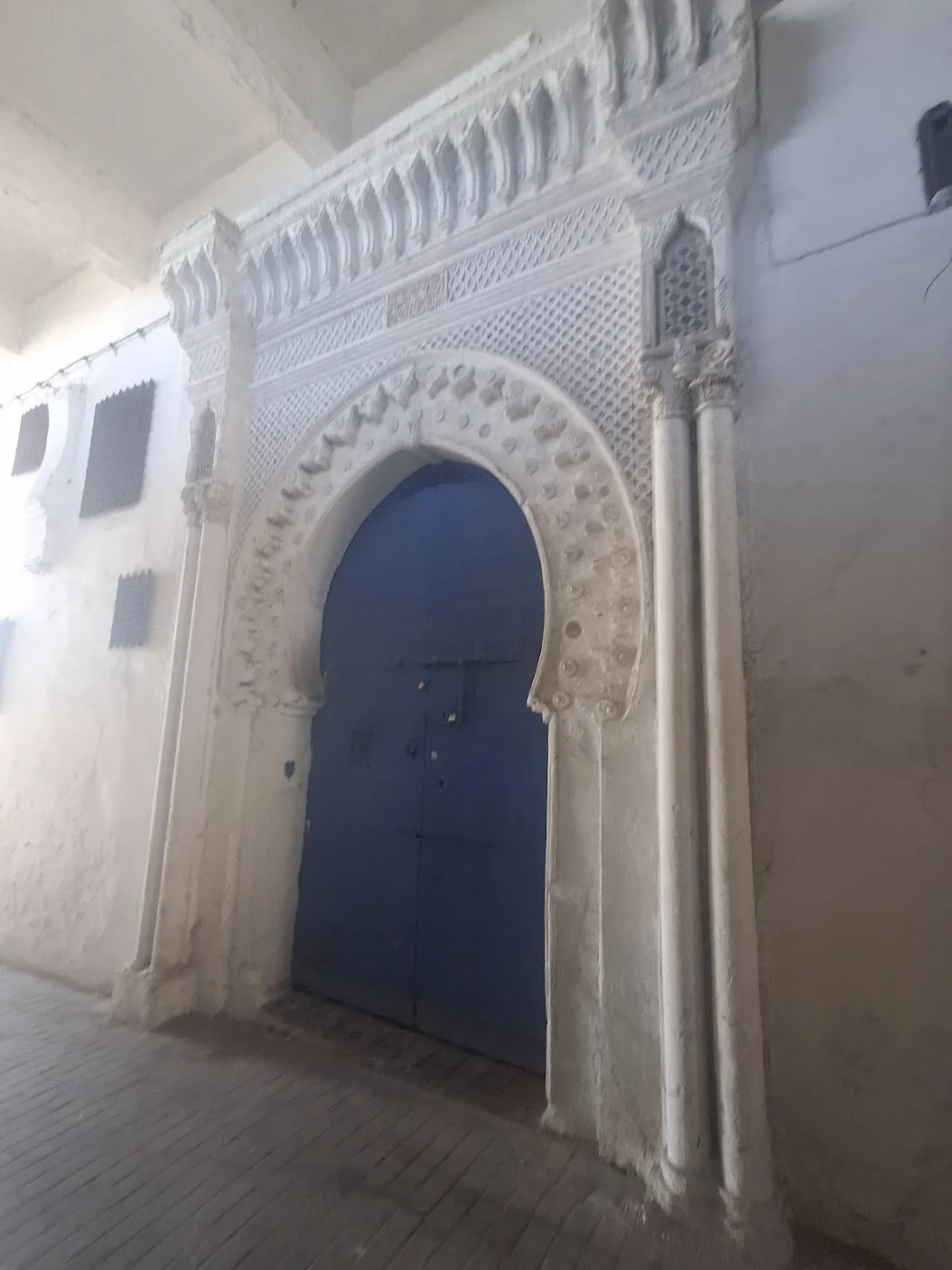
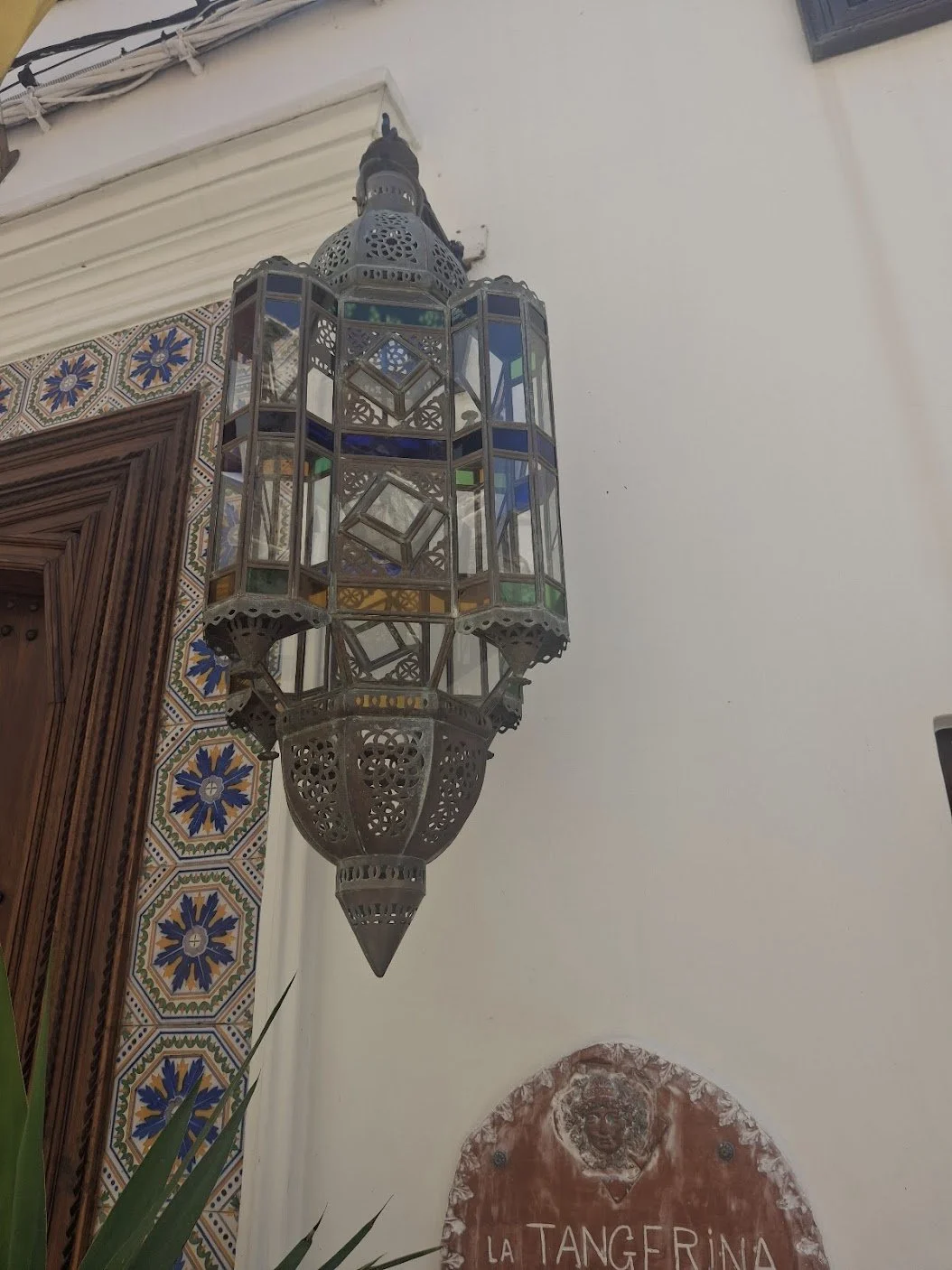
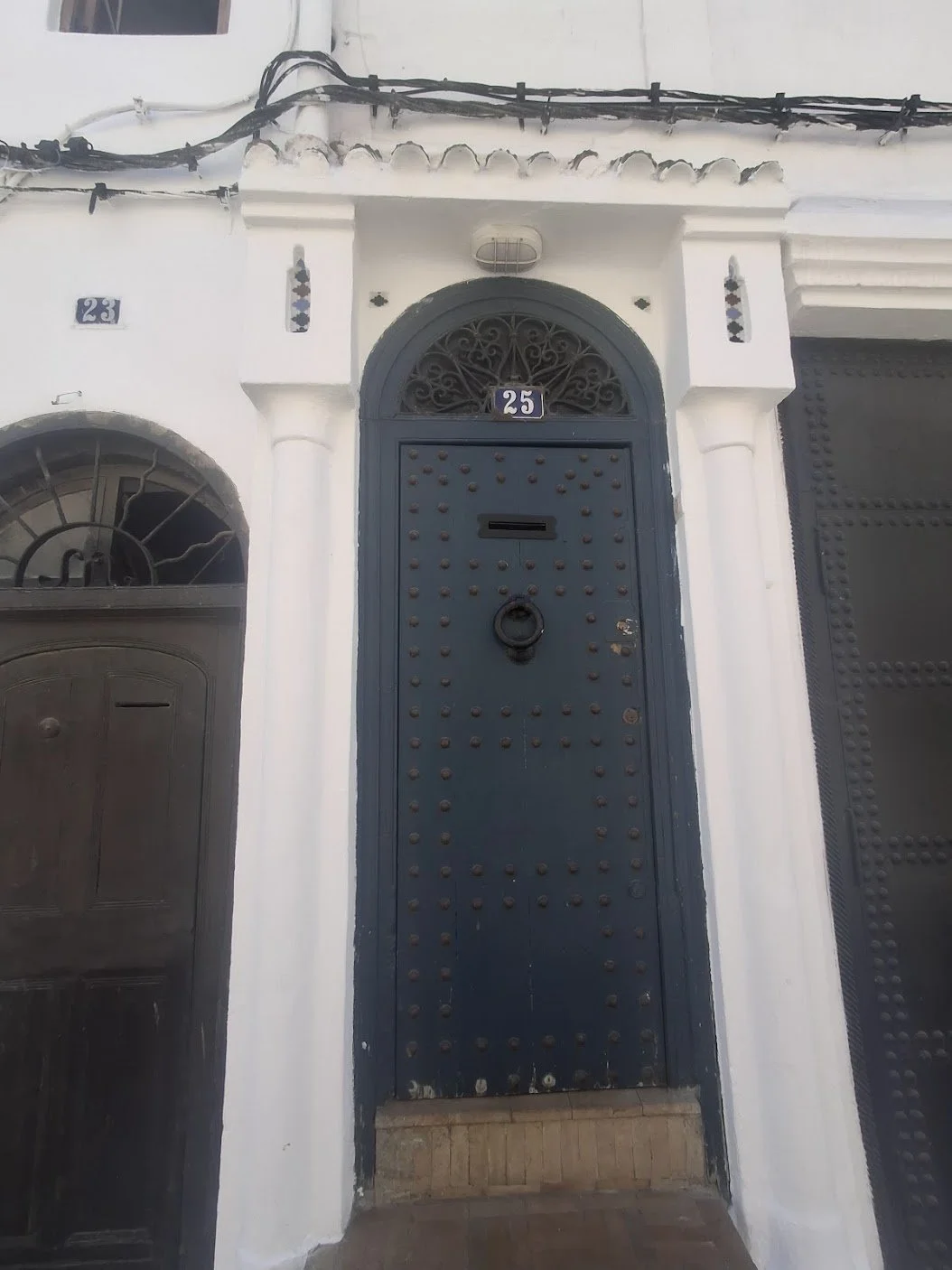
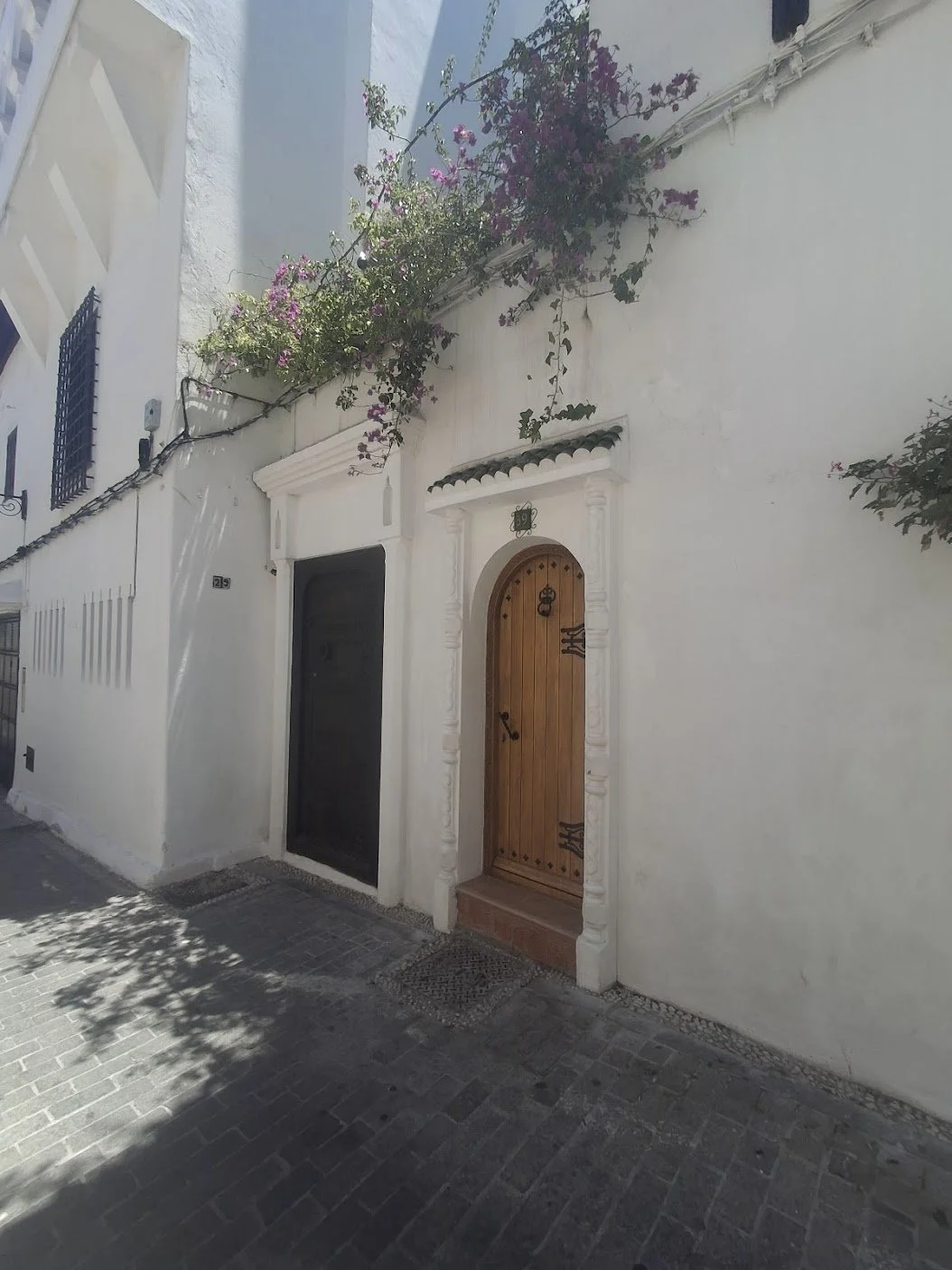
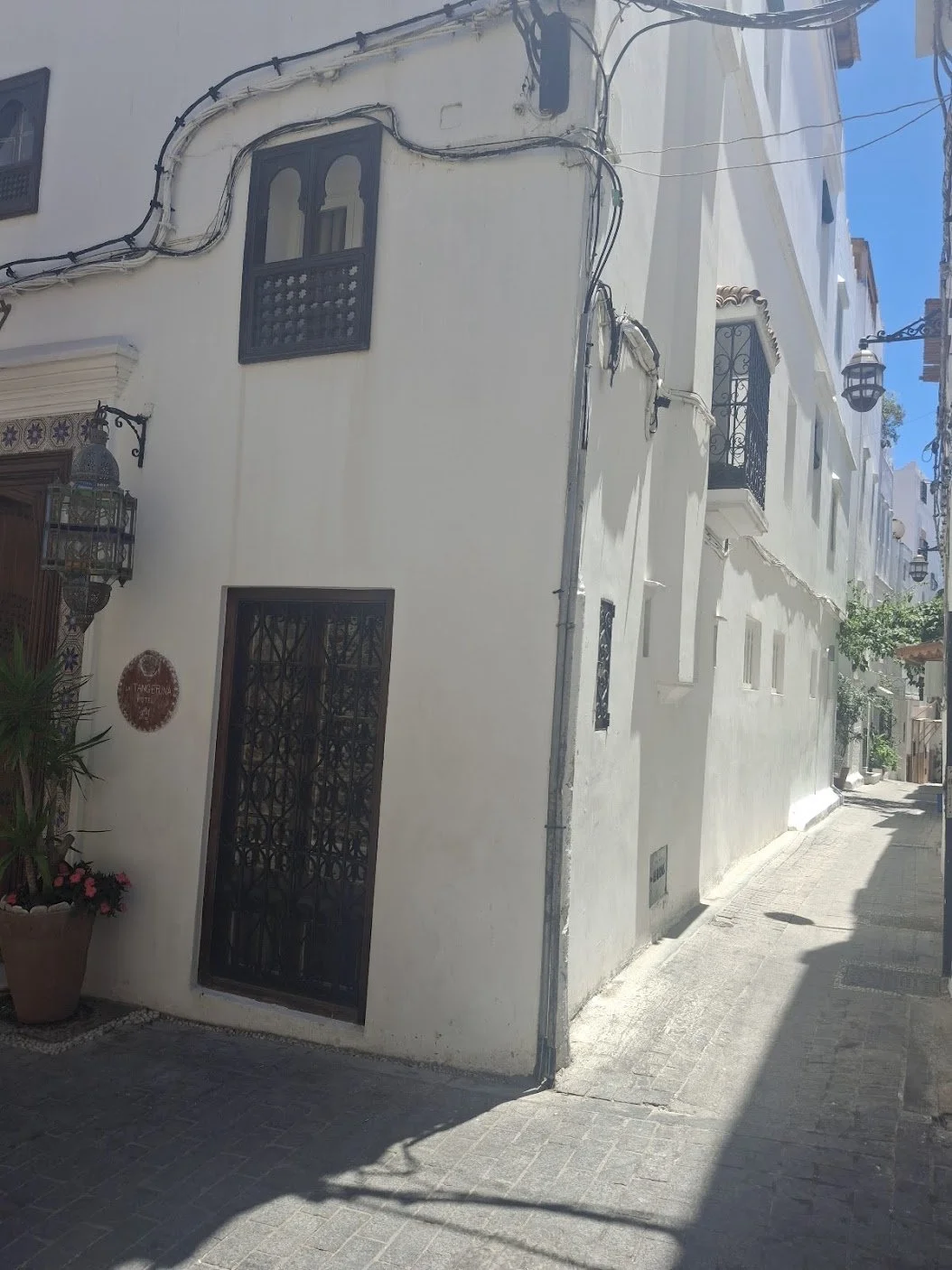
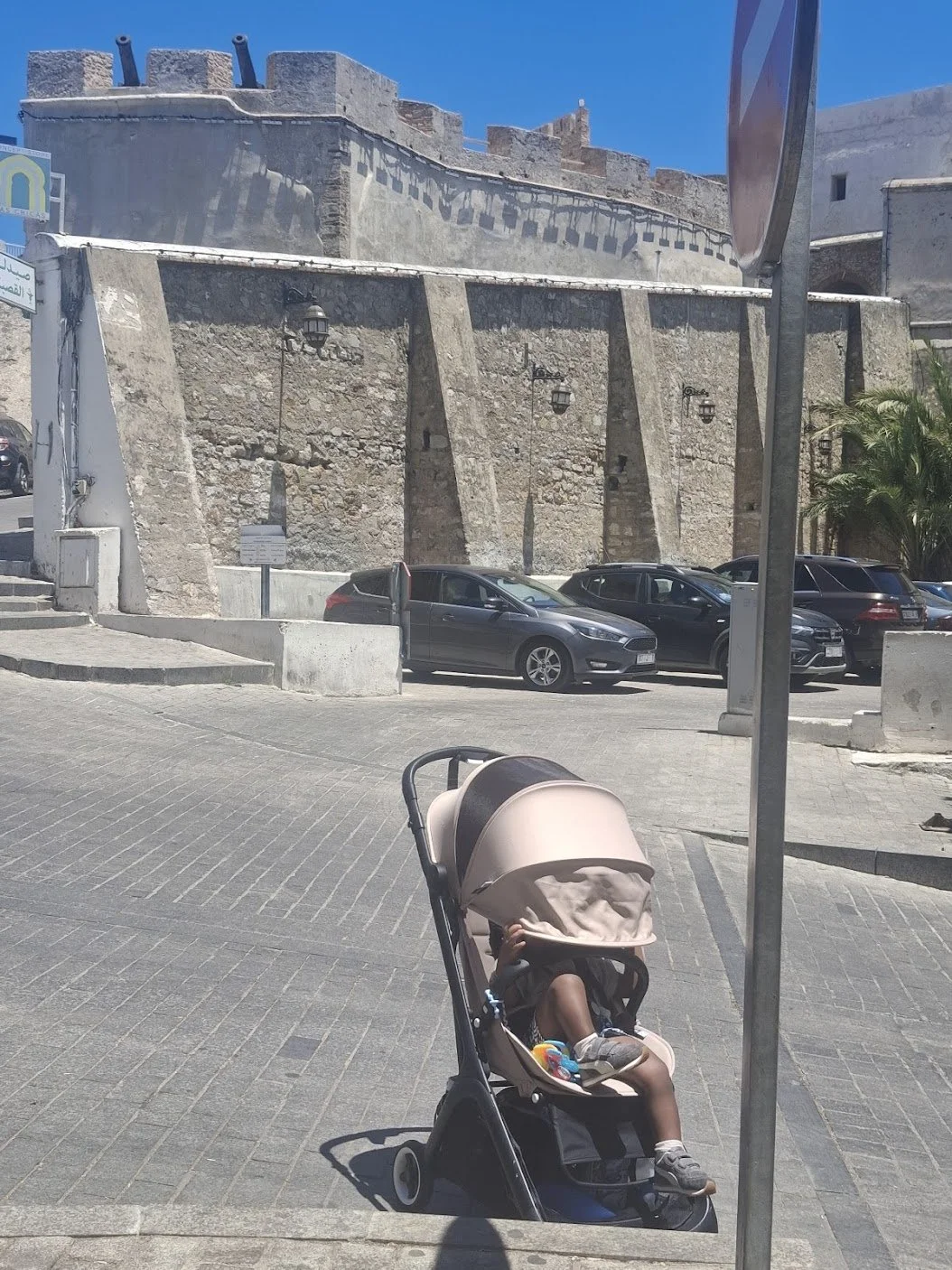
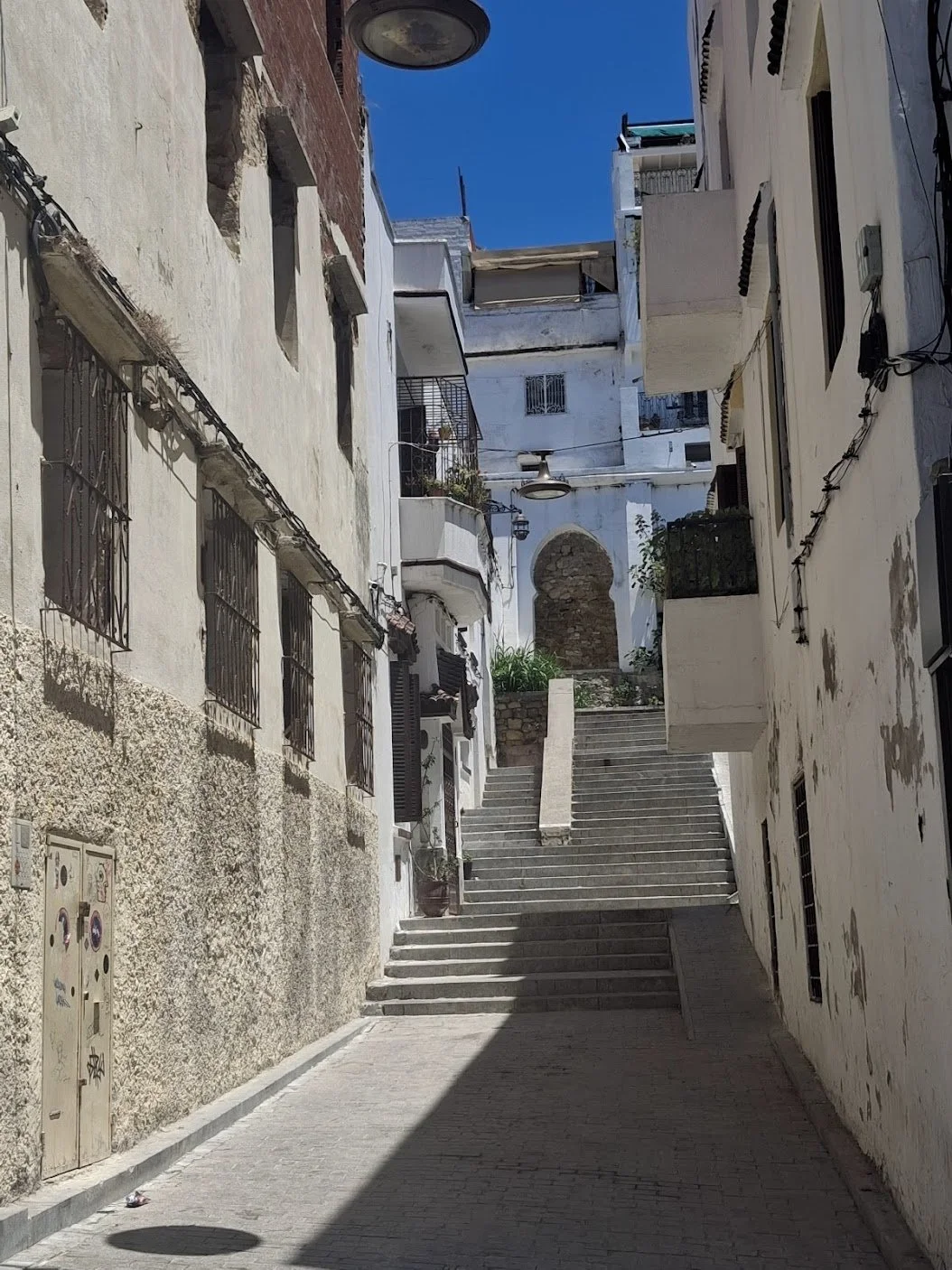
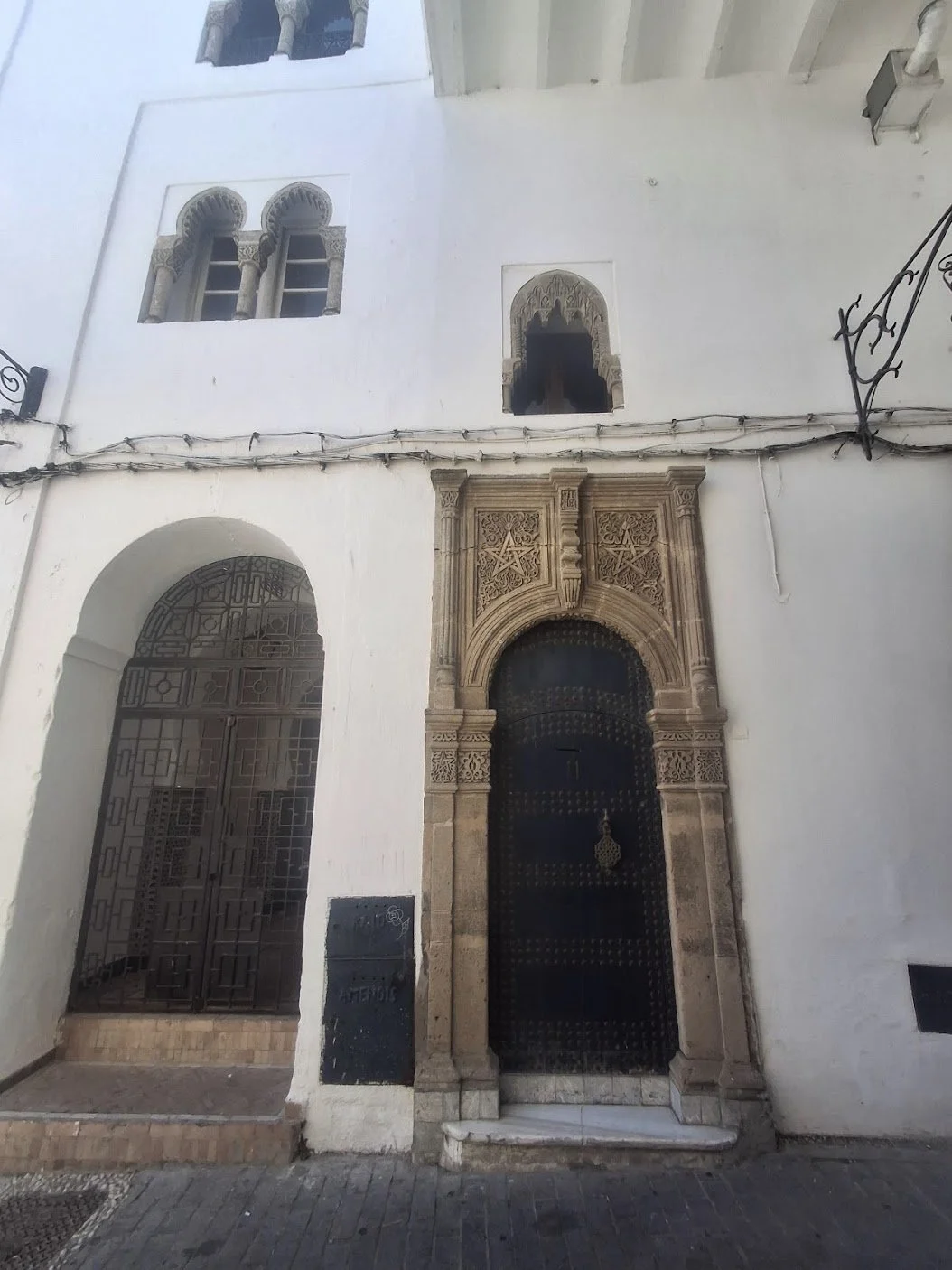
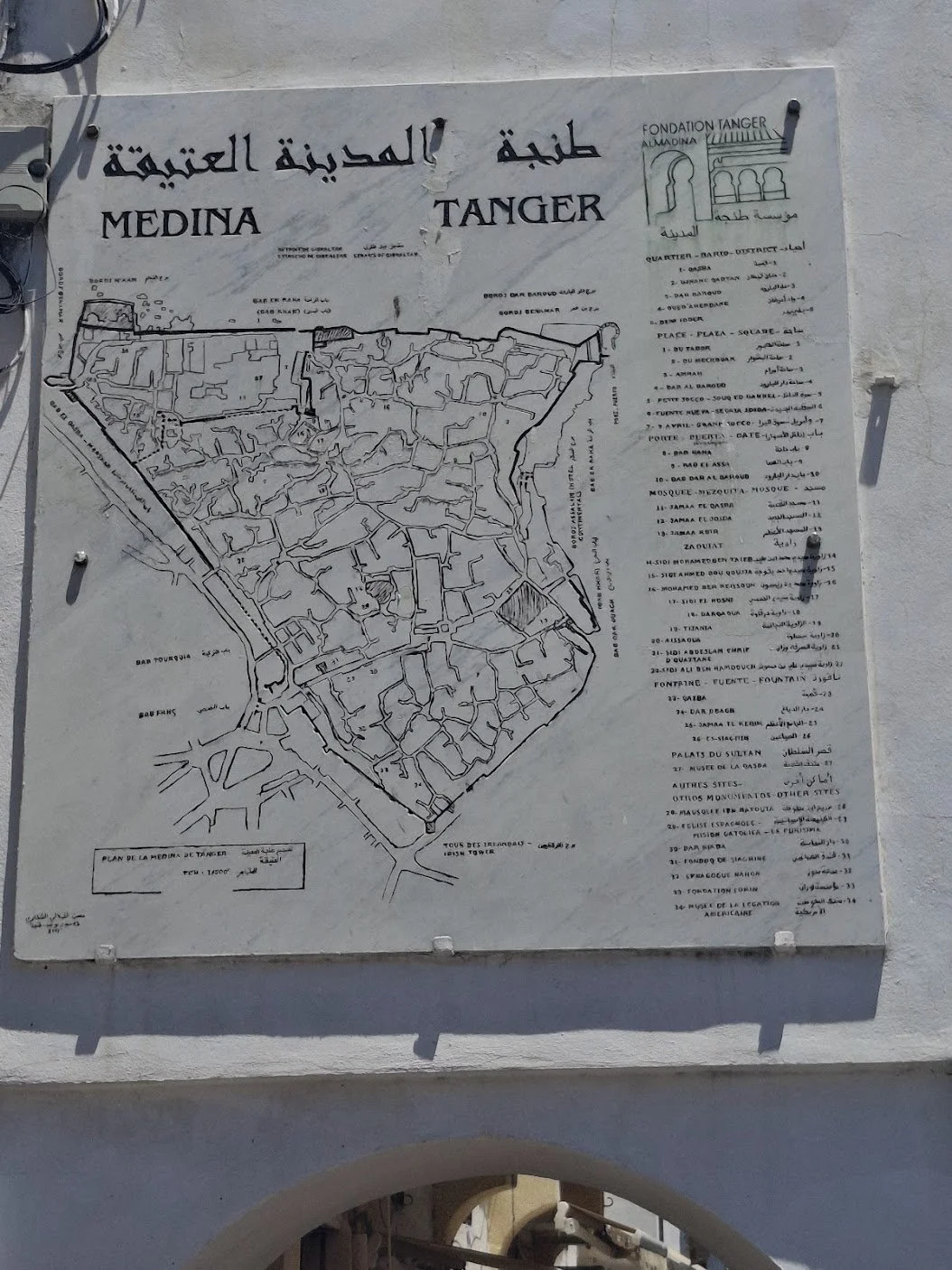
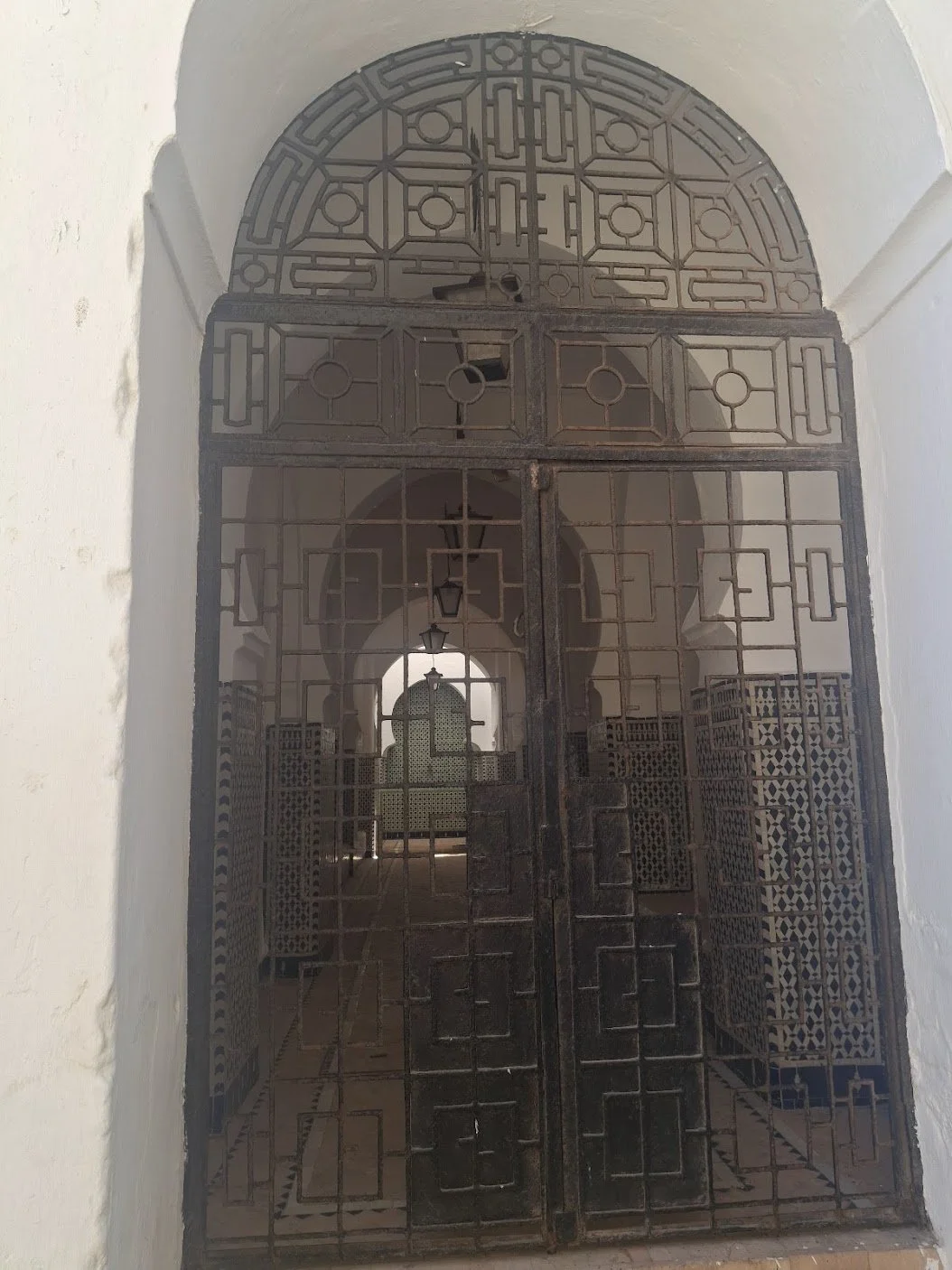
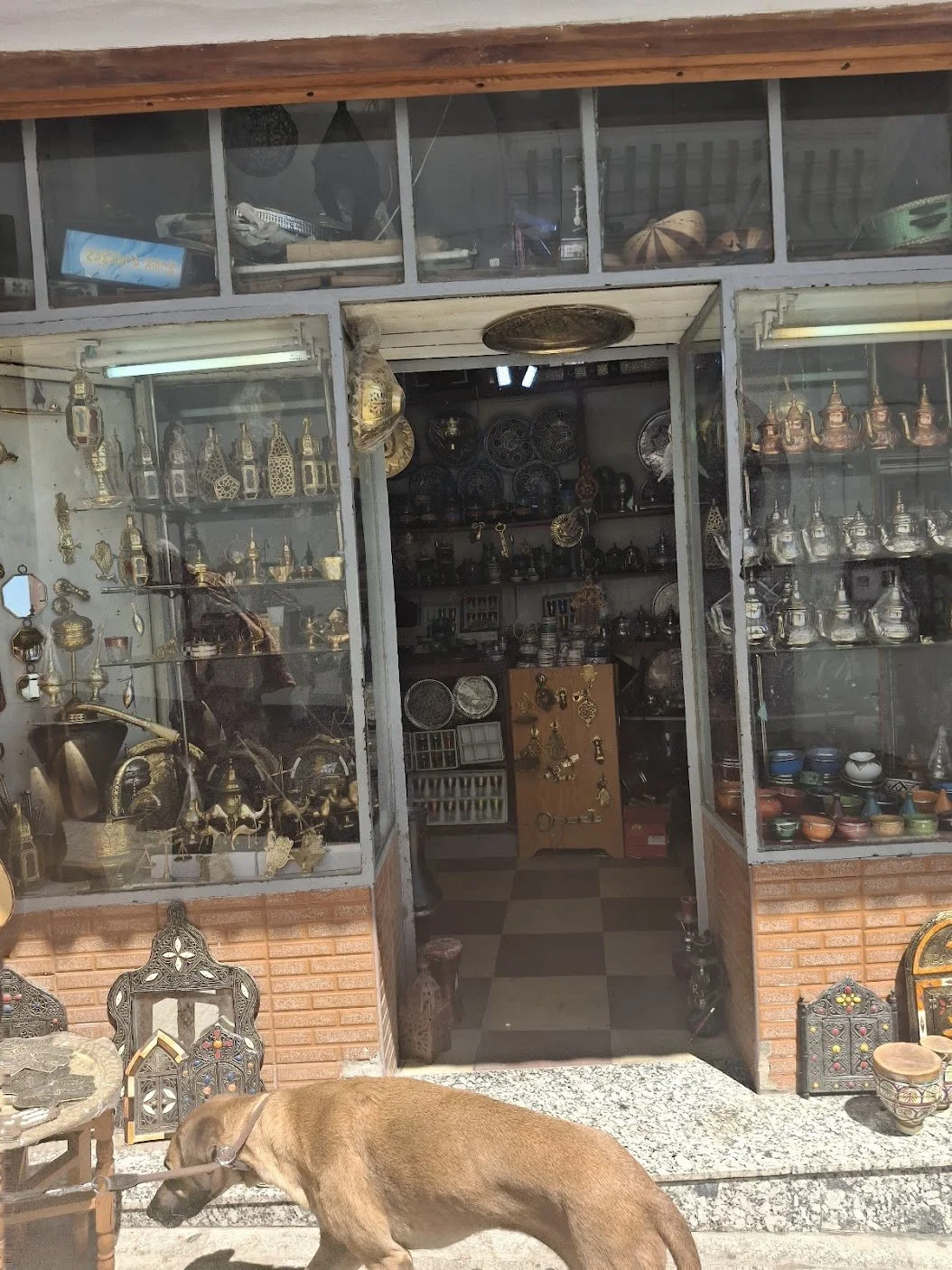
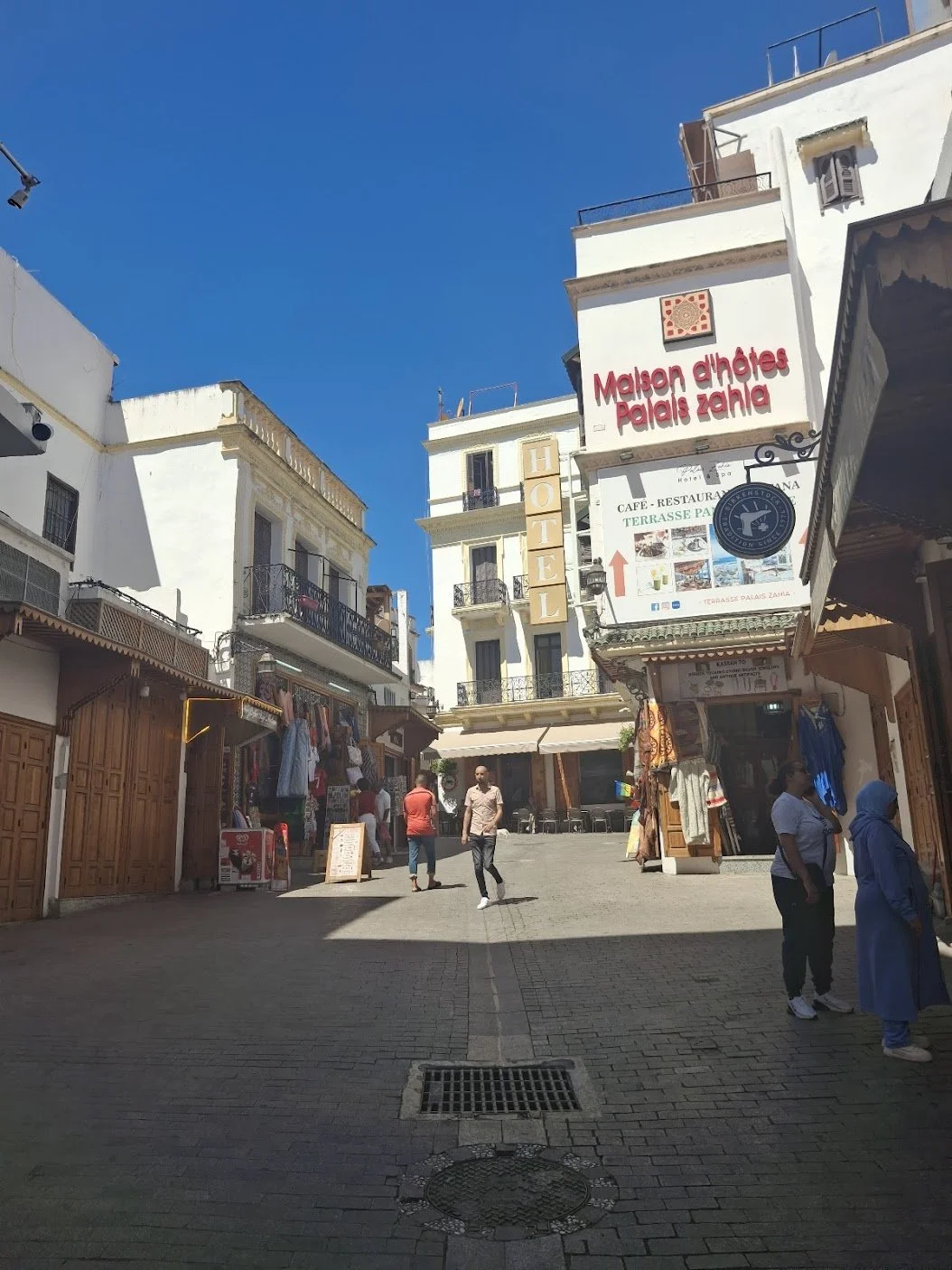
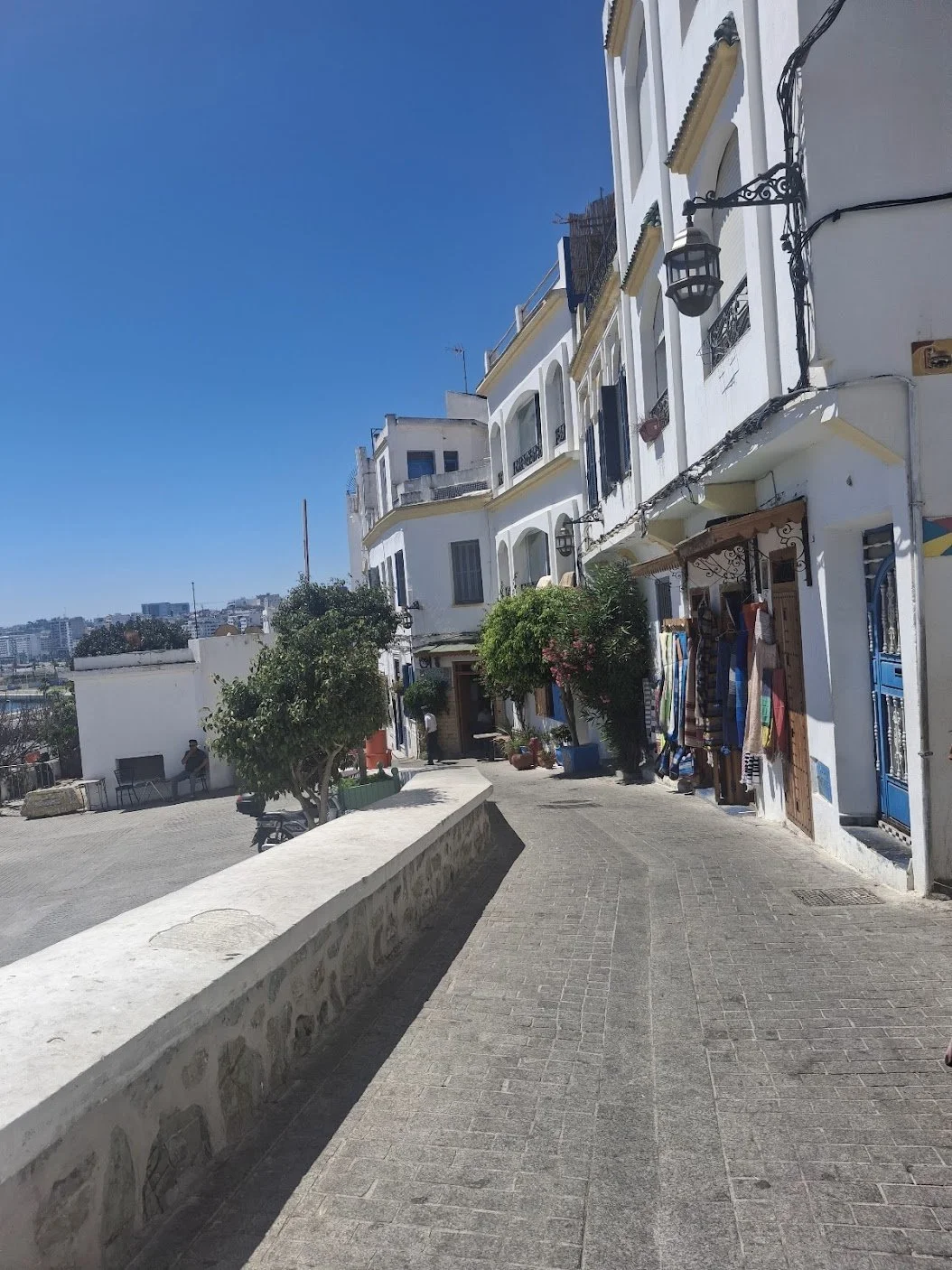
The old medina in Tangier feels like a living maze, the kind that asks you to slow down and surrender to it rather than rush through. Narrow stone alleys twist and fold into one another, sometimes opening suddenly into small plazas filled with light, conversation, and the smell of mint tea. Tangier’s old medina is wrapped in white whitewashed walls that catch the sun and soften the city, making everything feel brighter and calmer than you expect from a place so alive. The doors; some bright, some weathered; hinting at stories behind them.
The architecture feels layered rather than uniform, shaped over centuries by different cultures, rulers, and ways of life. Buildings rise organically, sometimes leaning into one another, with uneven staircases, arched doorways, and thick walls designed to keep the heat out and the cool in. Windows are small and intentional, often framed with ironwork. The doors! The doors are works of art on their own. Many painted blue or green, stained wood with metal accents, or left raw, act as quiet focal points against the white. From above, rooftops stack and overlap, forming a textured landscape of terraces, laundry lines, and satellite dishes. It’s beautiful without trying to be polished—textured, imperfect, alive. The medina doesn’t feel staged for visitors; it feels lived in. Walking through it, you feel cradled by the architecture, guided inward, protected from the noise and draws of the modern world just beyond its walls.
Café Conversations
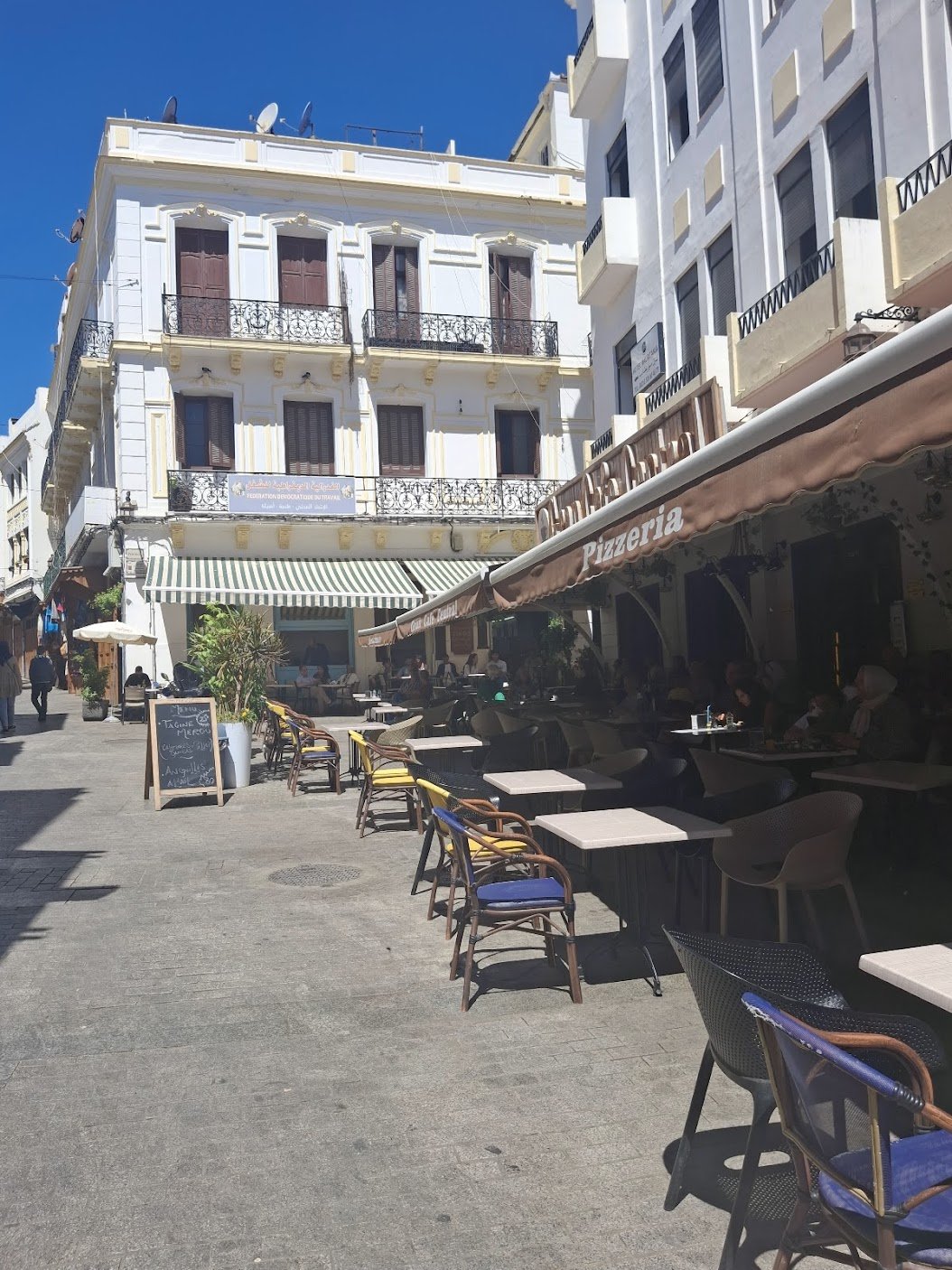
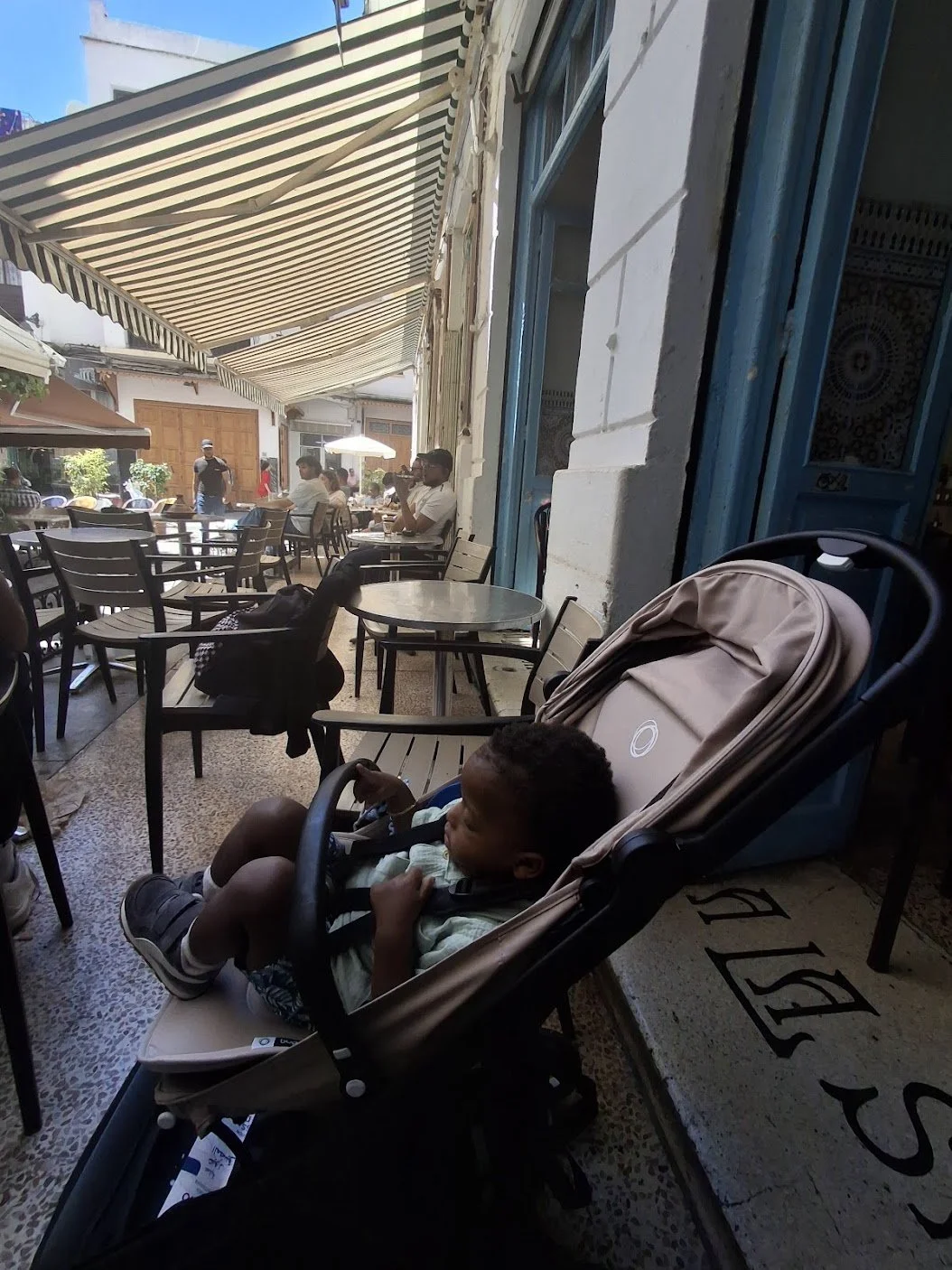
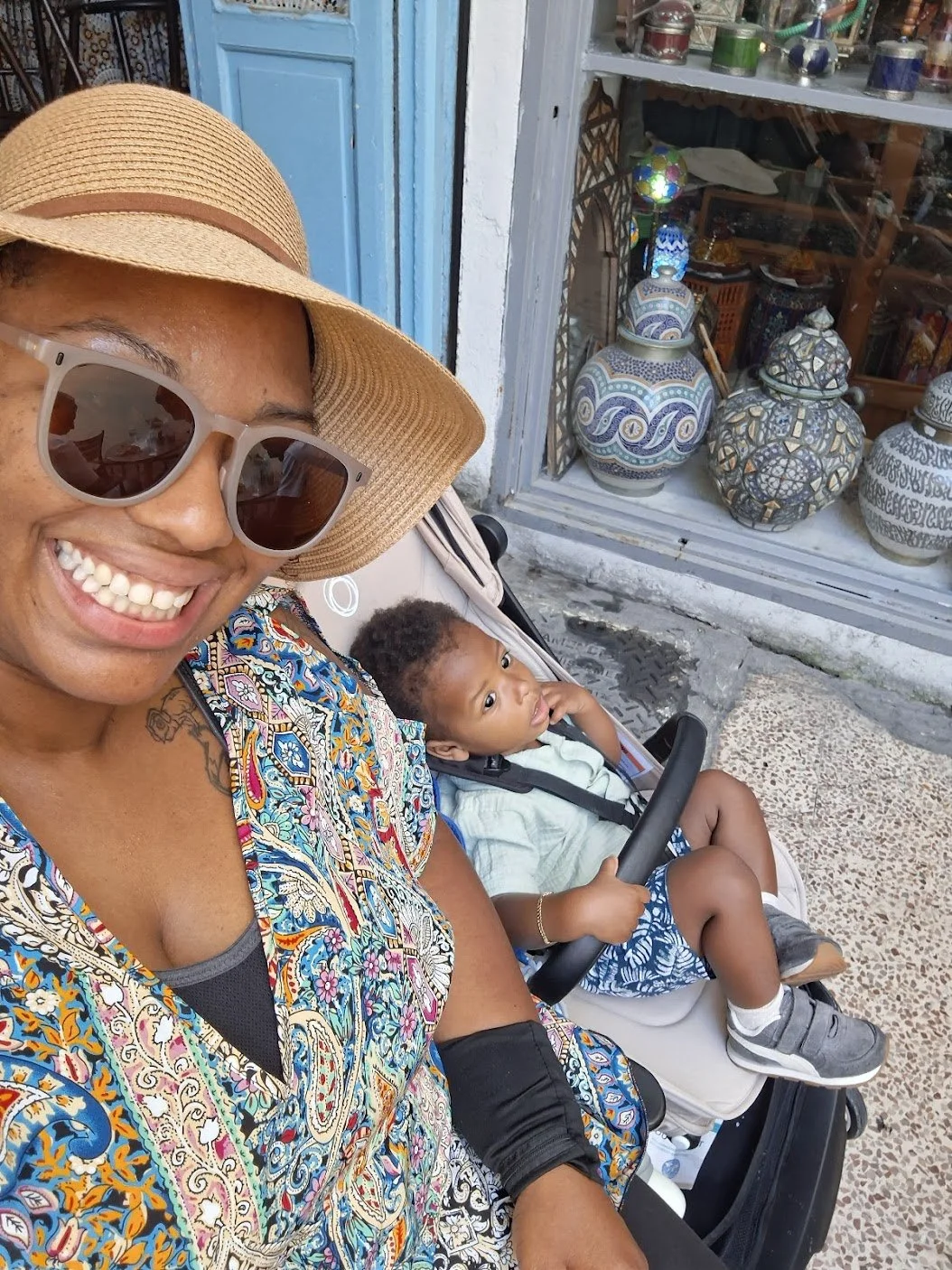
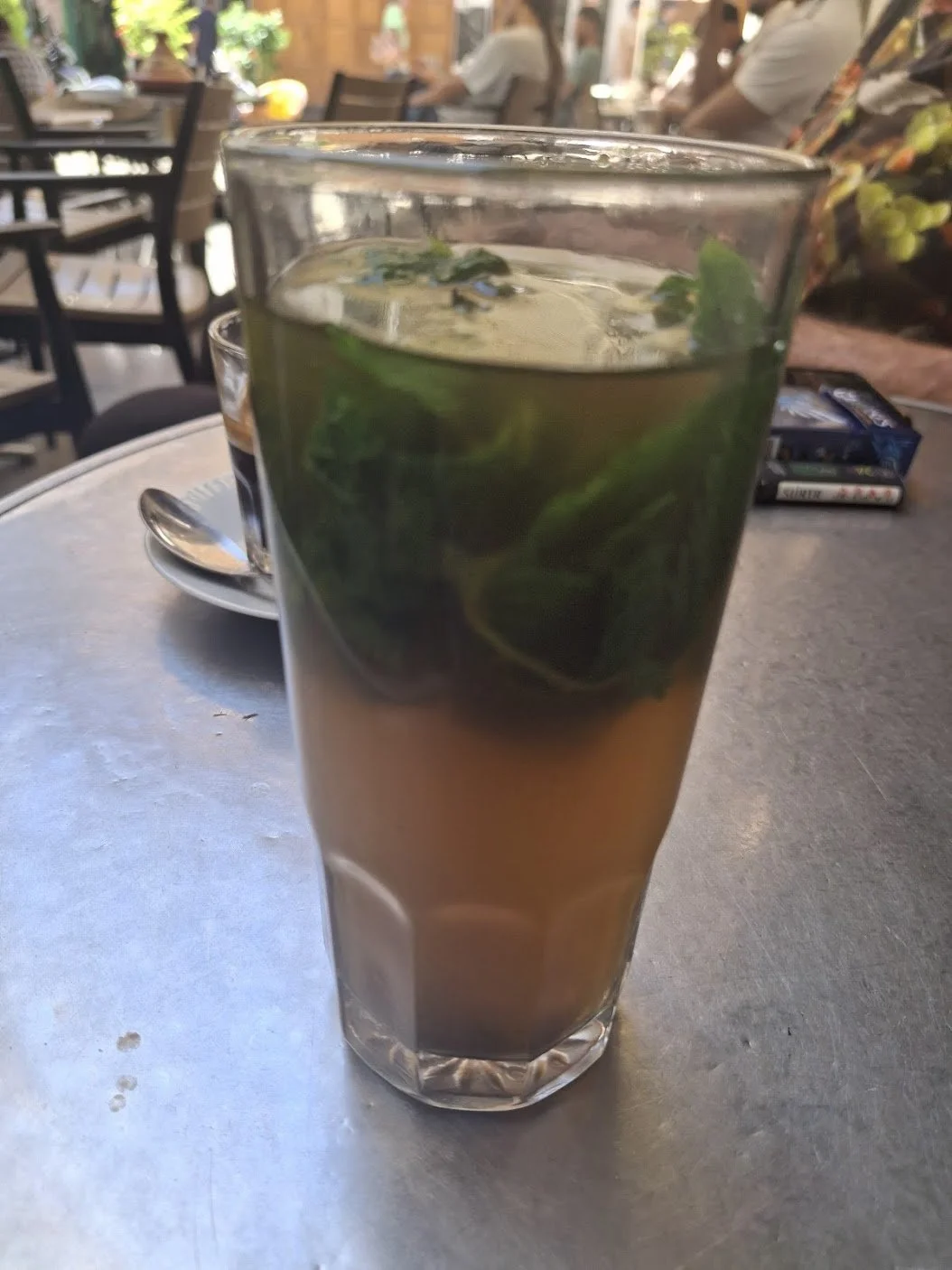
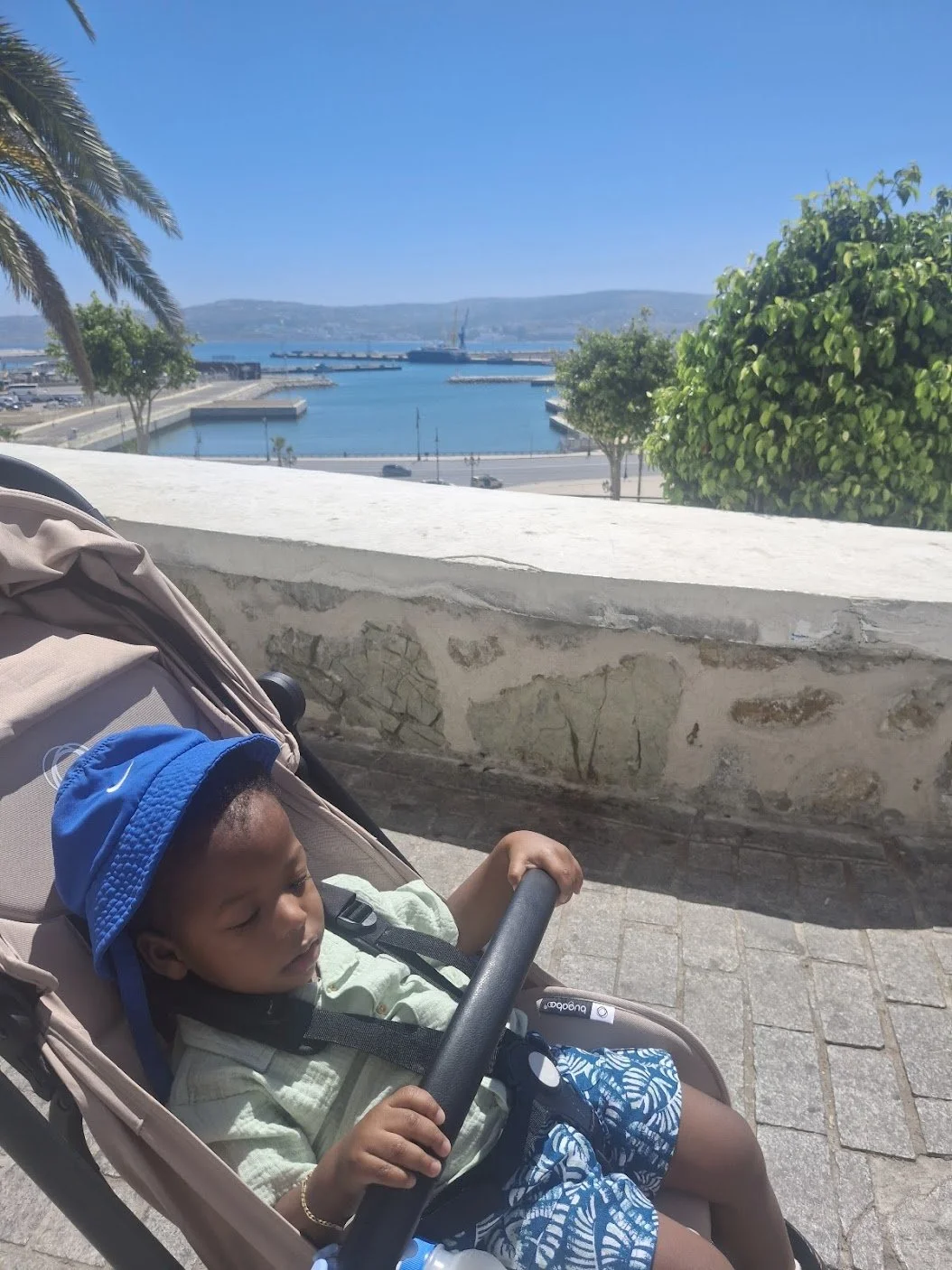
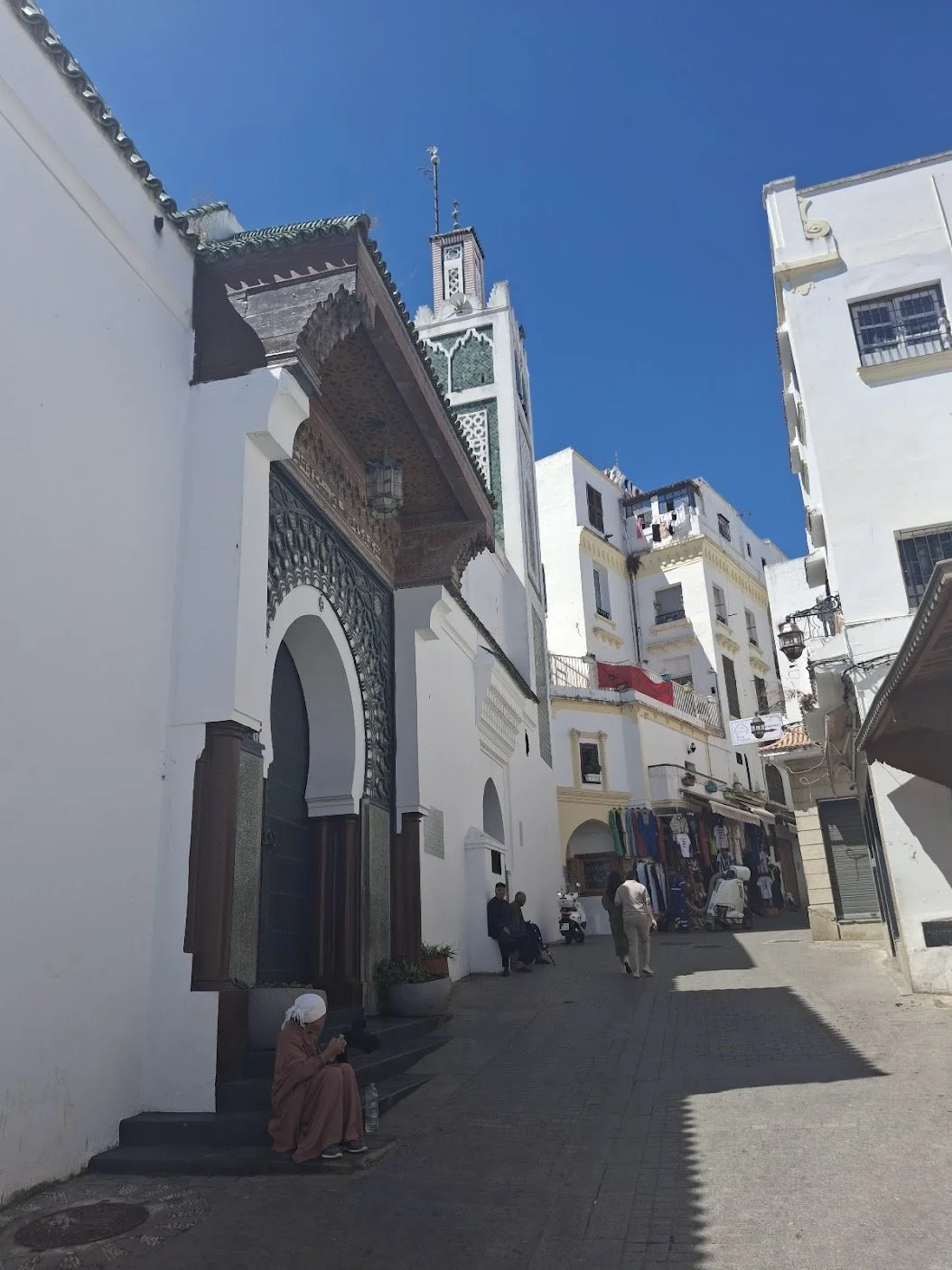
Sitting at the café in Souk Dakhel, I let myself fully arrive. The chairs faced outward, inviting observation rather than distraction. I wrapped my hands around a small glass of Moroccan mint tea—hot, sweet, fragrant, with fresh mint leaves floating at the top. Each sip felt grounding. I watched life unfold: neighbors greeting one another, men stopping mid-walk for conversation, children weaving effortlessly through adults. No one seemed in a hurry, and for the first time in days, neither was I.
Gillio and I chatted. He gave me some pointers and was curious about what brought me to Tangier. I explained to him about starting fresh, my son’s epilepsy diagnosis a few weeks prior, and wanting to explore the areas of Spain, Morocco, and Portugal. I also asked him what brought him to Tangier. He shared with me that he loved the people and could write, free from distractions. I enjoyed people watching and seeing the life of Souk Dakhel unravel.
I loved the universe. Connecting me to two creatives. The first, Enrique in Barcelona, who's a visual artist, and whose home was like an art gallery. The second being Gillio, a writer and editor with tons of books, advice, and great conversation. He made sure that I had his phone number, and he said to call in the event of an emergency or if I got lost. But shared that people are pretty helpful and don’t be afraid to ask for help. I pulled out some money to pay, but he was insulted and took care of the bill. I thanked him for the morning tea, and we were off. My first stop were the two museums that I had researched. Musee Dar Niaba, then followed by the Borj En-Naam Espace D’Exposition De LA Memorire D’ Ibn Battouta Tanger.
Tangier Museums
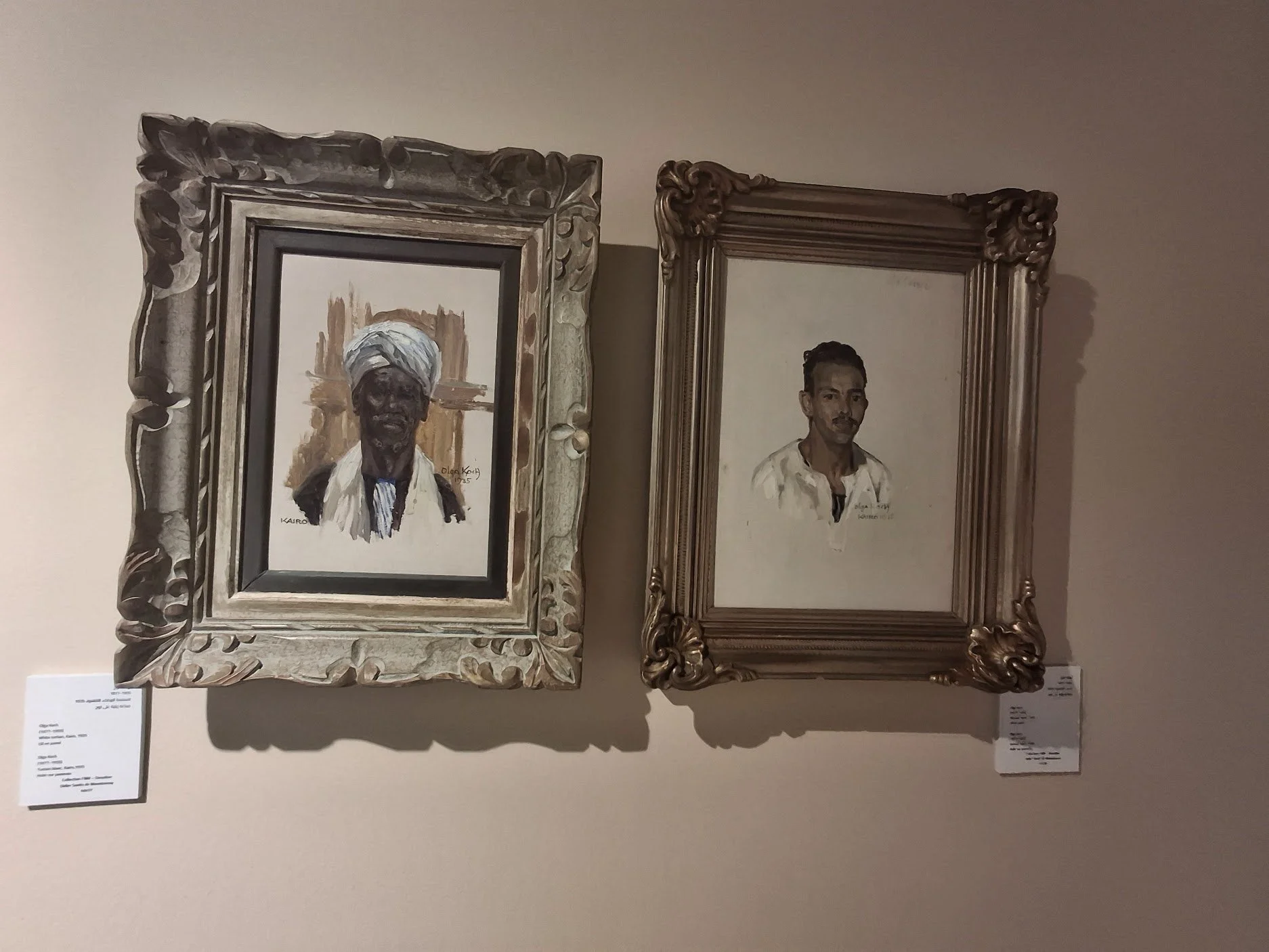
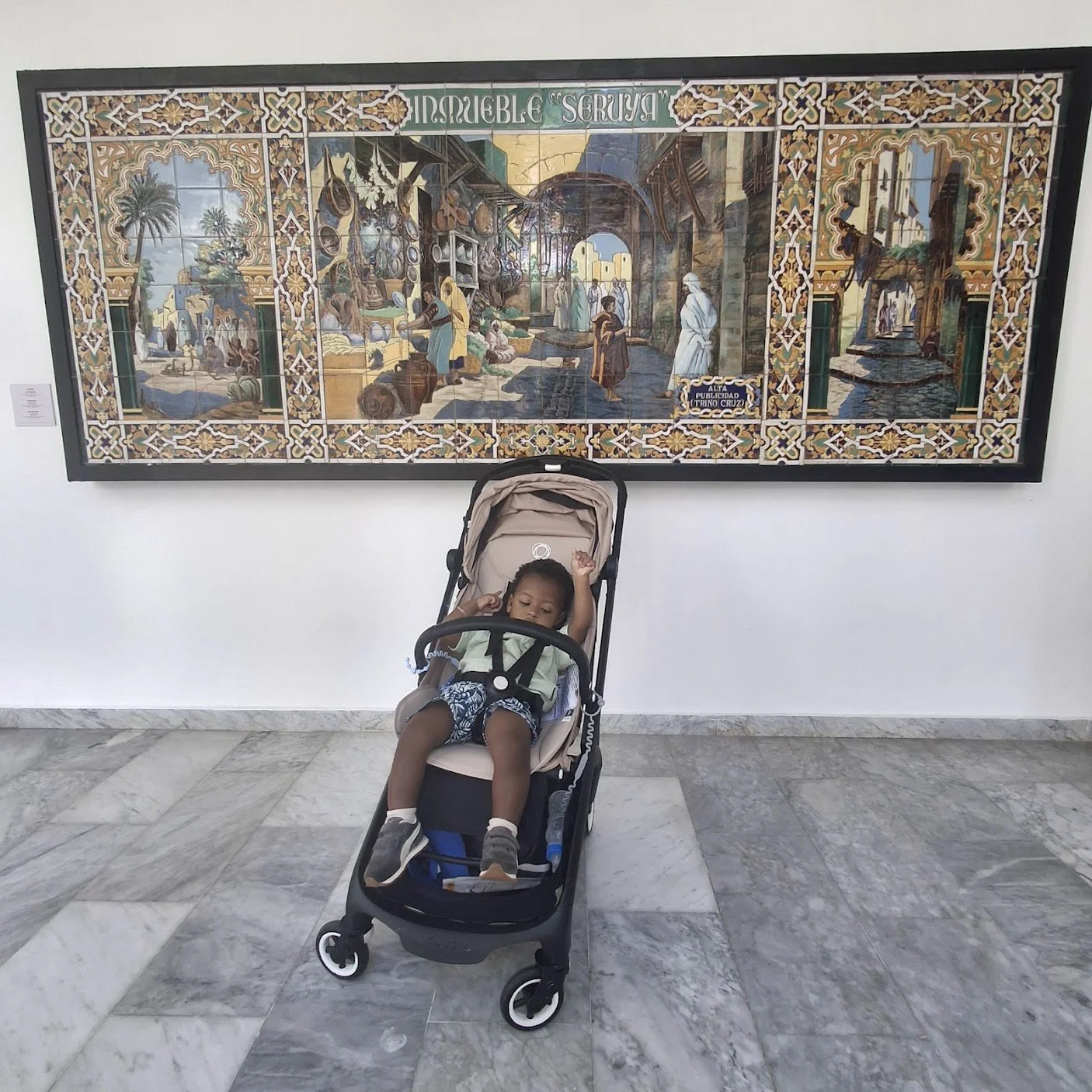
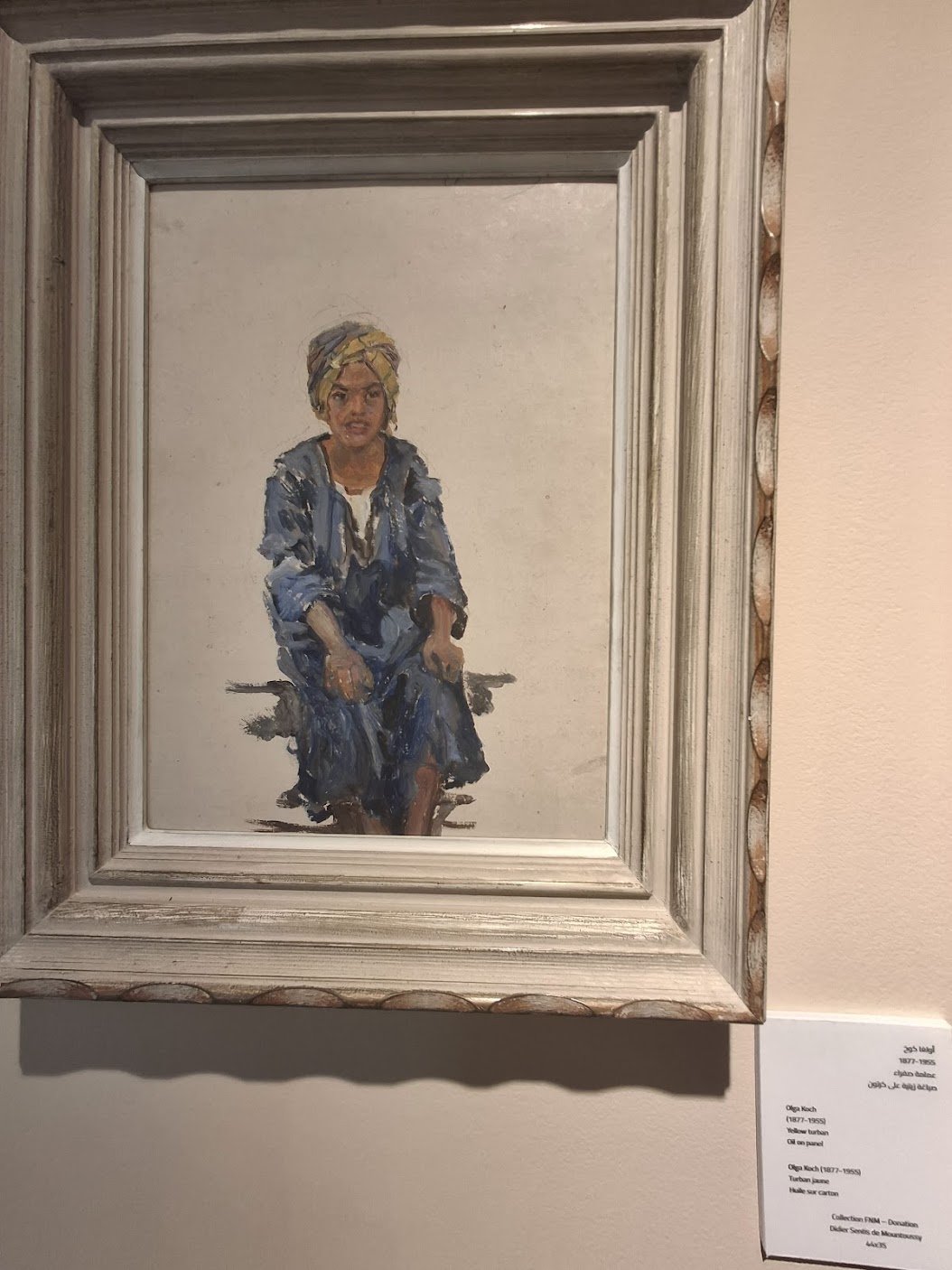
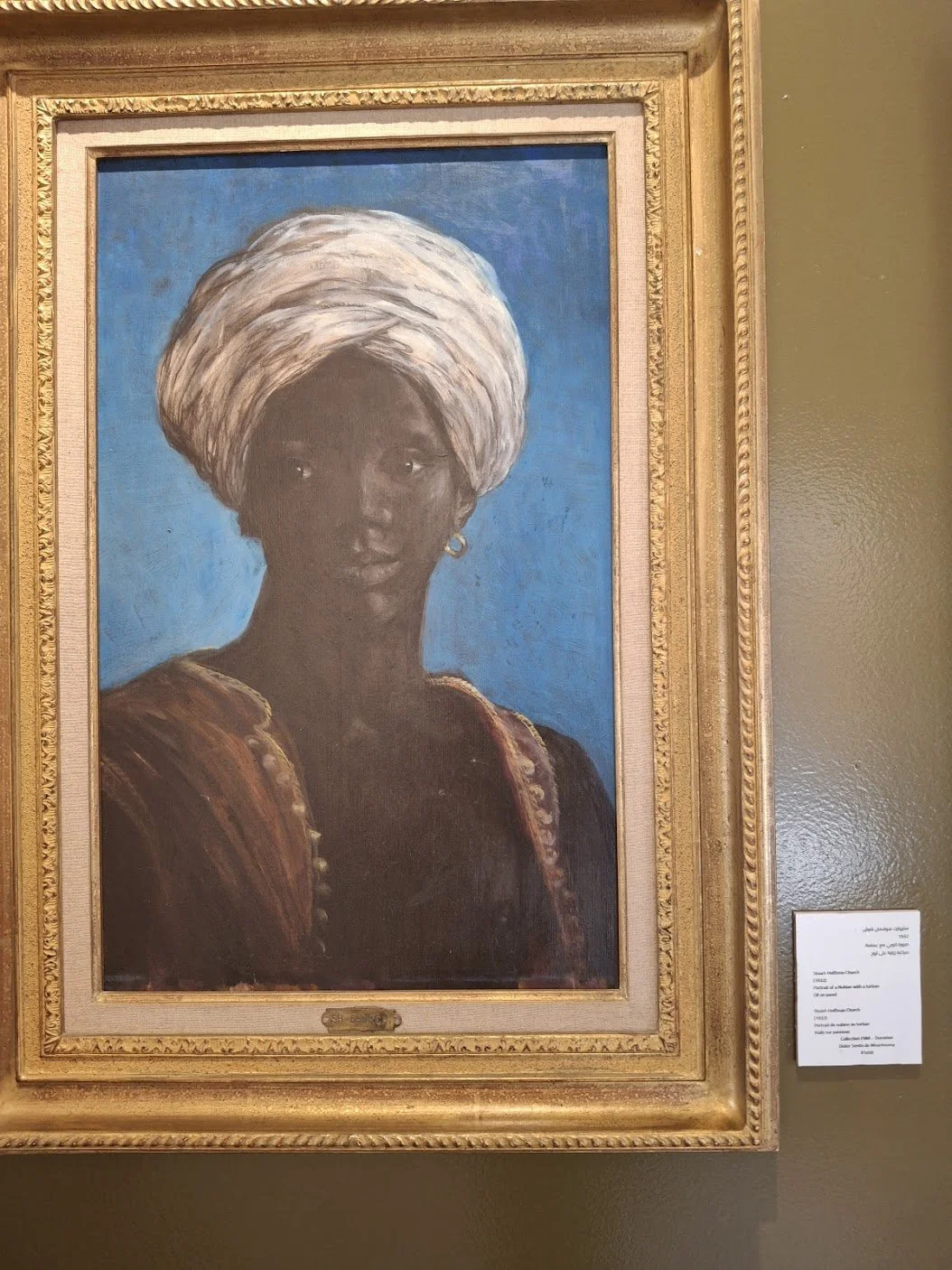
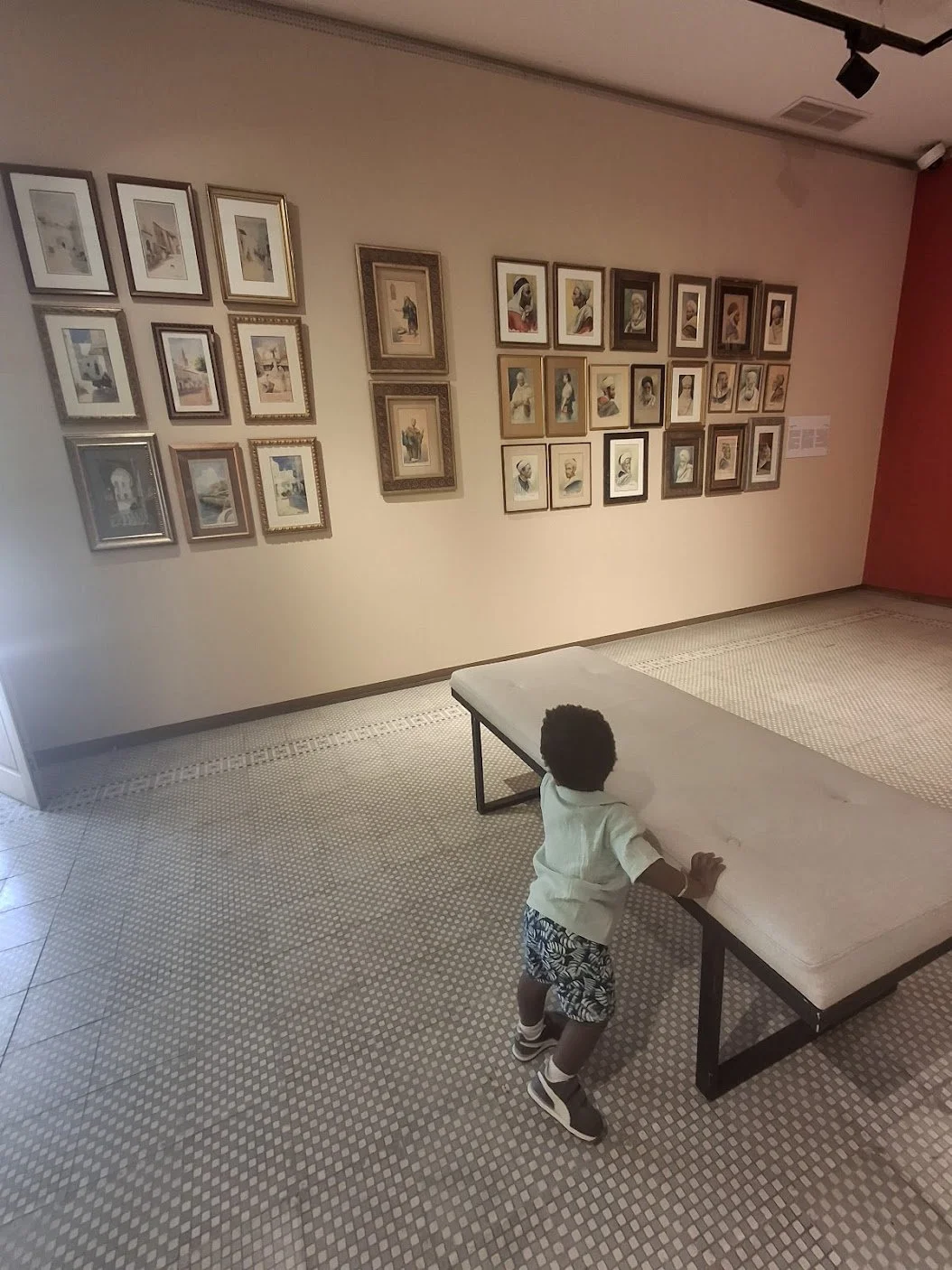
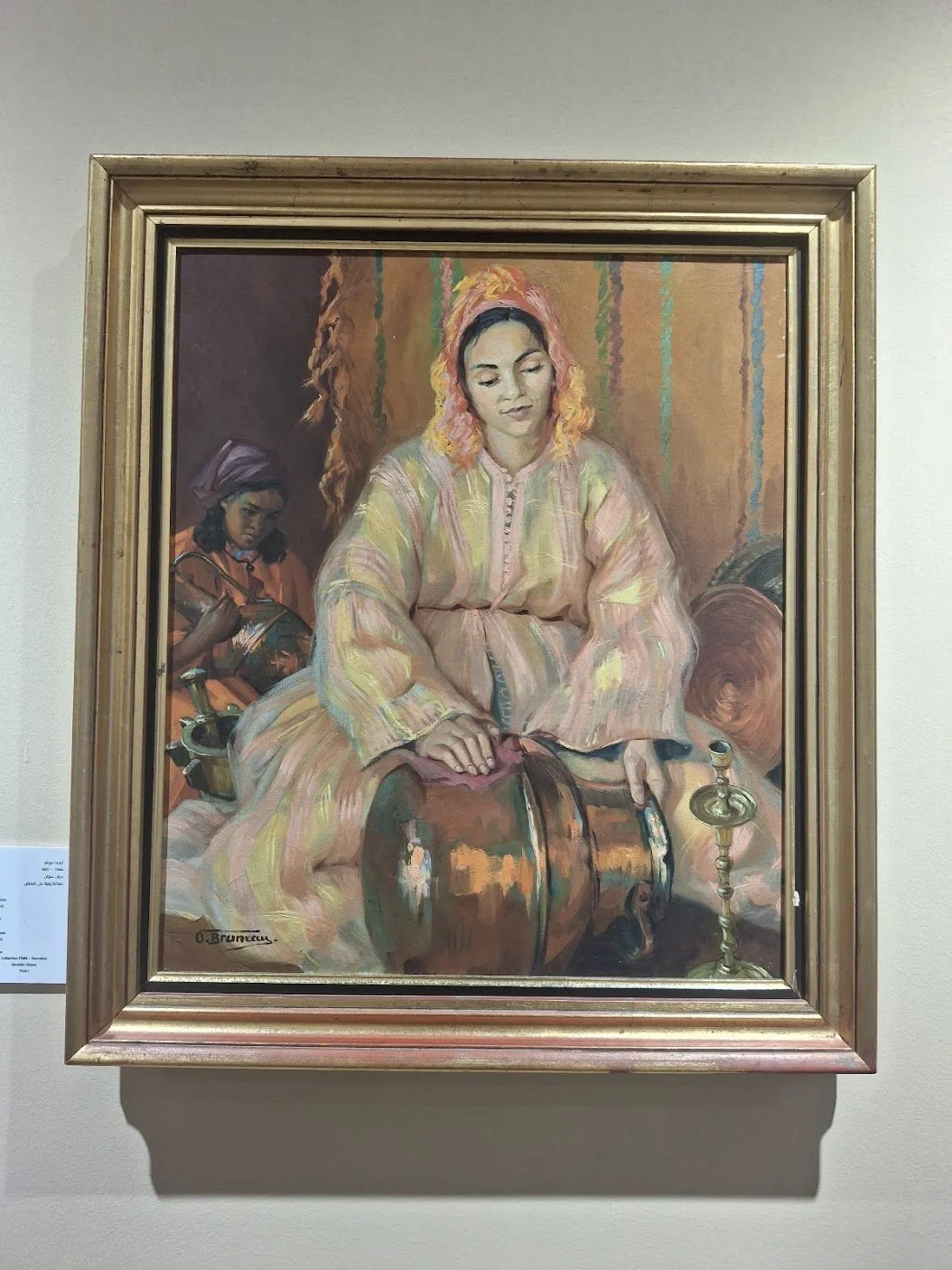
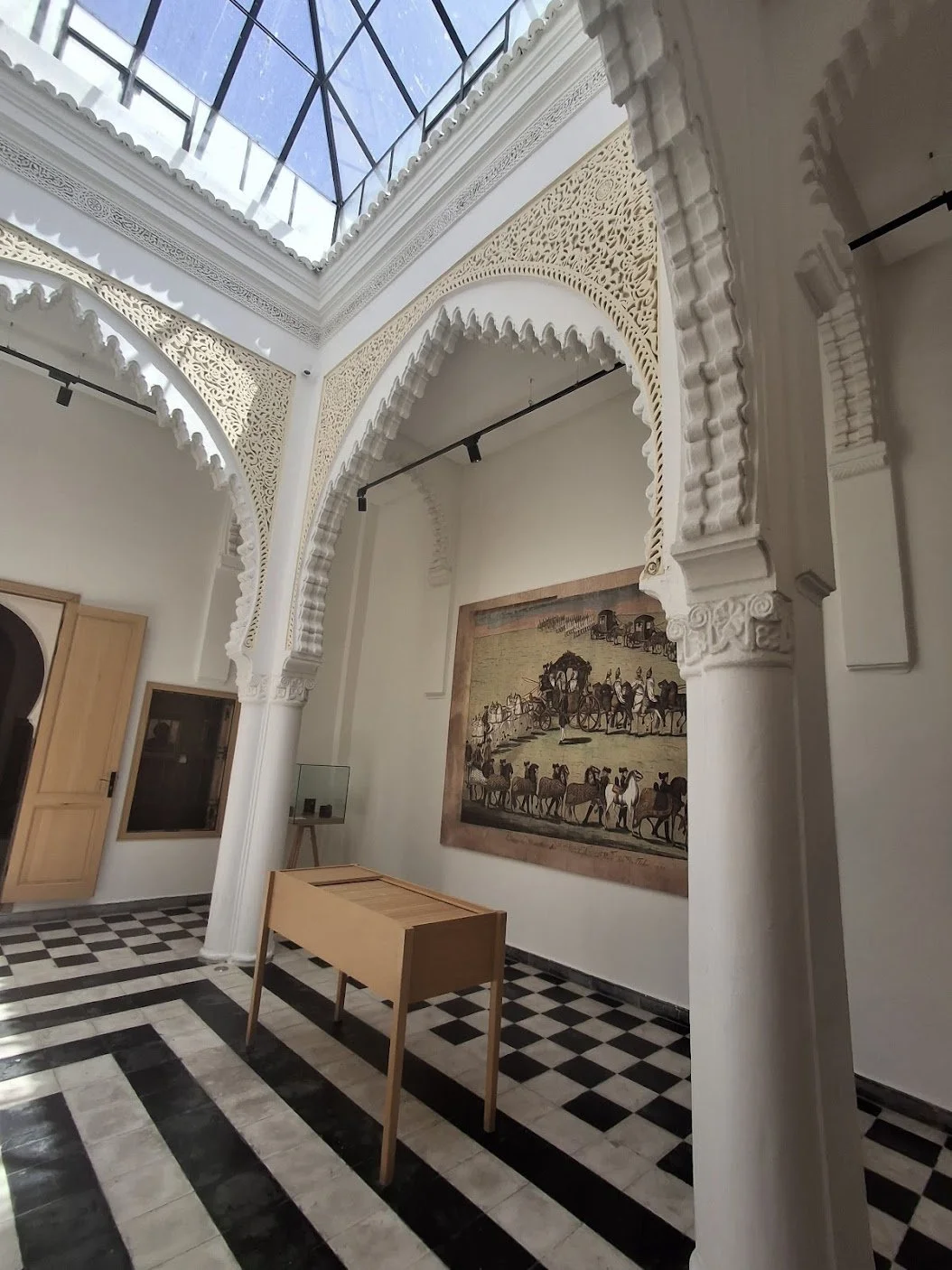
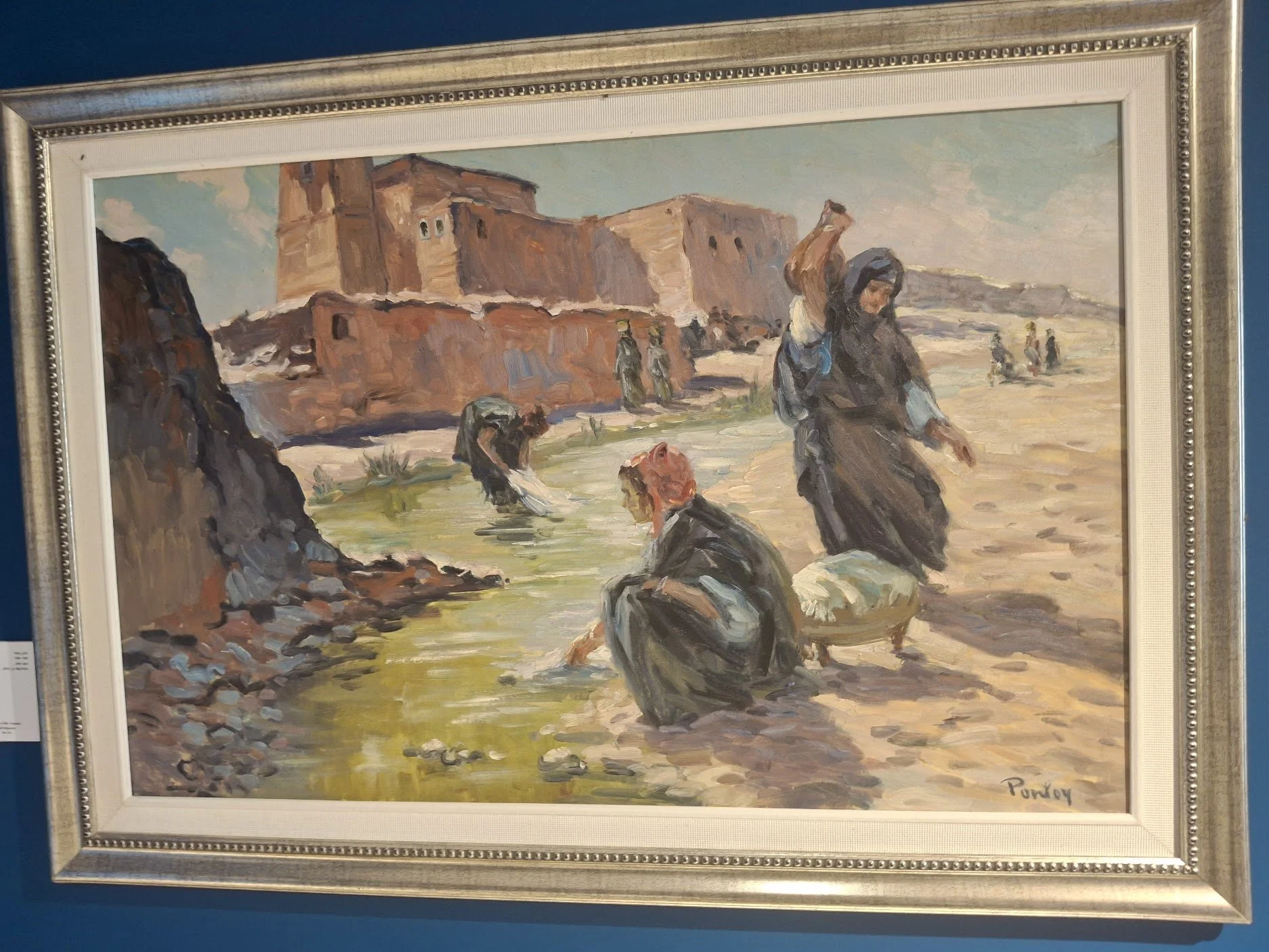
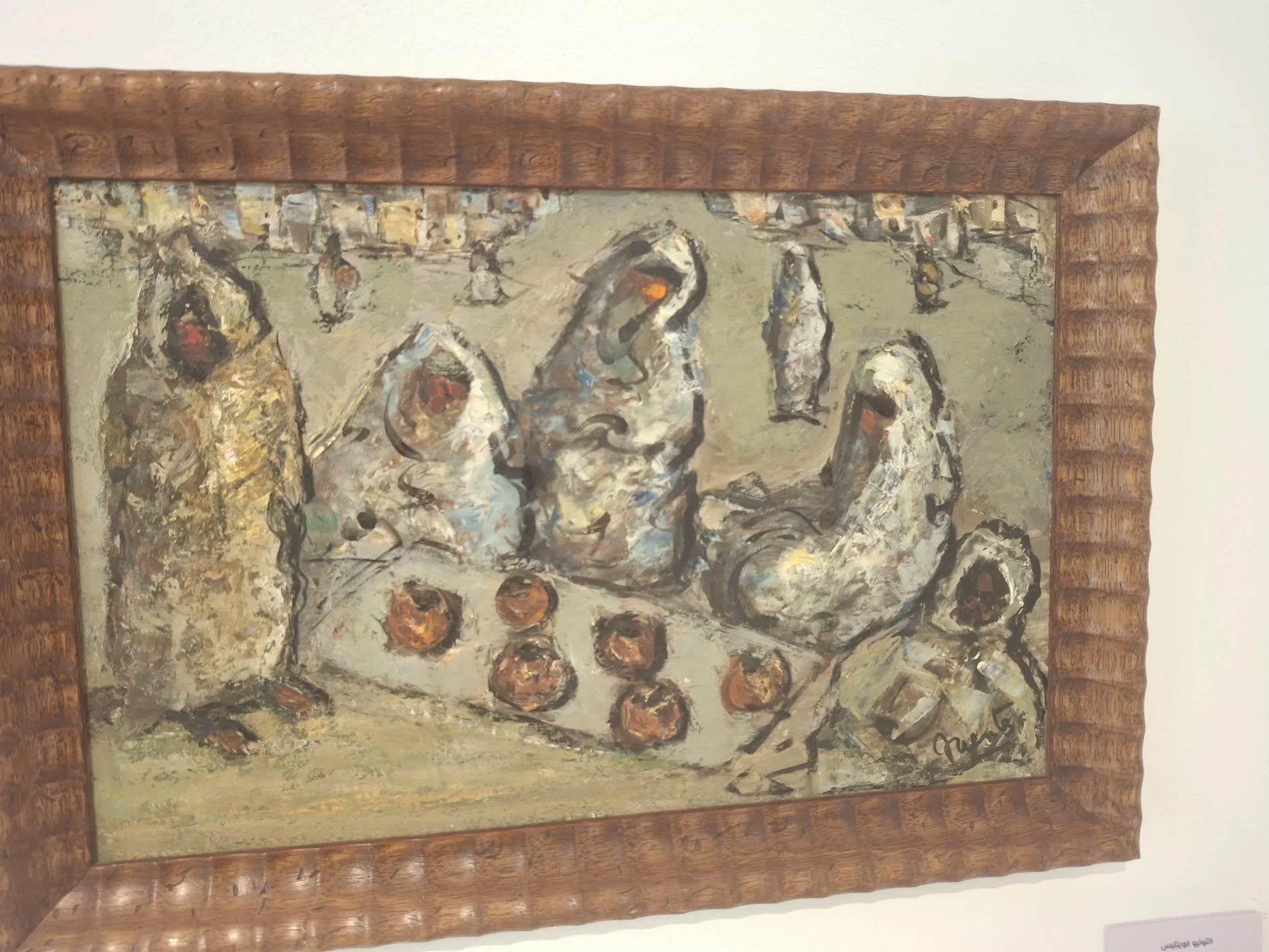
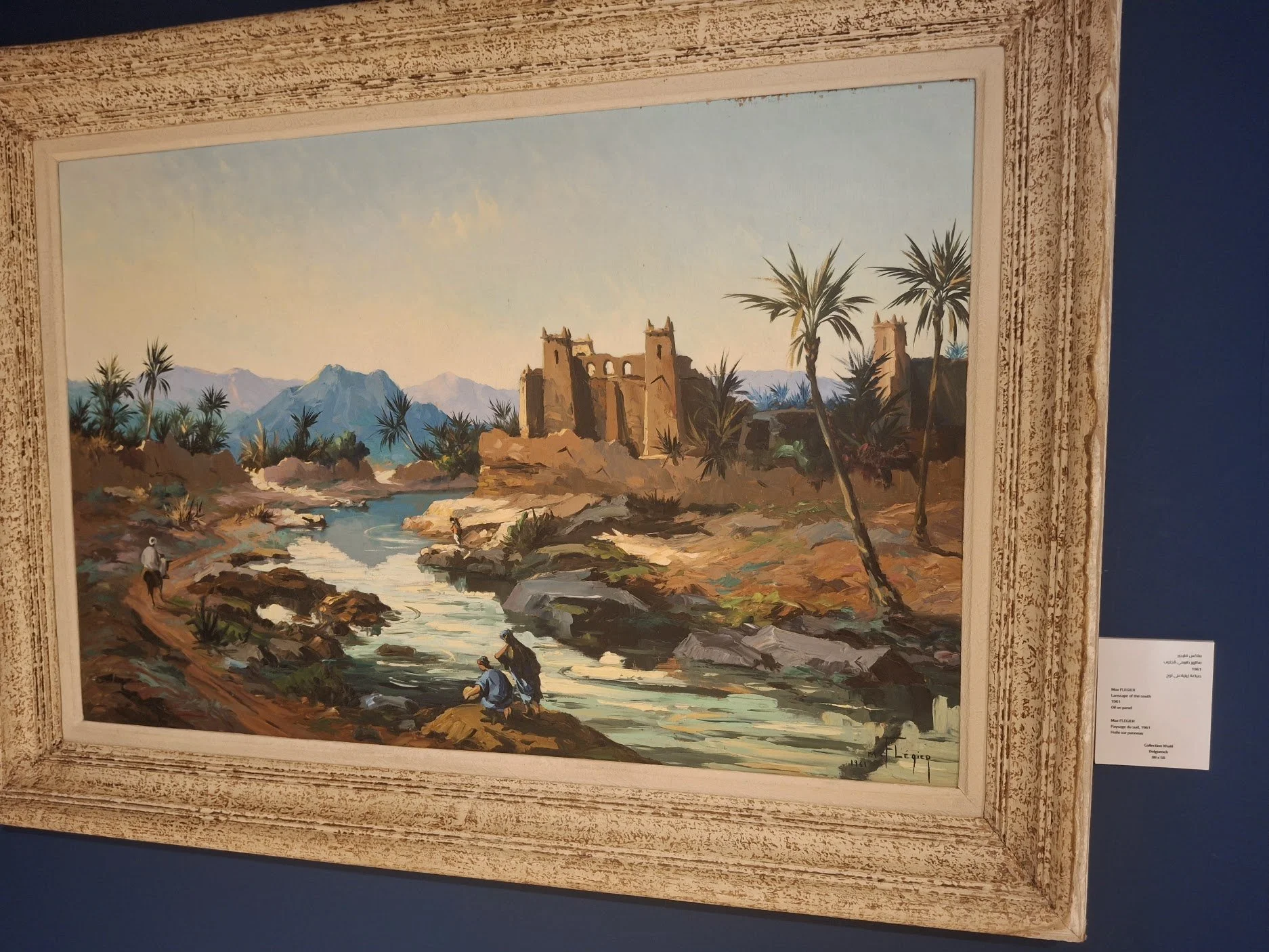
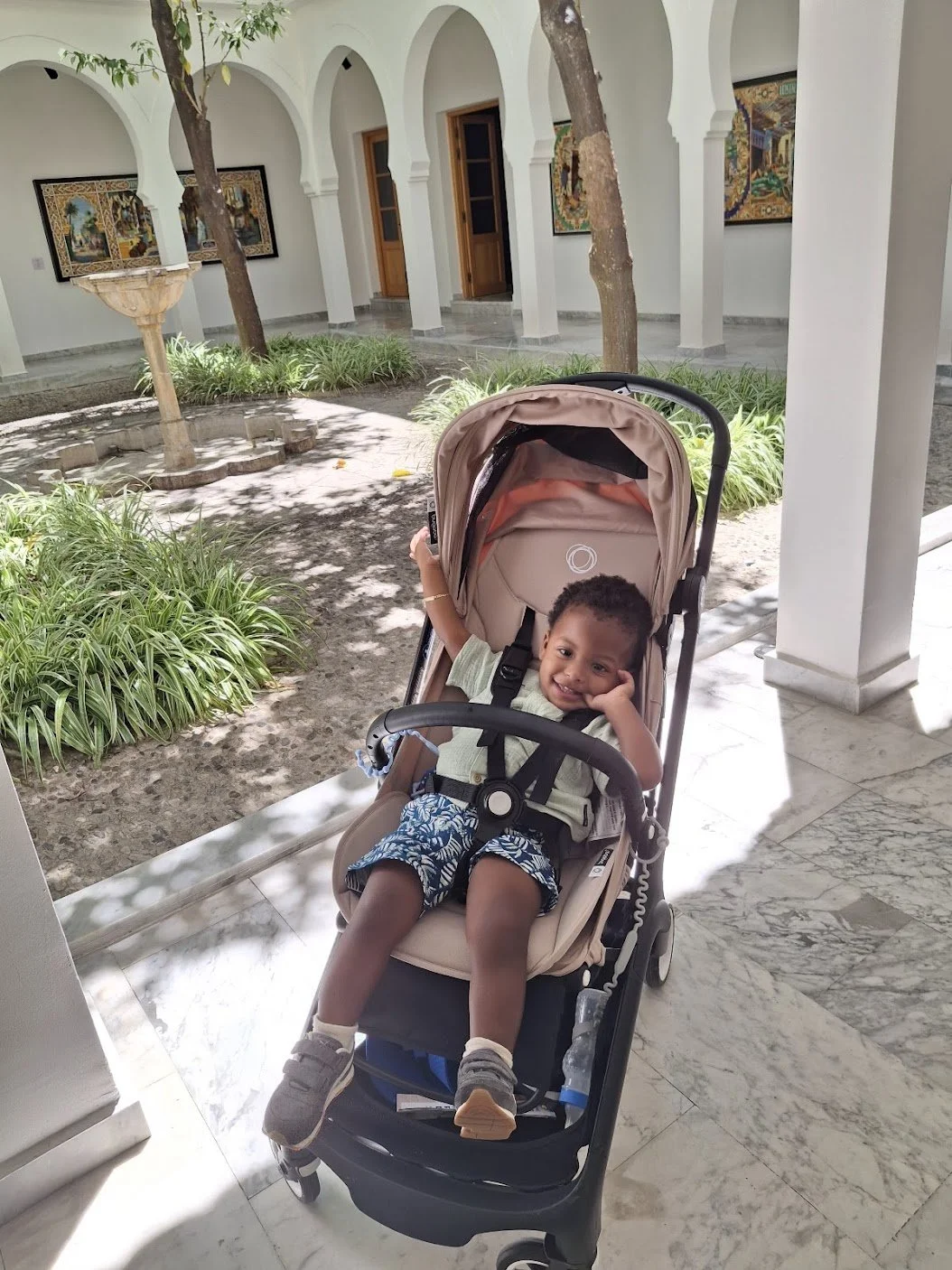
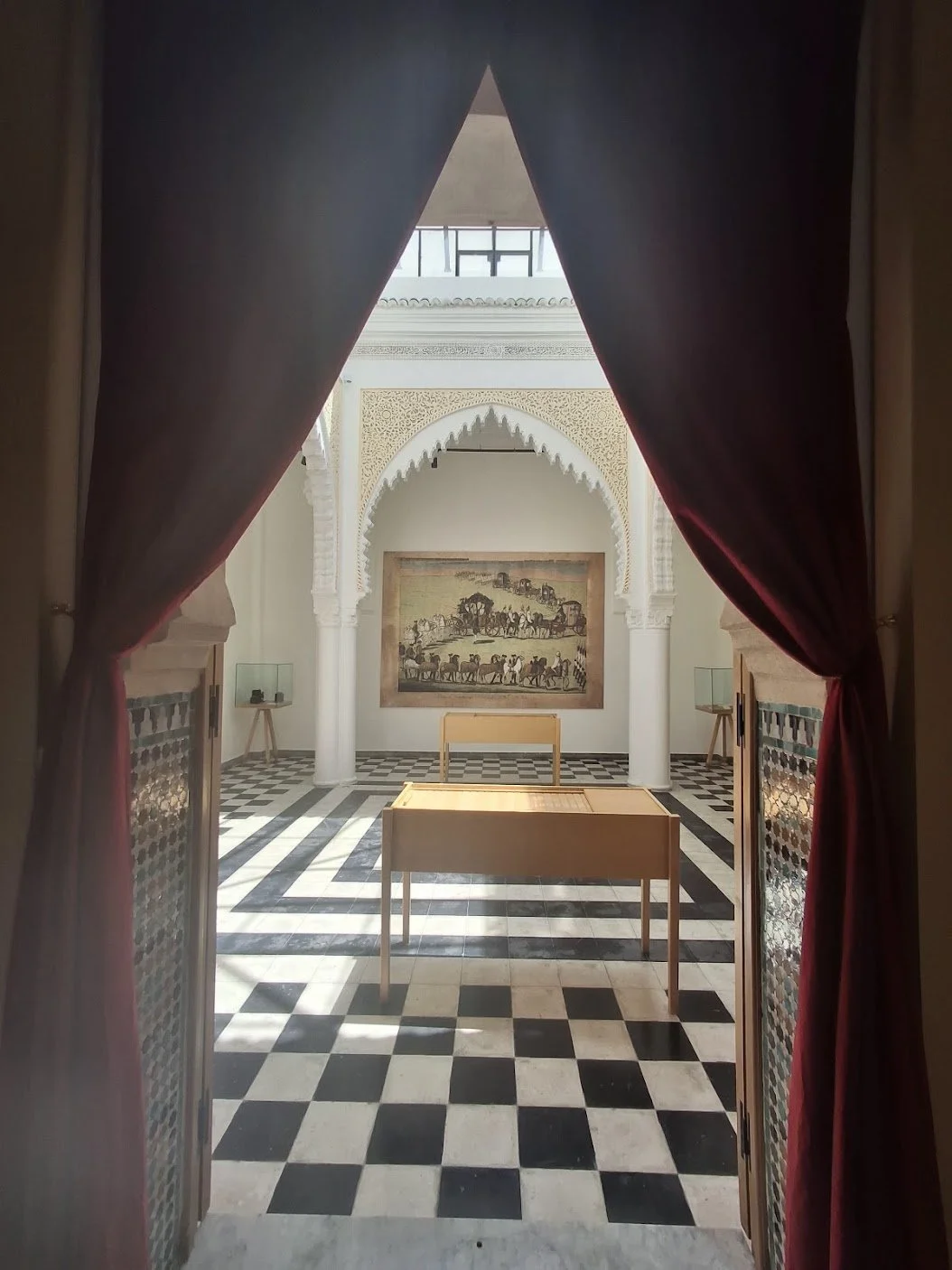
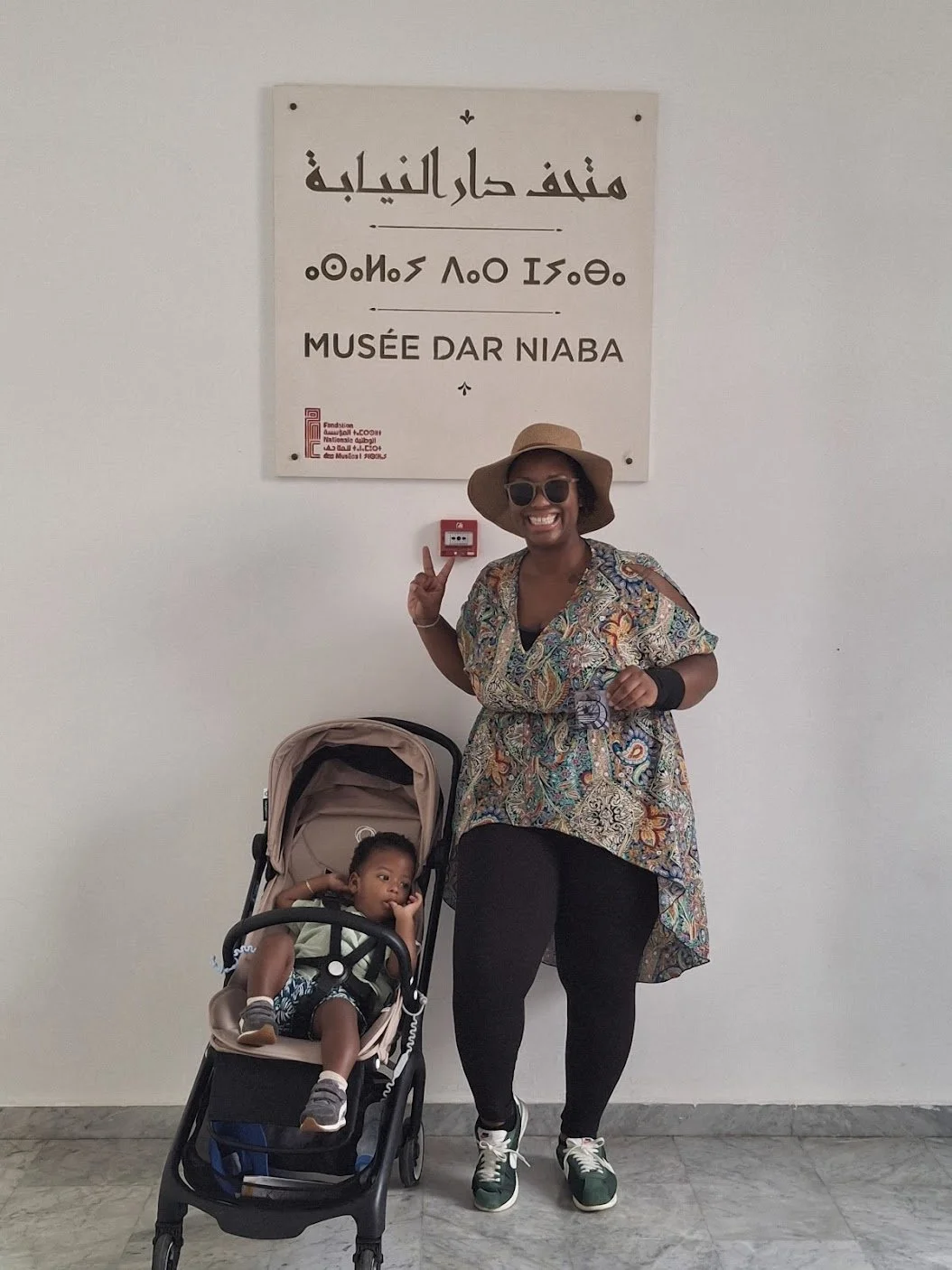
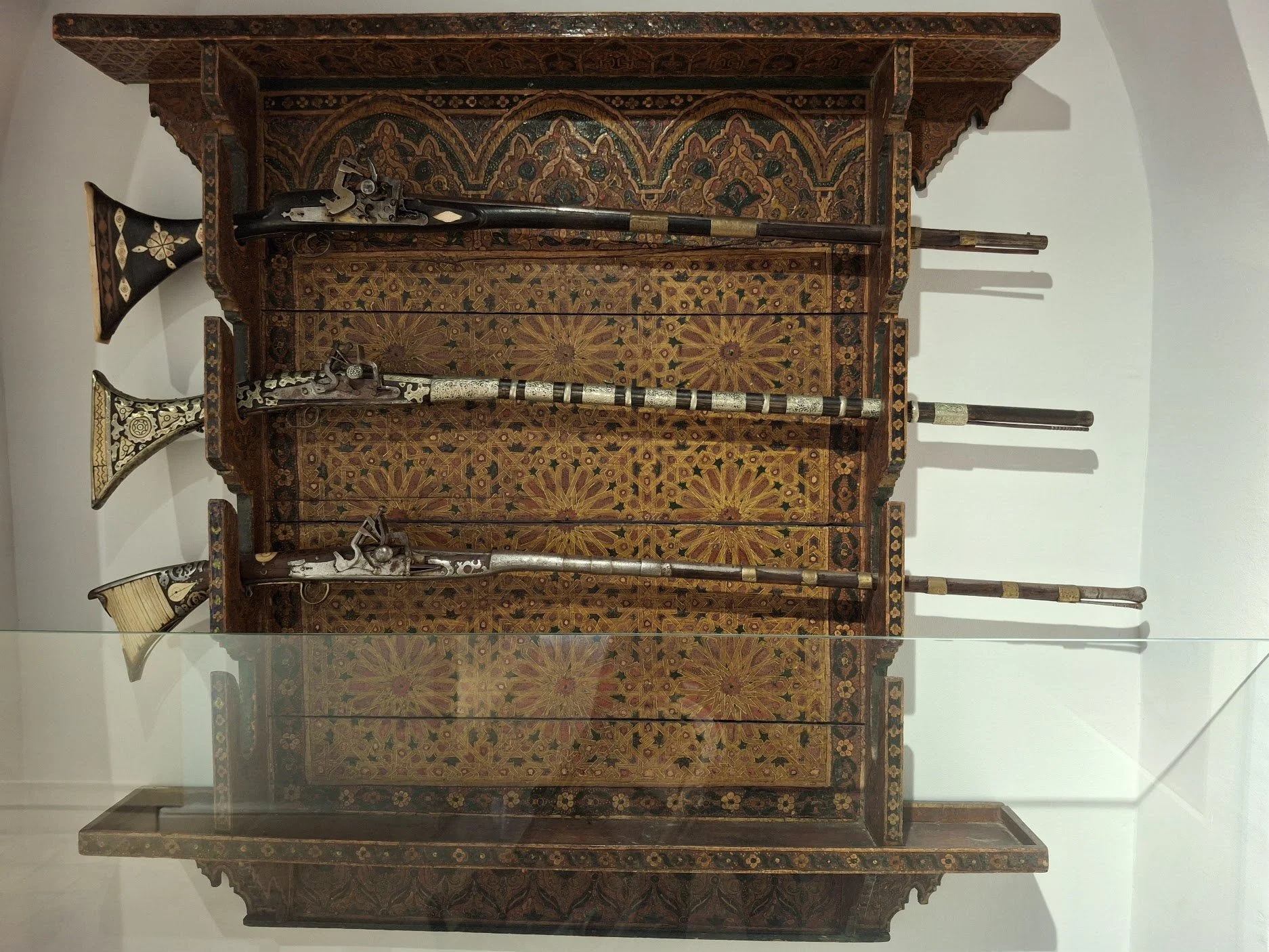
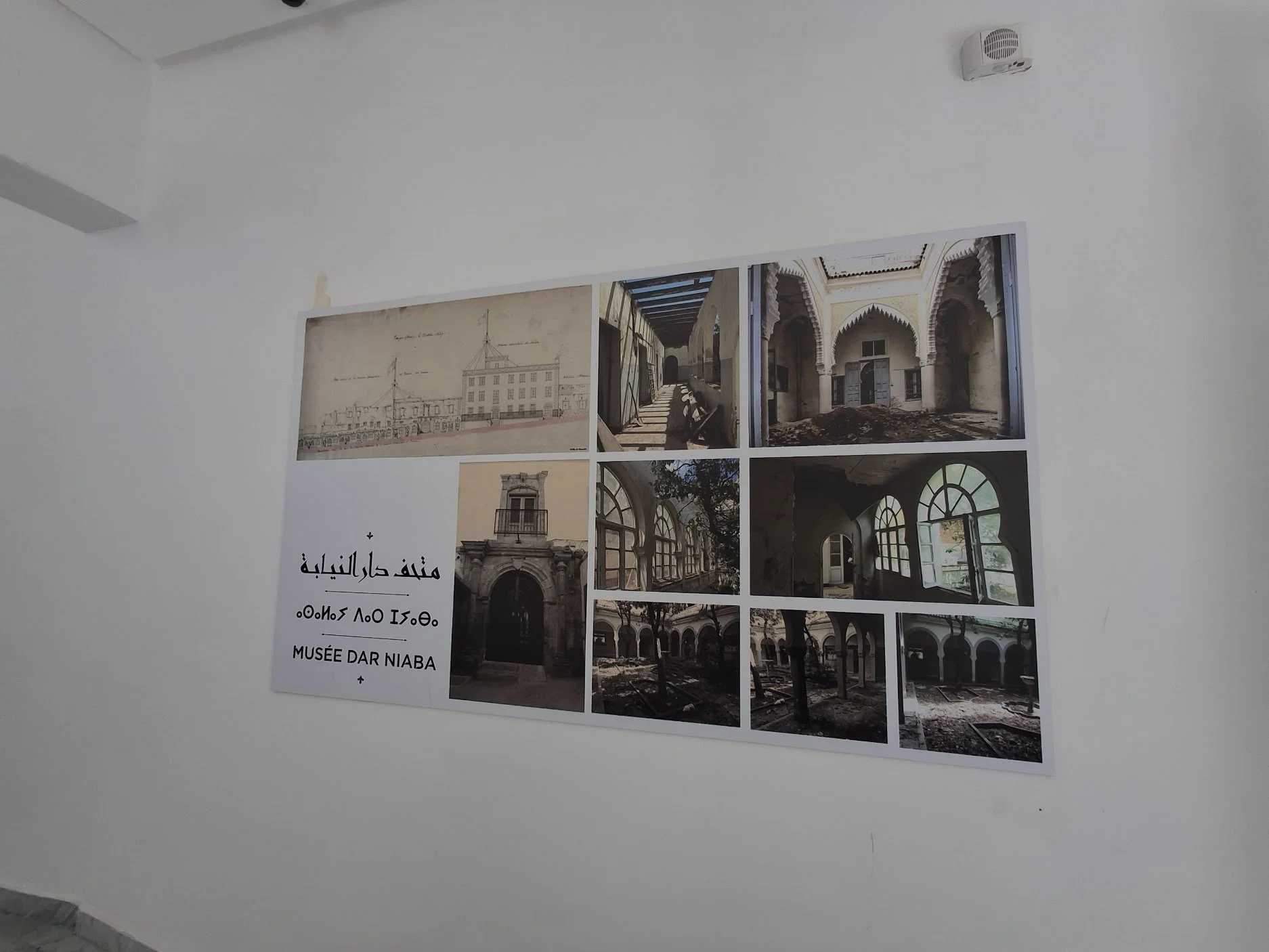
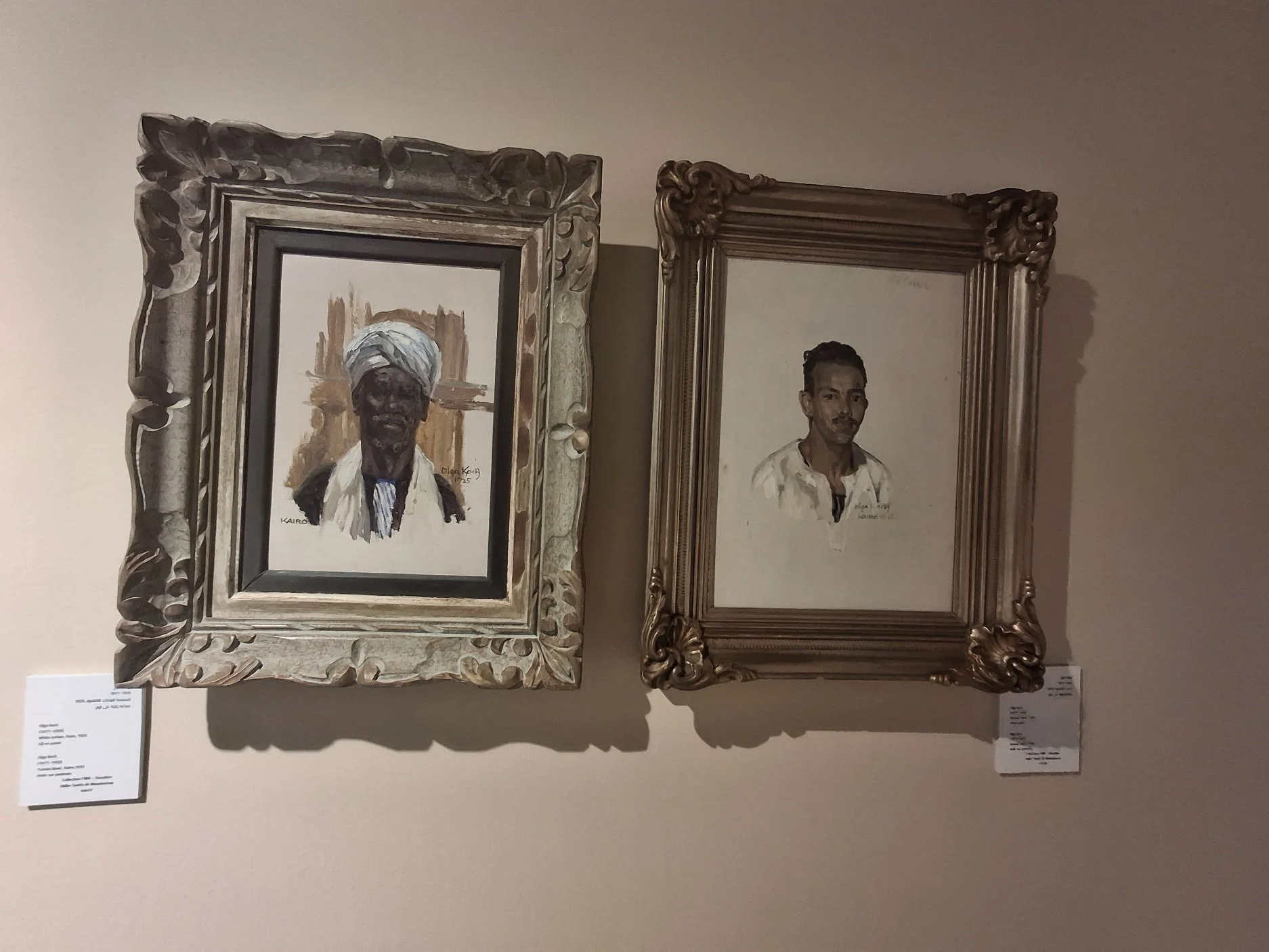
The first Musee Dar Niaba was a beautiful museum in a riad. They had some beautiful paintings and mixed media pieces. Museé Dar Niaba offered a kind of quiet I didn’t know I needed. The riad was peaceful and cool, the echo of footsteps softened by tiled floors and high white walls. Sunlight filtered in through the middle open courtyard, illuminating mosaics and artwork that celebrated the diversity of Morocco. I lingered in front of paintings longer than planned, grateful for the calm, for the sense of being held by history and beauty. Titian mirrored the energy—curious but calm, happy to explore gently alongside me.
I enjoyed seeing black and brown subjects representing the country's diversity. They had an impressionism exhibition at the time that showcased some very talented artists. The bright colors and the energy of the brushstrokes really brought the paintings to life. I was also happy to read several female artists' names on the walls. Titian seemed to enjoy the galleries. So much so that I let him out and cruise around one of the benches in one of the galleries.
Afterwards while walking around the medina and taking pictures a nice man offered to push my son up a very big hill. The Borj En-Naam Espace D’Exposition De LA Memorire D’ Ibn Battouta was at the top of the hill, along with a military fort that I wanted to see. I thanked the man for pushing my son up the hill, but when I reached into my wrist wallet to pay him, he said, “No, no, no.” Then pointed in a direction south and said in broken English, ‘good sees’ which I interpreted as good views. I made a note to go that way after the Ibn Battouta museum.
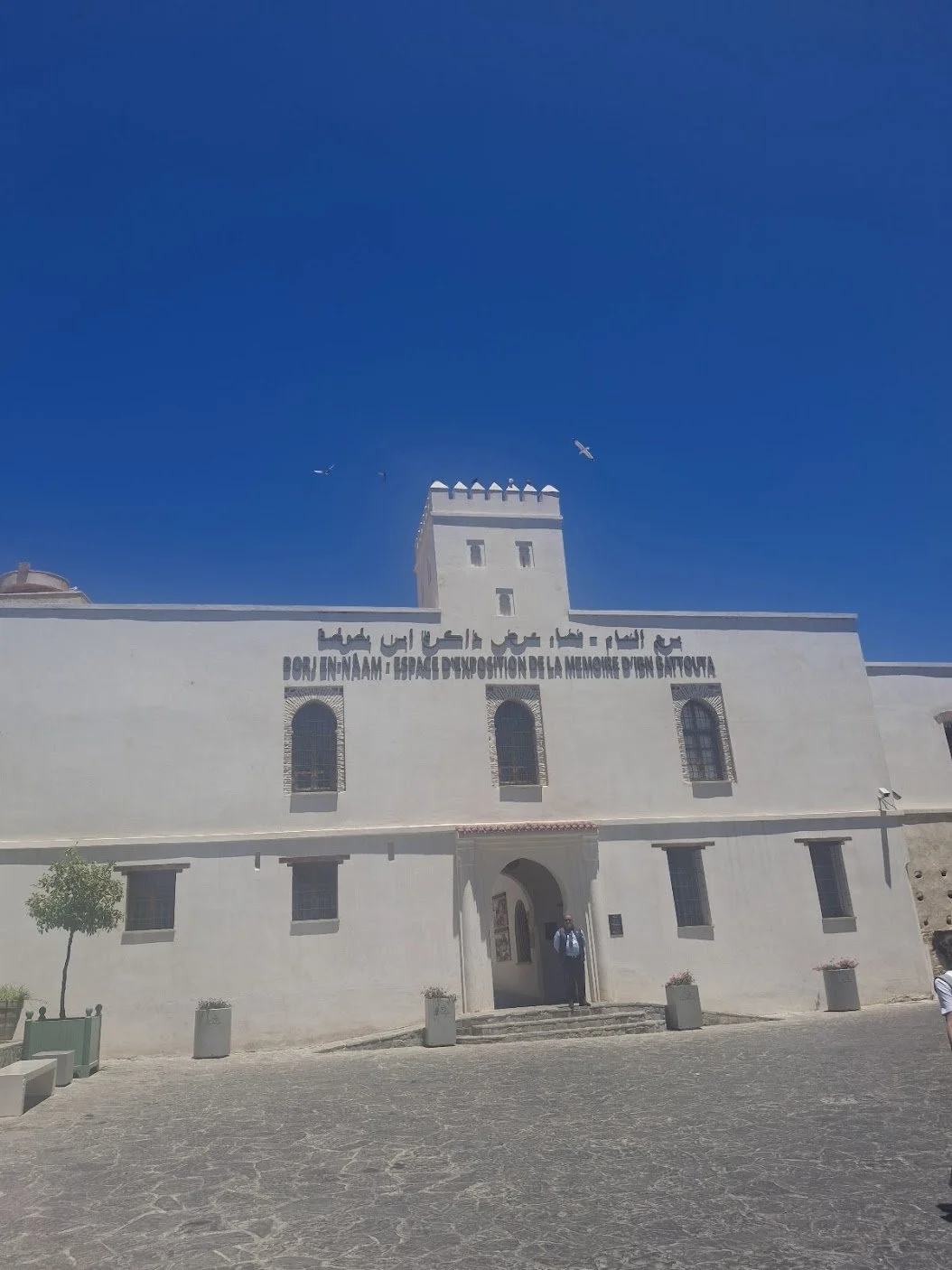
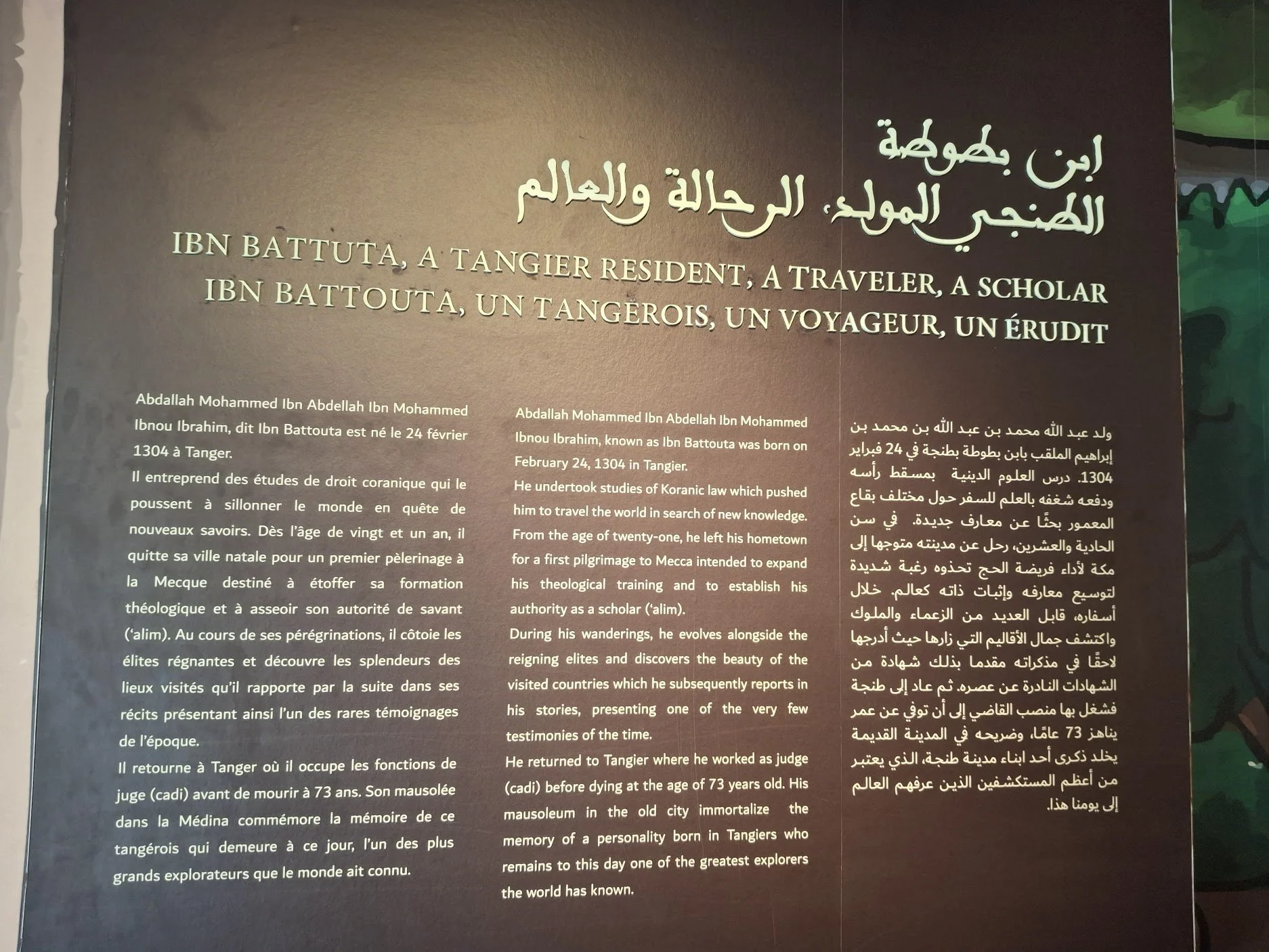
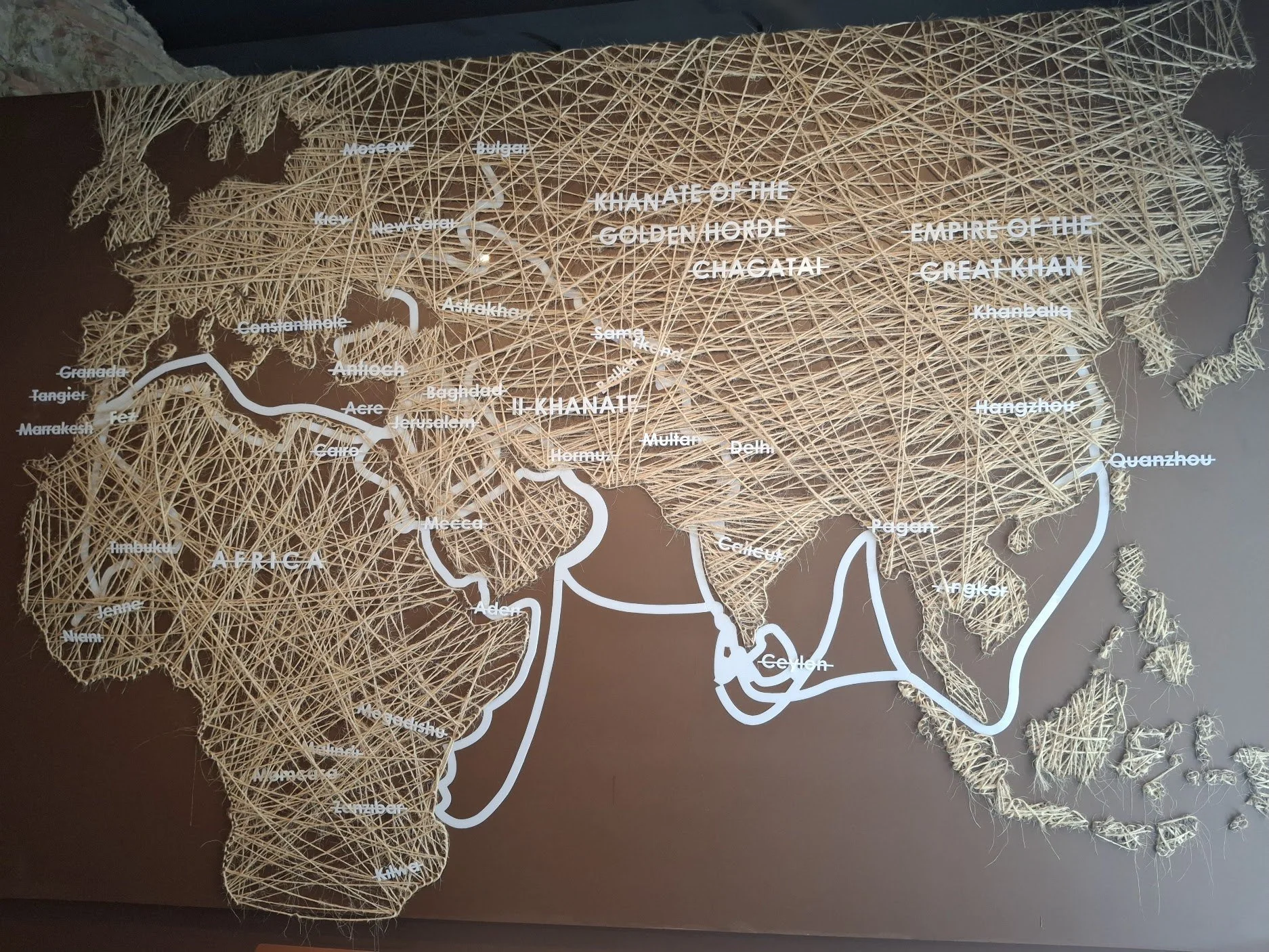
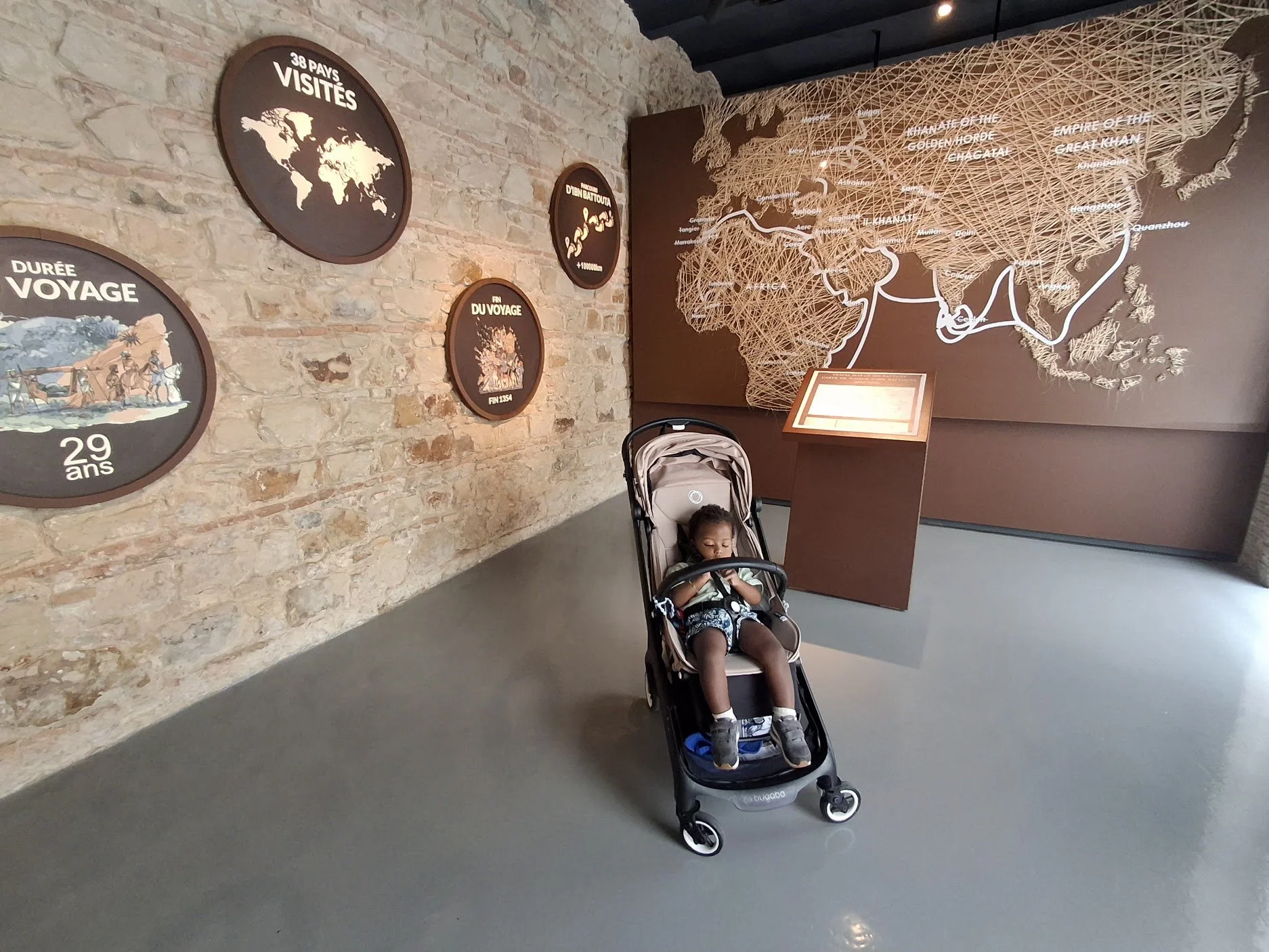
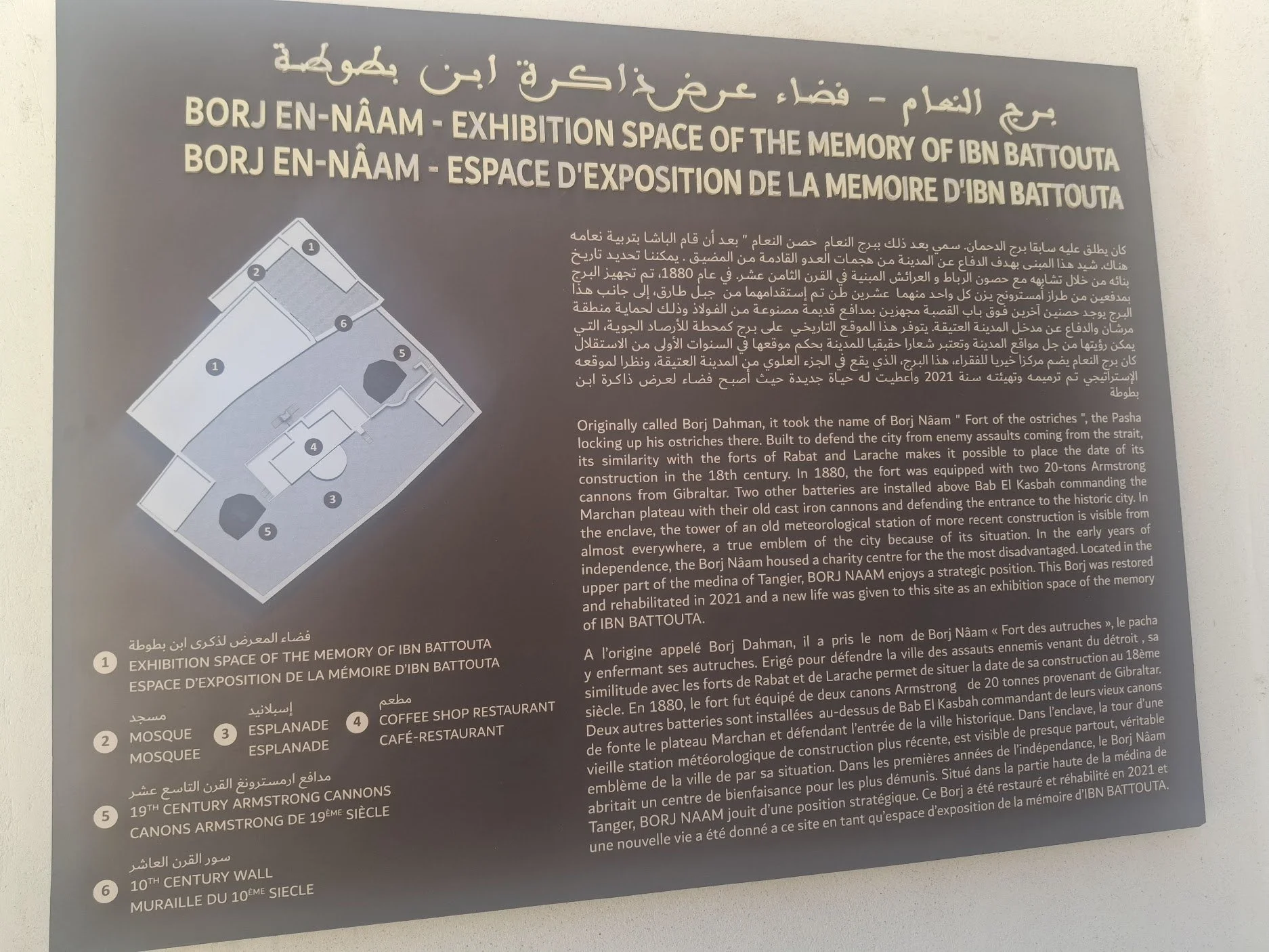
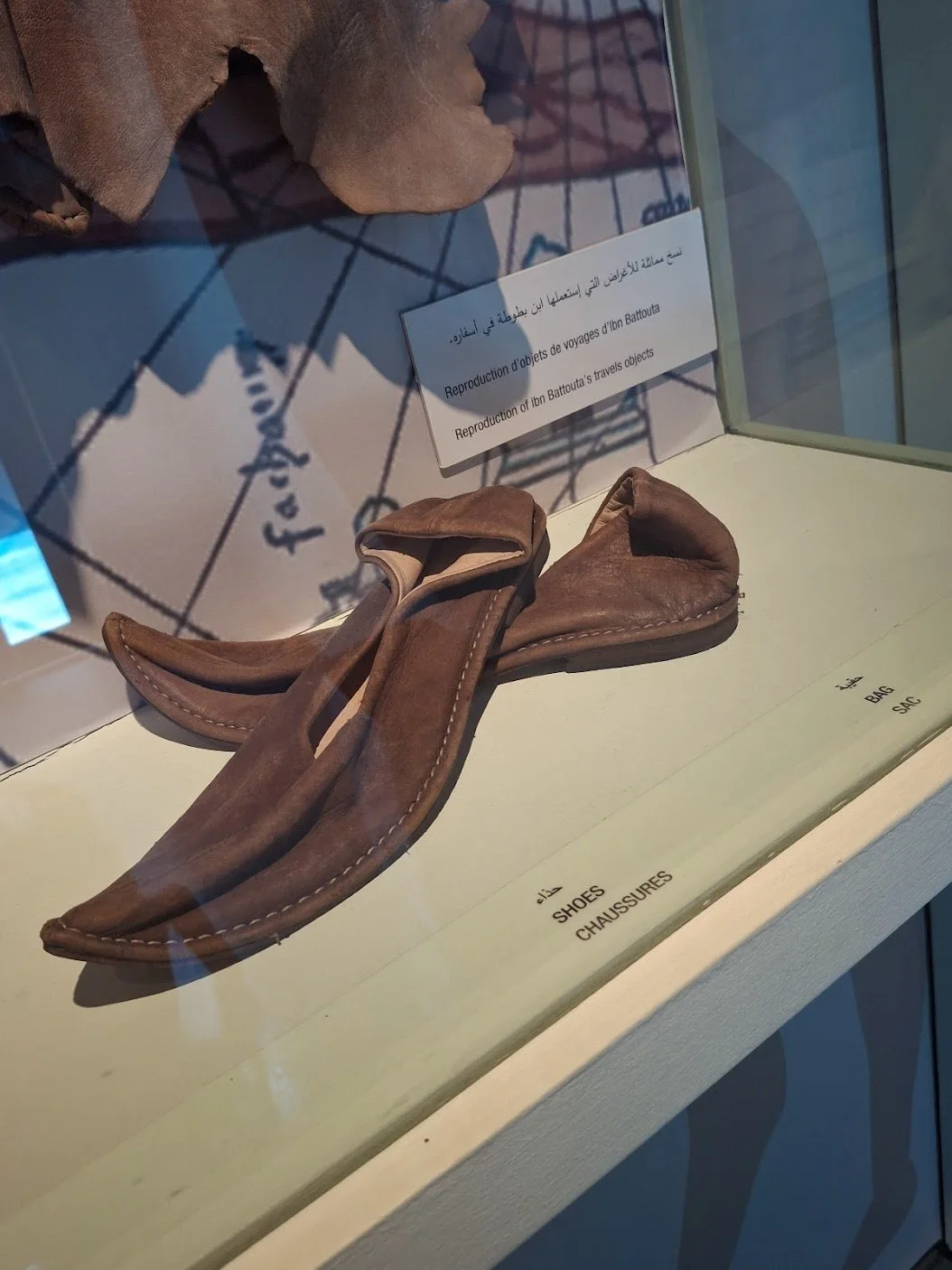
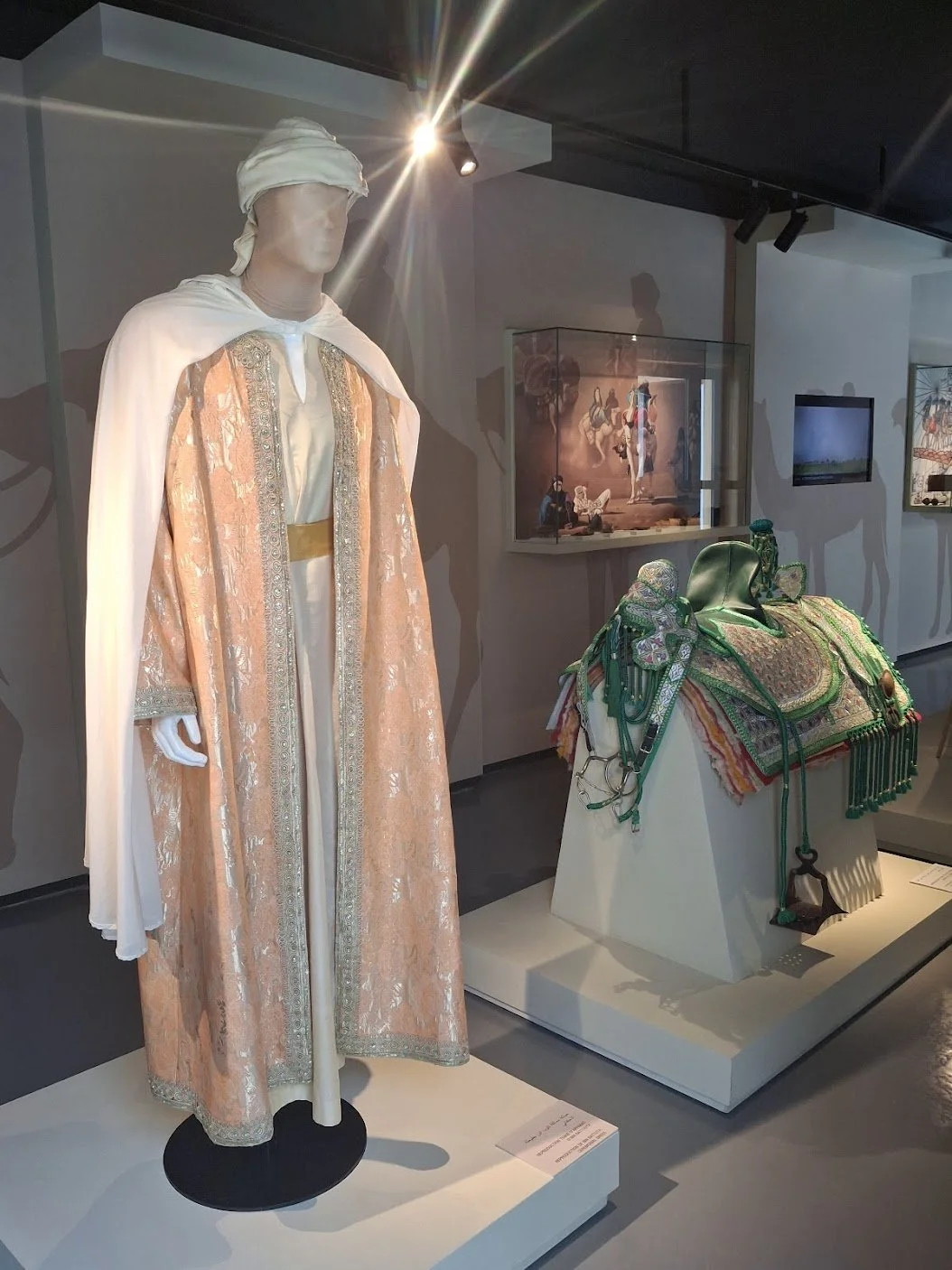
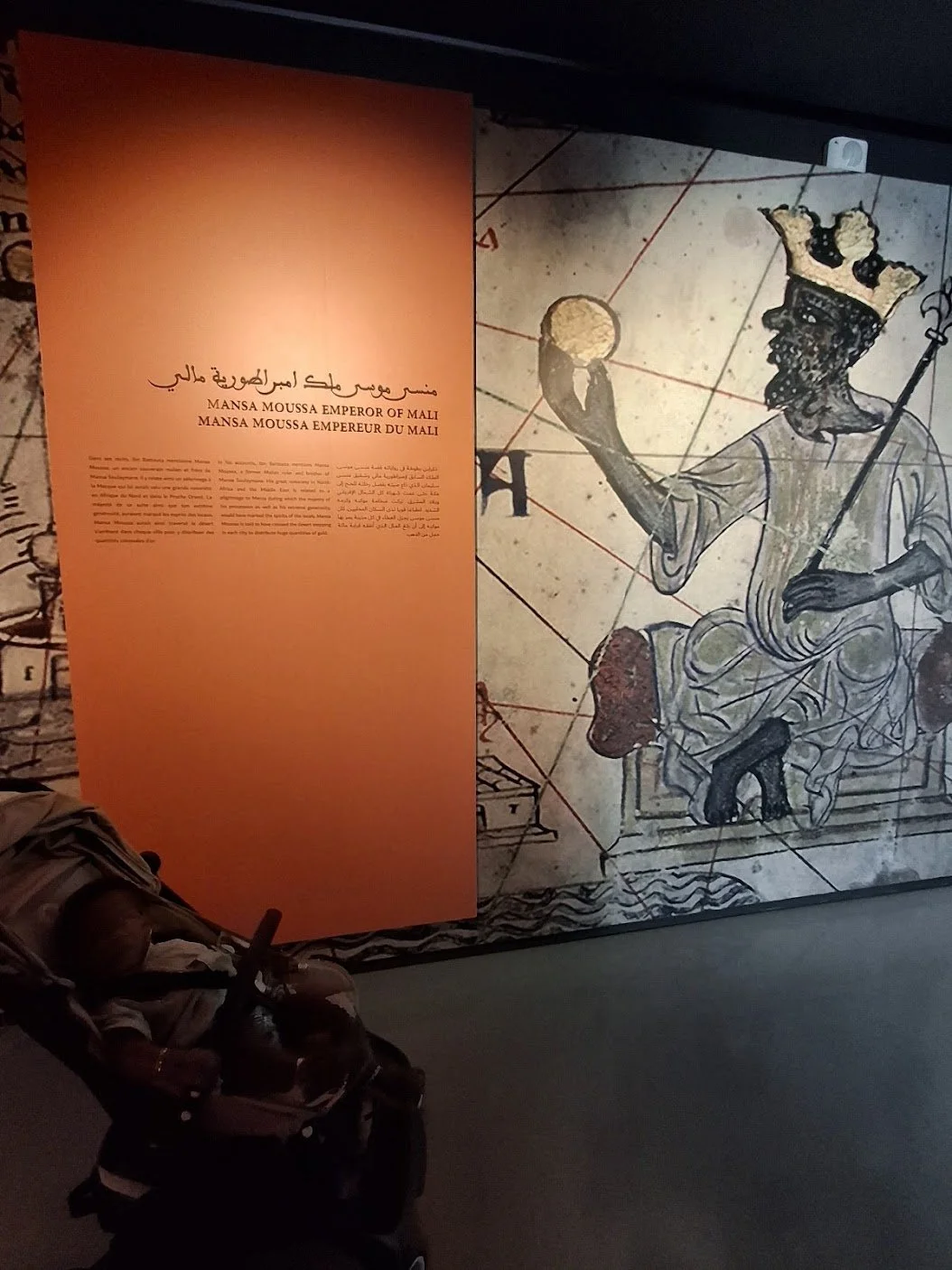
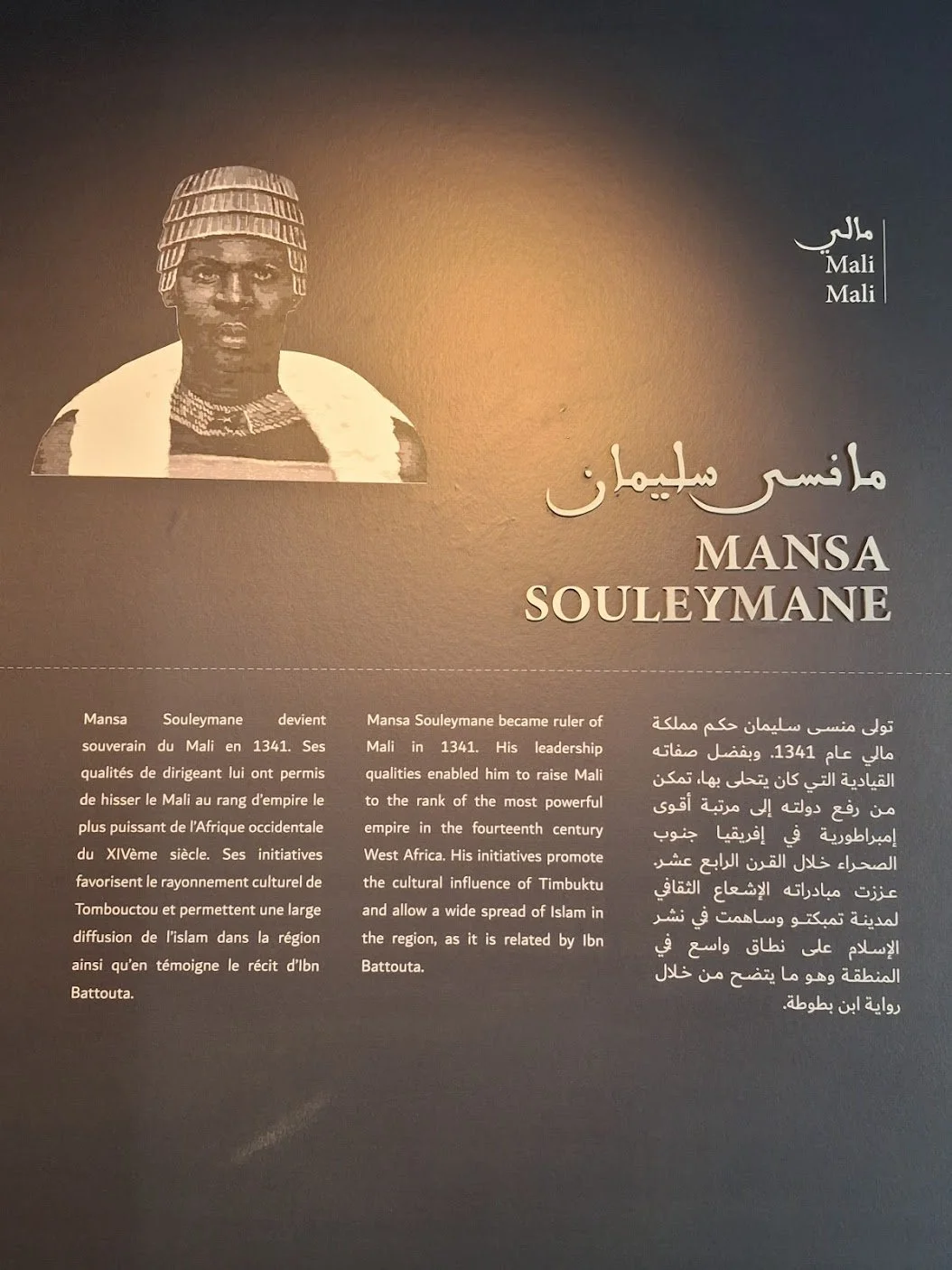
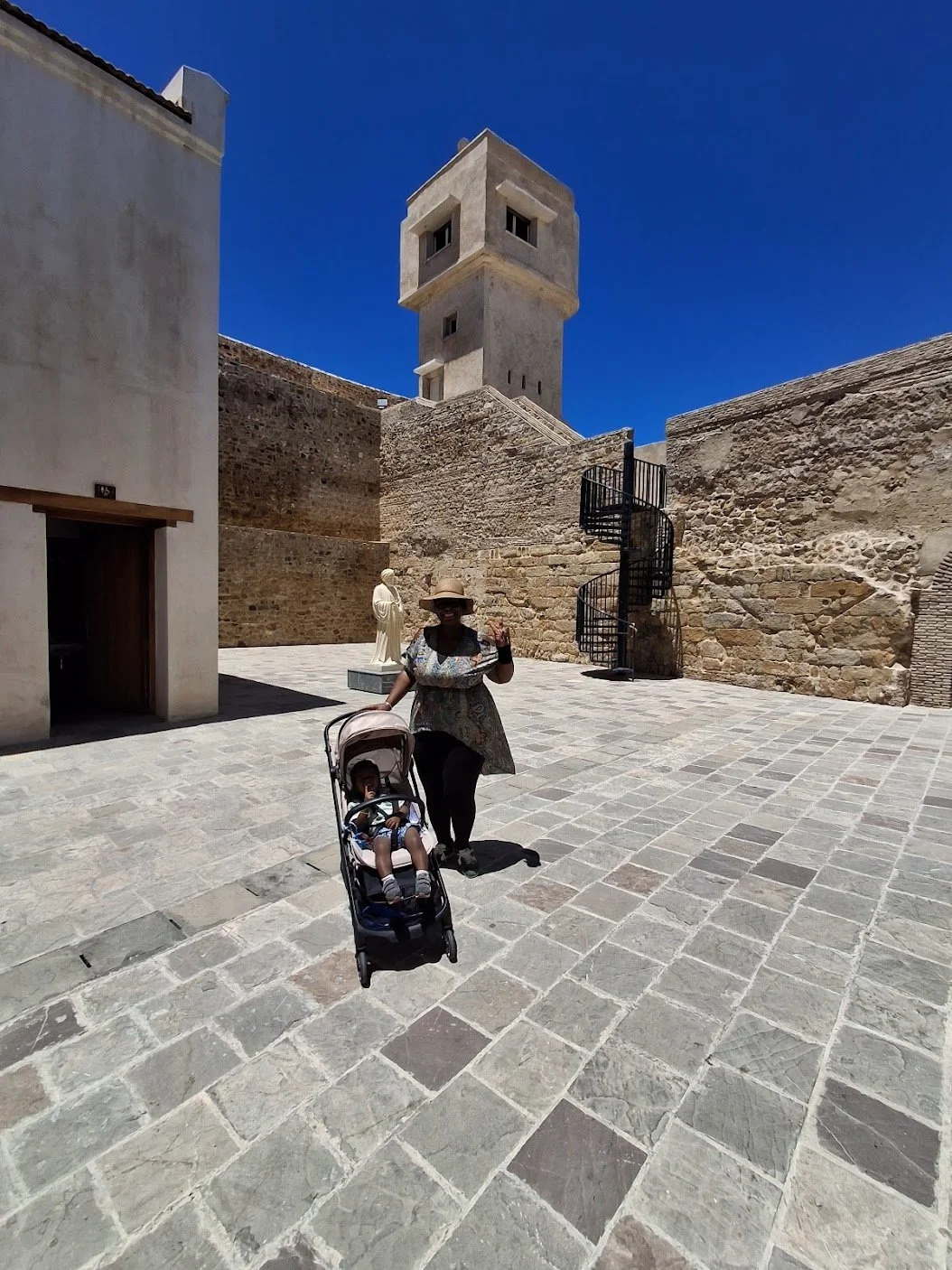
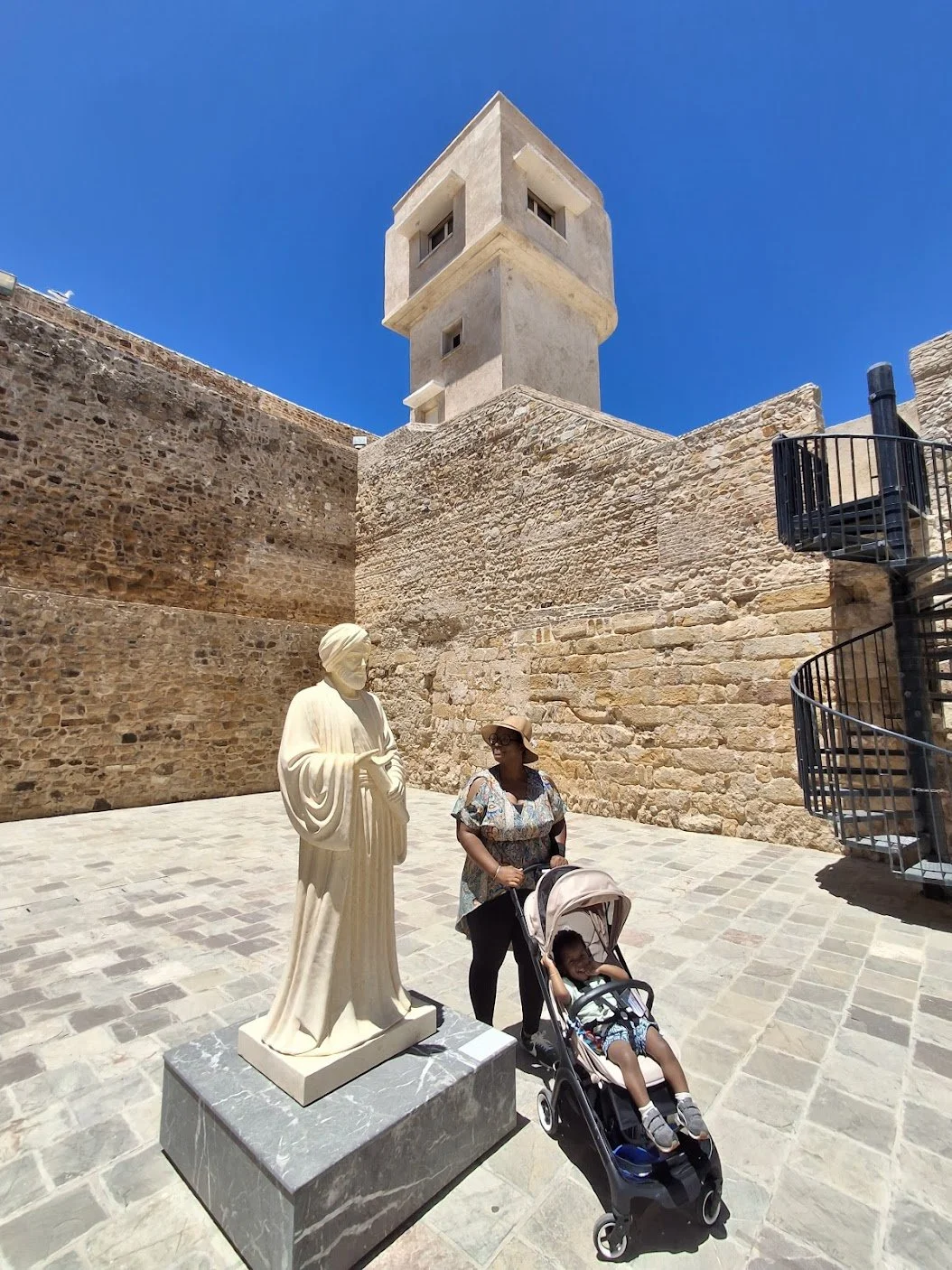
The Ibn Battouta Museum was very cool. He was a traveler who saw the world on foot and by boat. I was so inspired by his journeys and his story. There was also an exhibit about Mansa Musa that was very informative and inspirational. I took pictures, selfies, and posed for a few pictures. Then was off in the direction that the kind man who pushed Titian up the hill pointed out to me.
Parallels
Ibn Battuta was a traveler long before travel was safe, convenient, or celebrated. Born in Tangier in the 14th century, he set out with the intention of making a single pilgrimage and instead spent nearly three decades crossing Africa, the Middle East, Asia, and parts of Europe—mostly on foot or by boat—guided by curiosity, faith, and an openness to the world. Standing in the museum dedicated to his life, I felt an unexpected connection. Like him, I didn’t leave home knowing exactly how far I would go or how deeply the journey would change me. My travels weren’t about escape, but about movement—about learning, healing, and trusting that the road would shape me as much as I shaped it. Traveling with my son through unfamiliar cities, languages, and cultures felt like a modern echo of Ibn Battuta’s spirit: choosing courage over comfort, embracing uncertainty, and believing that the world, though vast, is meant to be experienced rather than feared.
Mansa Musa was known as the richest man in history, but standing in front of his story in the Ibn Battuta Museum, it wasn’t his material wealth that stayed with me. It was the power of his journey. As the 14th-century ruler of the Mali Empire, he became legendary not just for the gold he carried but for the way he moved through the world with intention, generosity, and faith. Traveling across continents, Mansa Musa transformed landscapes simply by passing through them, leaving behind knowledge, architecture, and connection. As I learned about him, I realized my own journey mirrored his in a quieter way. I wasn’t accumulating gold or influence—I was gathering something far more necessary: spiritual wealth and building our characters. Each border crossed, each early morning in the medina, each step taken with my son beside me added to a growing reserve of strength, clarity, and belief in myself. This trip wasn’t about riches you can count; it was about resilience you can feel. Like Mansa Musa, I was traveling not to prove anything, but to be shaped—returning richer in spirit, steadier in purpose, and more grounded than when I left.
Views & Unfurled Carpets
After visiting Ibn Battouta Memorial Museum, I felt a familiar spark. Ibn Battuta traveled the world on foot and by boat centuries before maps were convenient. He felt like a quiet companion on this journey. Learning about Mansa Musa, his immense wealth and influence, reminded me that Africa’s history is layered, powerful, and often under-told. Standing there, overlooking the city, I felt inspired—not just by where I was, but by the long lineage of people who dared to move, explore, and leave their mark on the world.
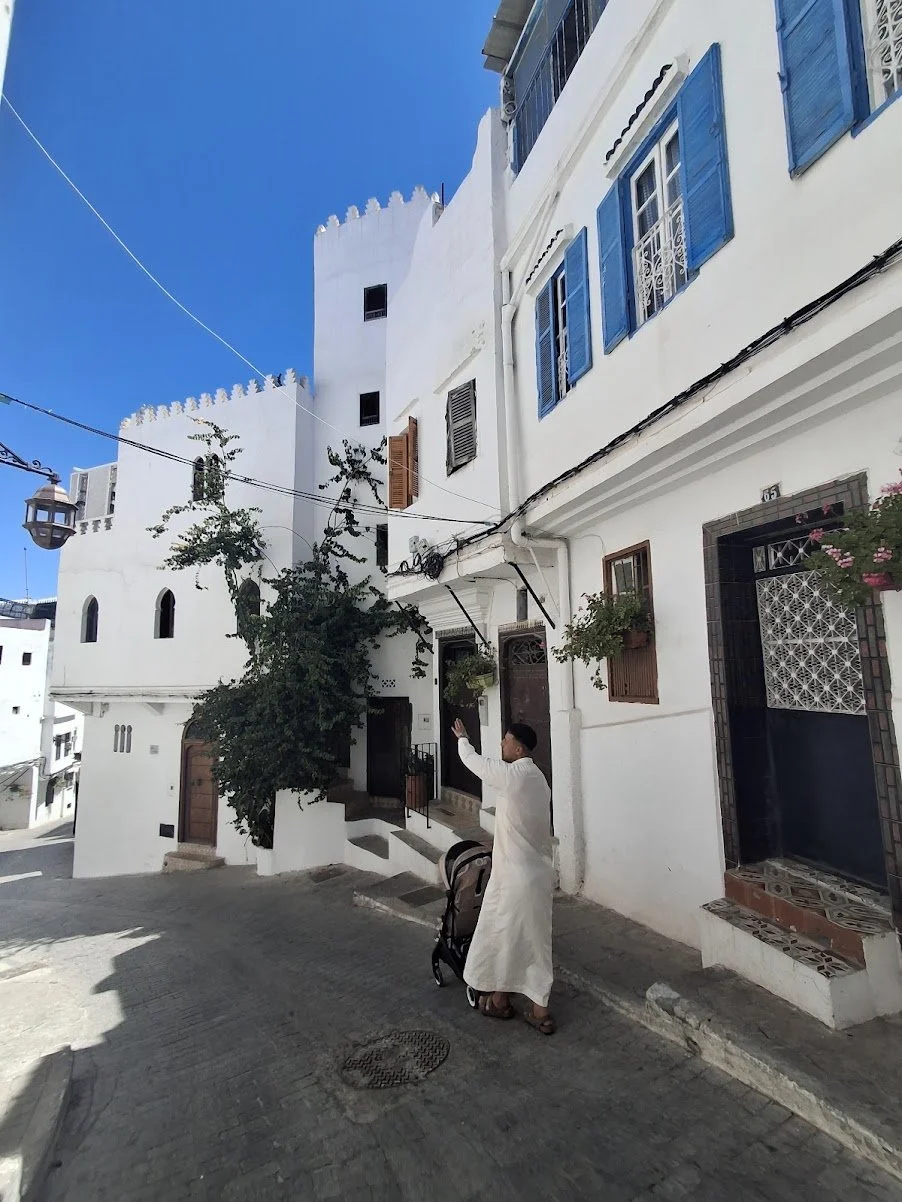
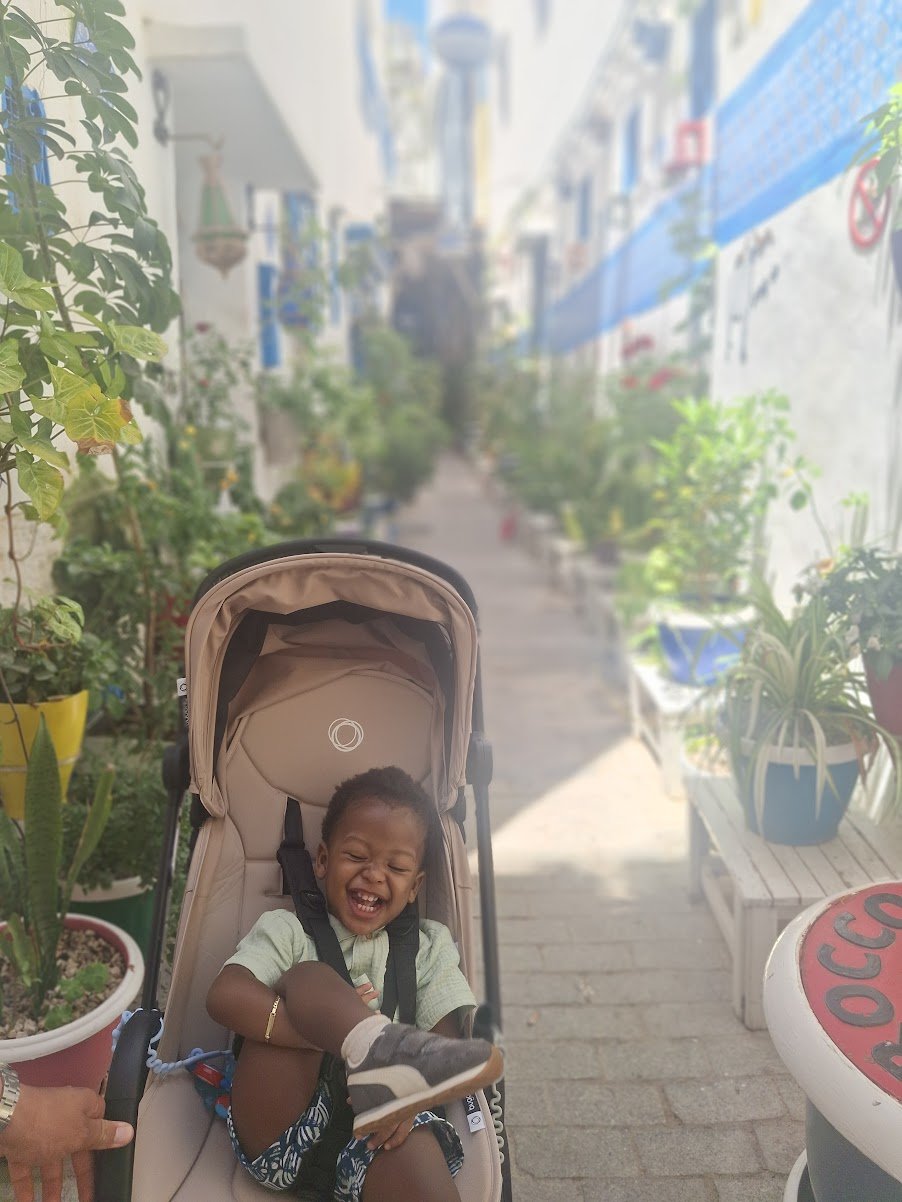
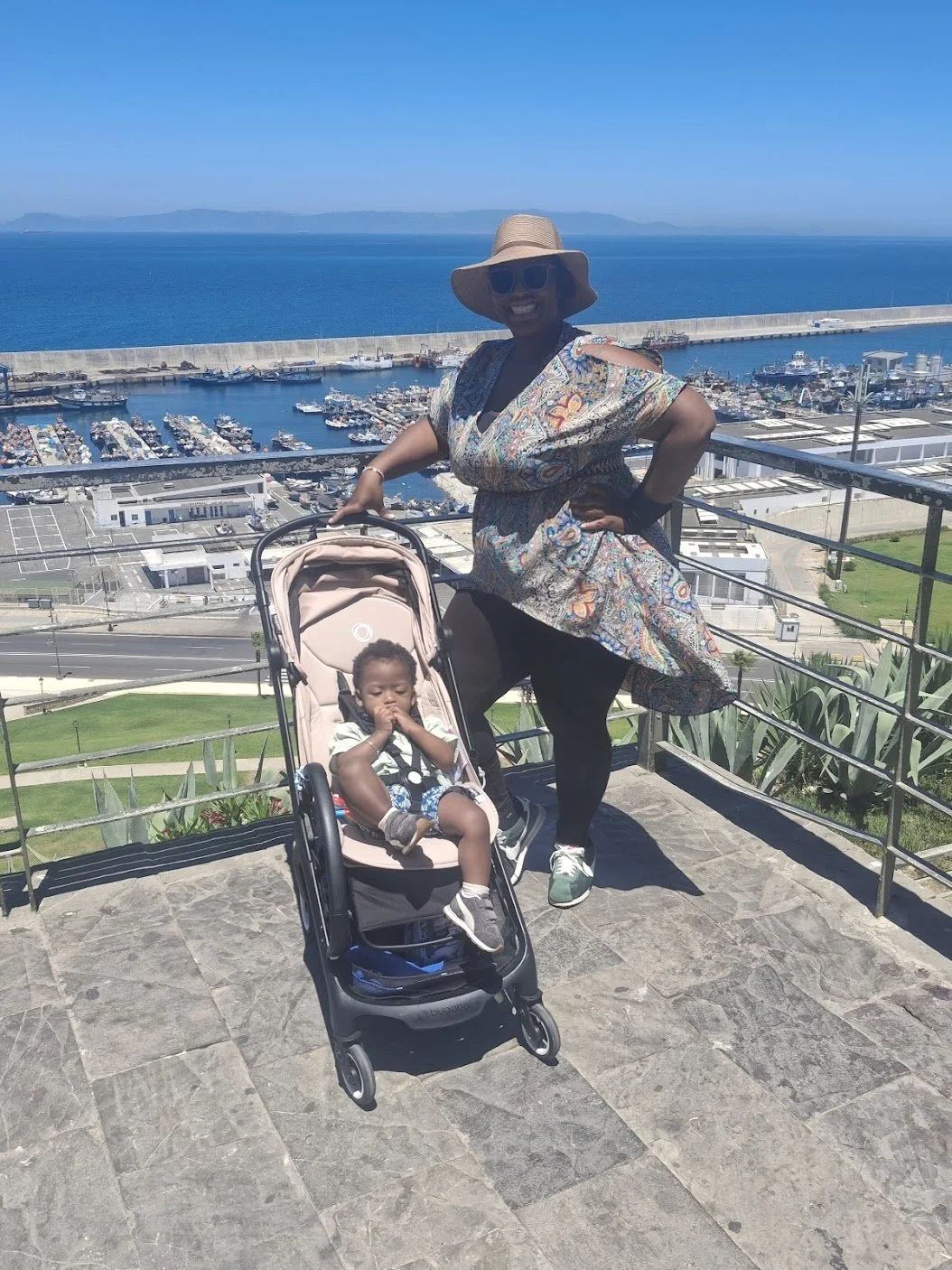
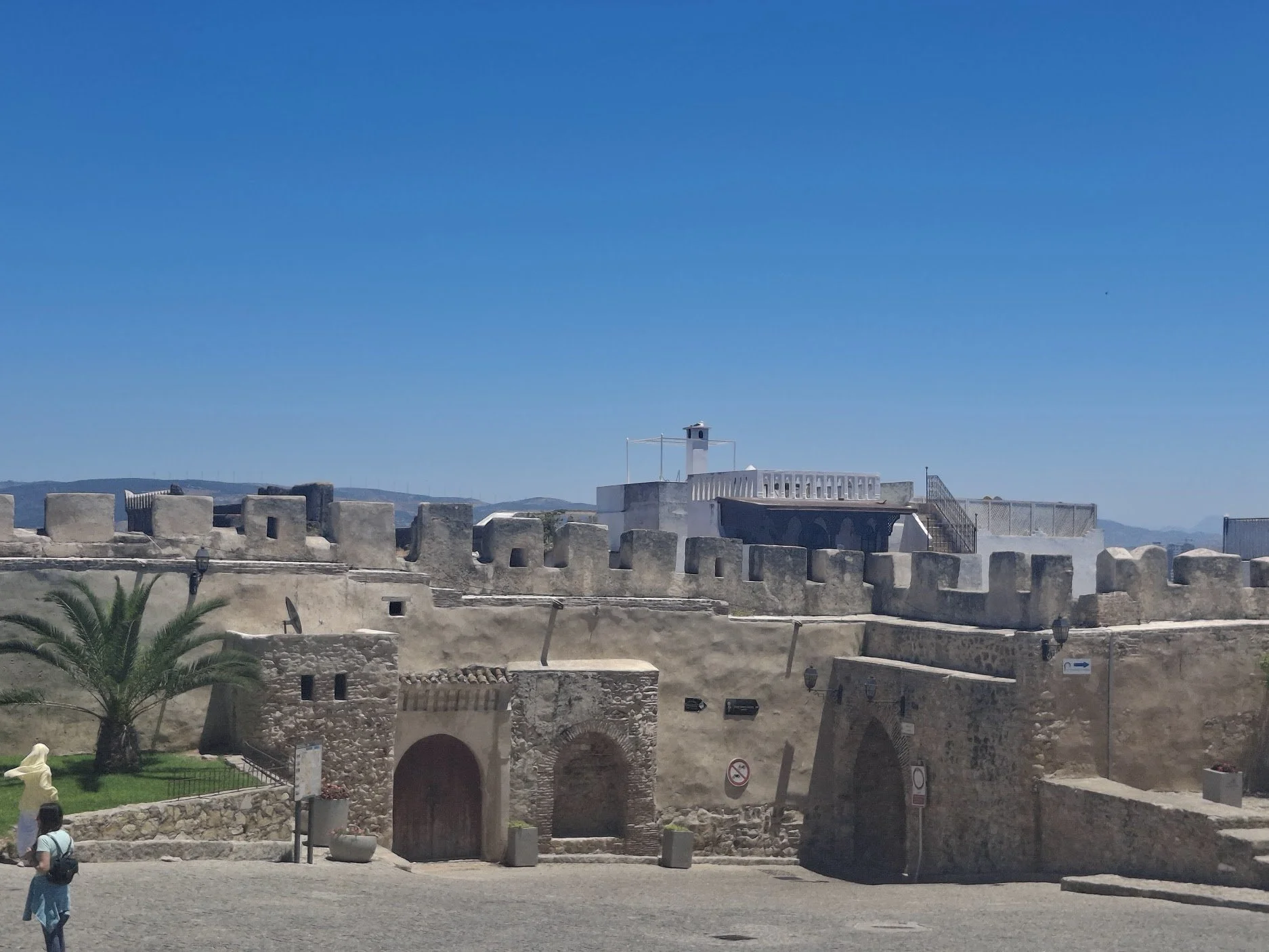
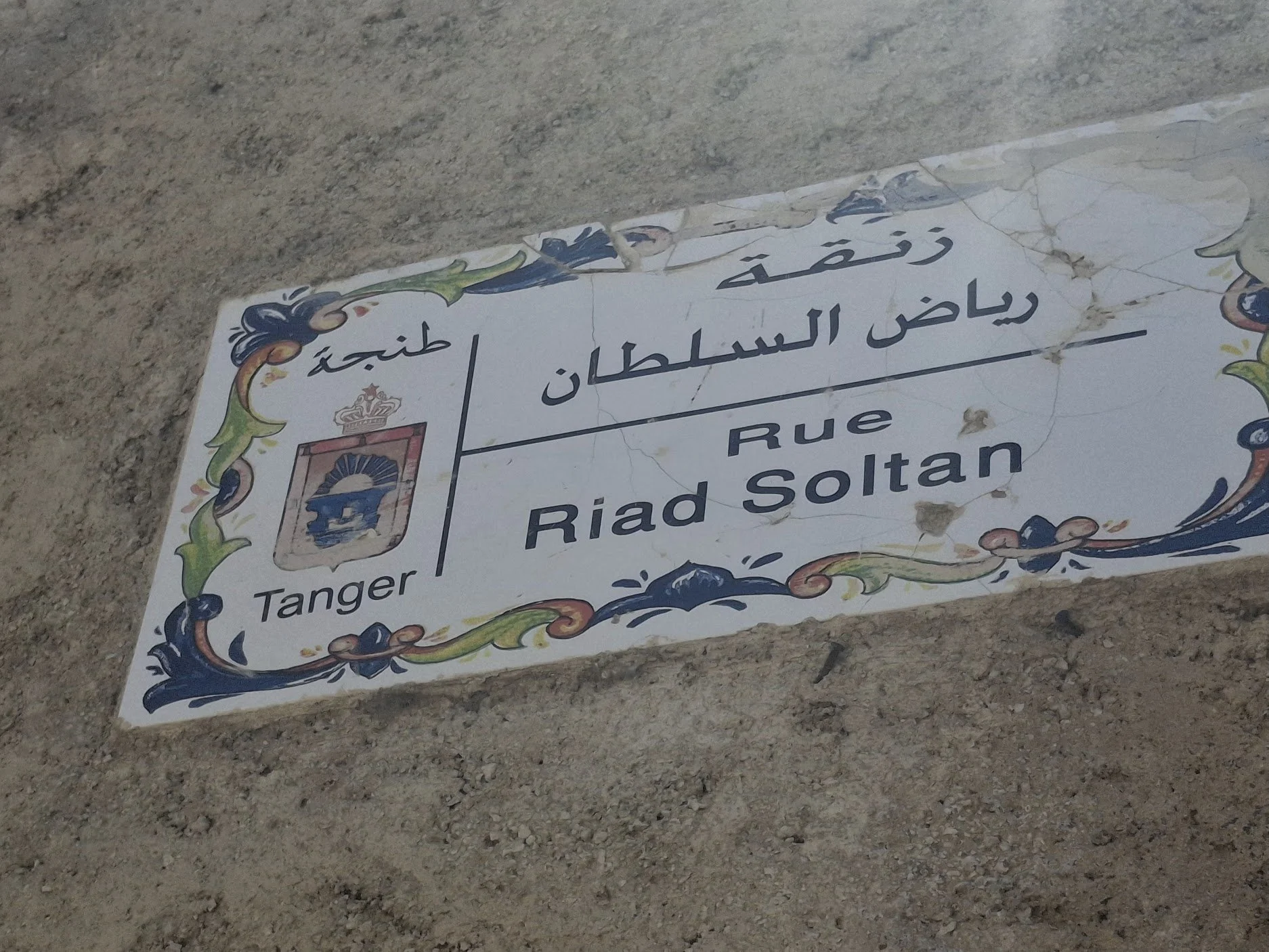
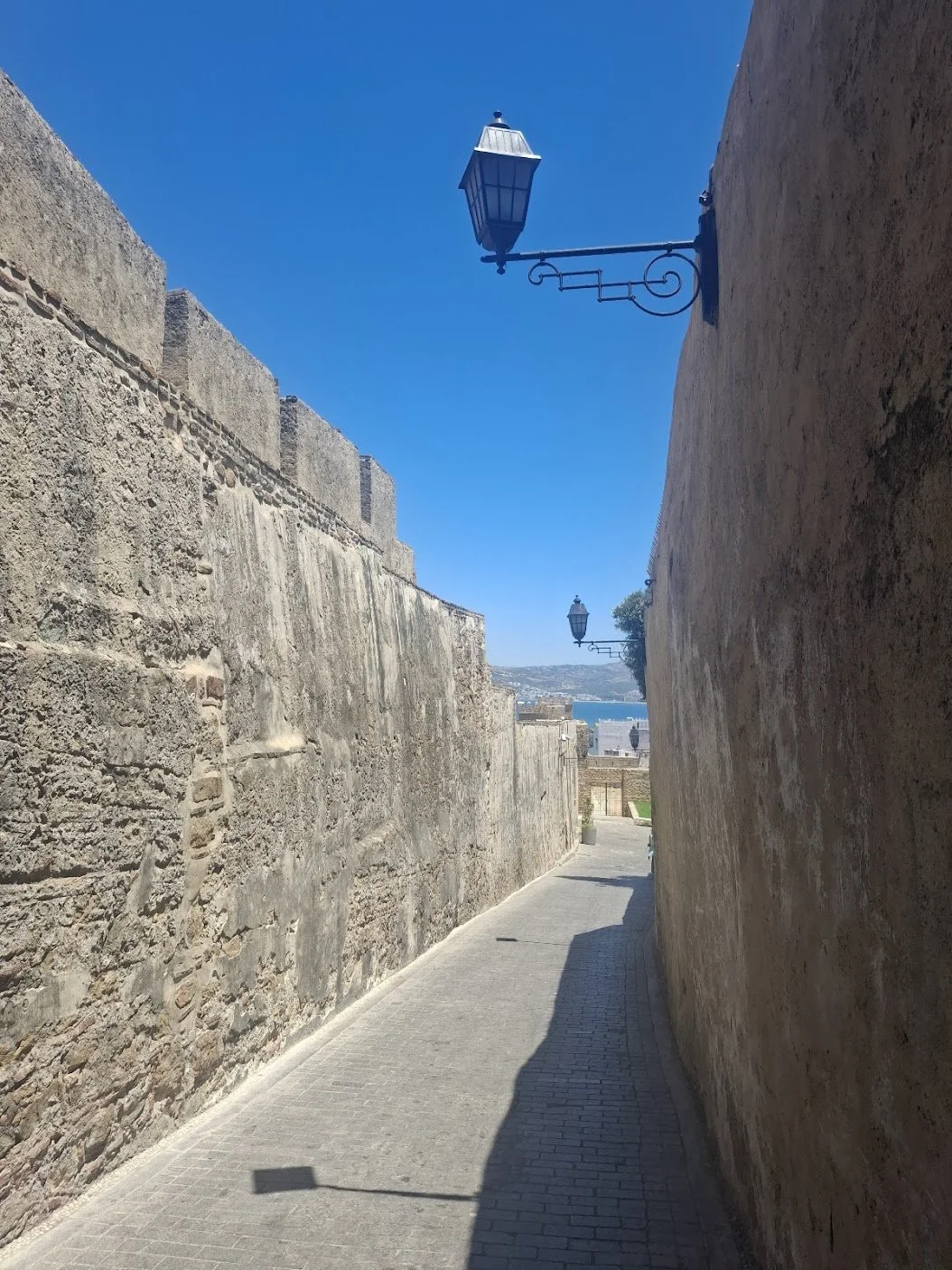
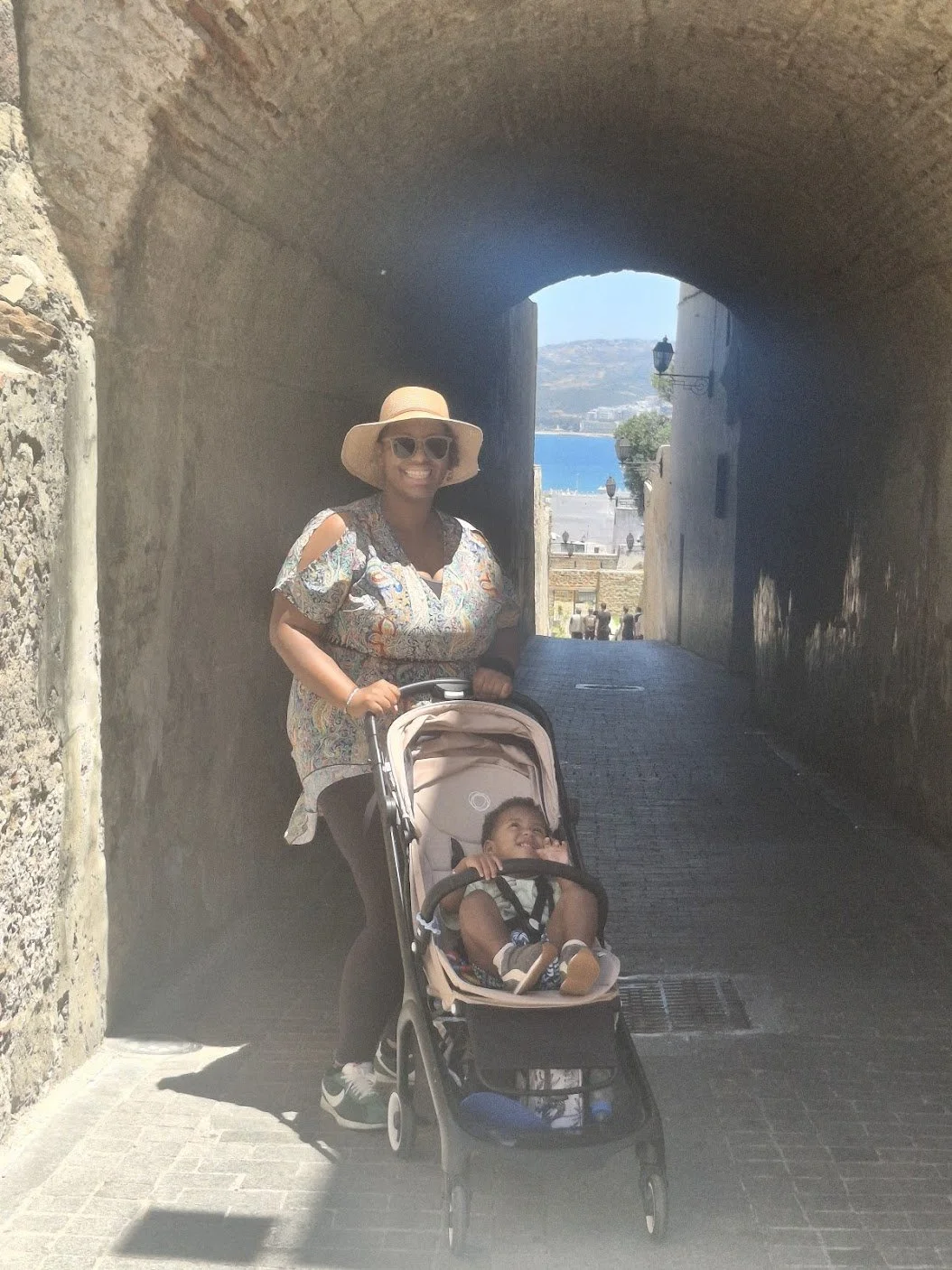
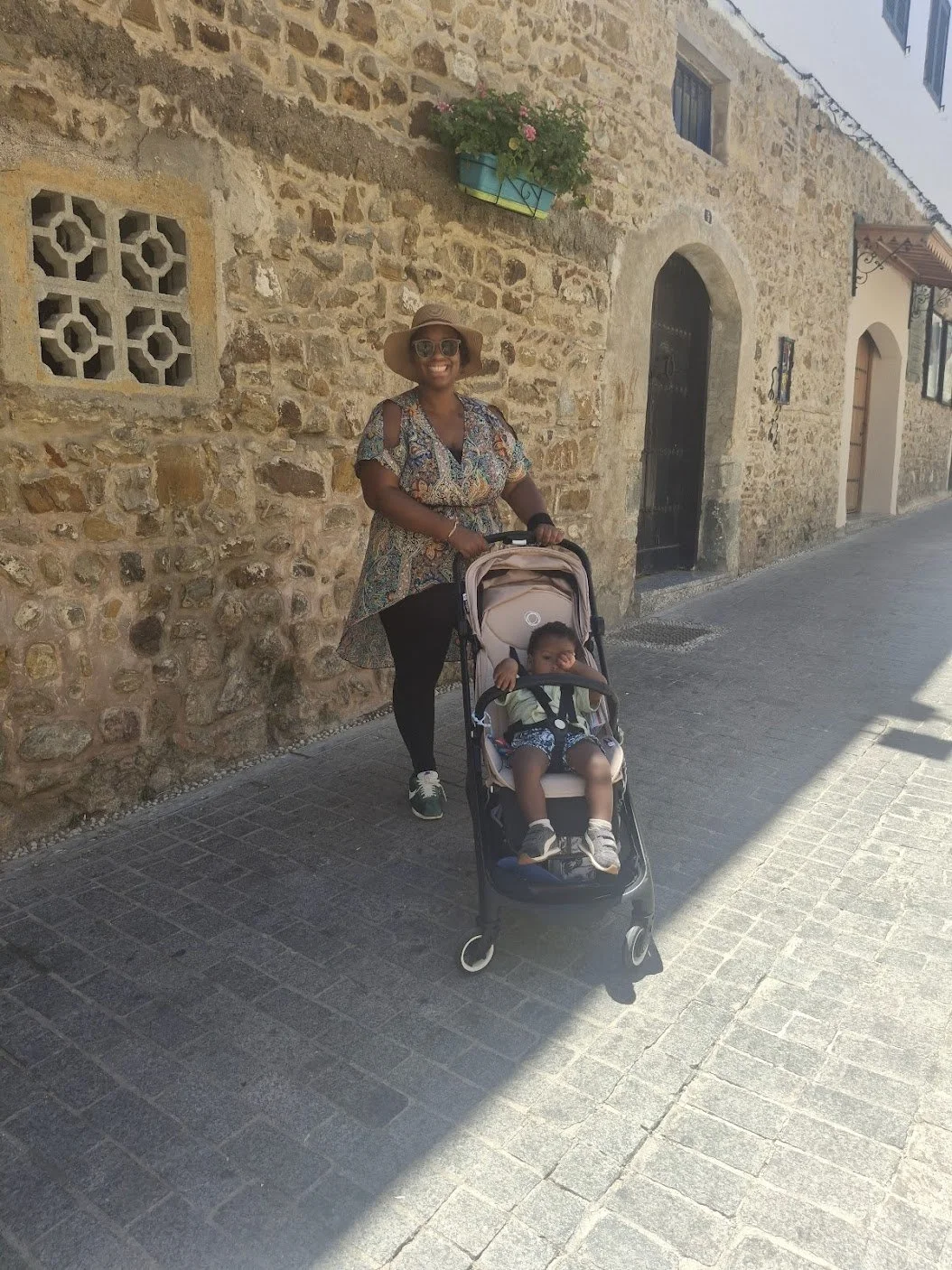
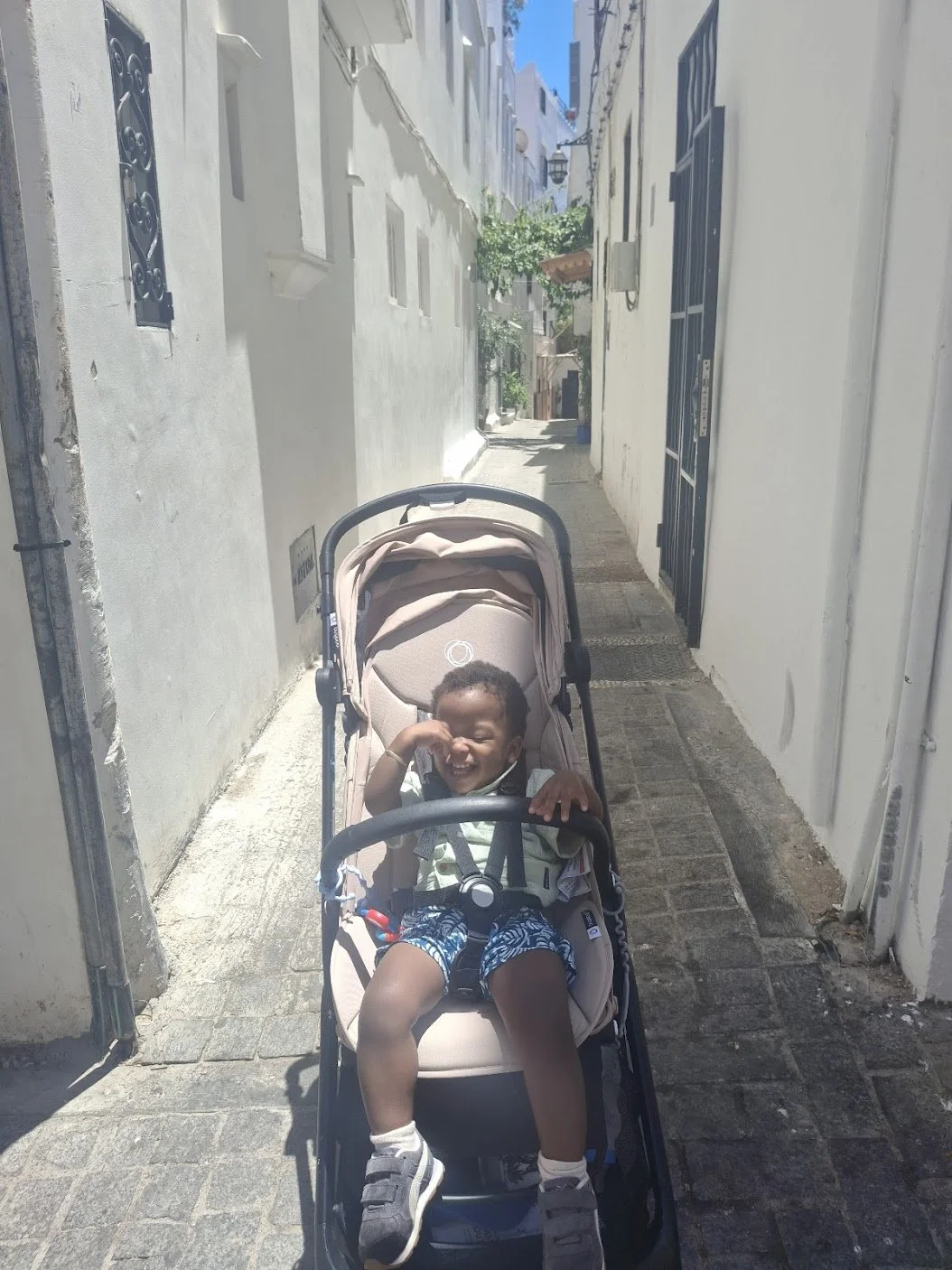
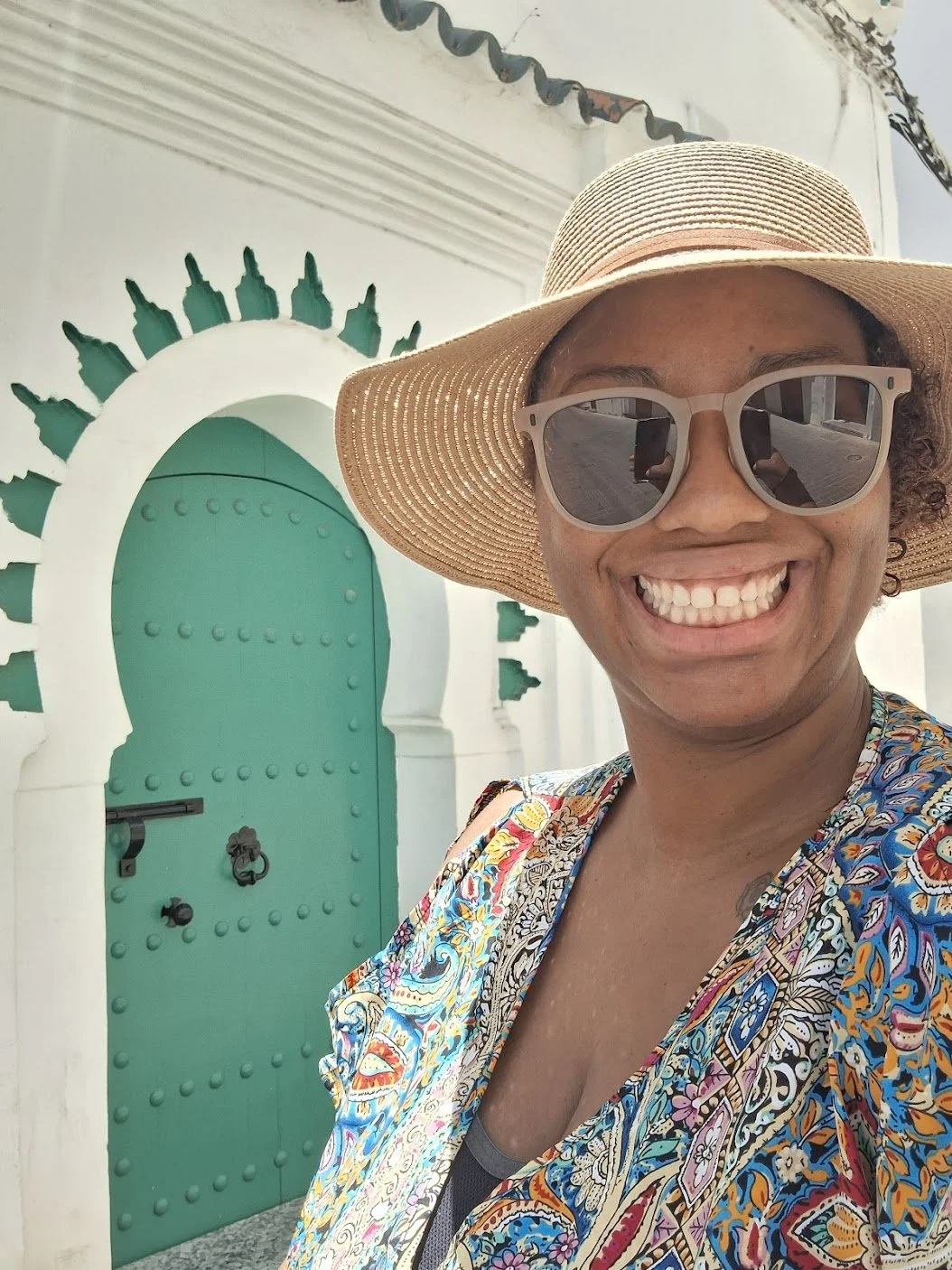
As I followed a path, I smiled to myself. I was grateful for my life, my son, this time away, and together. I shot pictures of his smile, of the architecture, of myself. Mom’s we always forget to take pictures of ourselves. It was when I took a selfie in front of a green door that a smiling man approached us and asked if I needed help. I said I was here to explore the medina. The kind man offered to take me on a tour of the medina. He told me green doors were mosques, gave me facts about different areas, and took pictures of us by the view, gave me a history lesson of the area, and was very impressed that it was just us two traveling.
He then took us to a carpet and fine goods shop. The first floor of the shop was nothing like what I expected. It was bright and welcoming, filled with Moroccan lamps casting warm light across the room and glass cases of delicate jewelry. I looked and pointed to pieces, keeping an eye on Titian and what was within arm's reach of him. The shop owner poured me a cup of mint tea. He then began asking me questions like where I was from, what I did for work, and how I was liking Morocco so far, while answering my jewelry questions and giving details about the pieces. I answered his questions while looking at the fine jewelry. He asked me to come upstairs, there’s more to see, I said, and motioned to my son, but before I finished my sentence, two men carried him up the stairs in his stroller ahead of me. I chased after holding my tea cup. The shop owner said, " Take a seat, which I did, and then, as if that was the cue, three of his men began showing us carpets!
That’s where the rugs appeared—rolled tightly along the walls, the magically unfurling them at my seated feet, one after another. I was mortified, knowing I didn’t have the funds for a hand-woven rug! Not to mention, I have many other stops on our journey and couldn’t carry a rug. I quickly put a stop to the show. I thanked them for their hospitality and, as a token of no ill will, bought a fridge magnet. The nice guy was outside waiting for me. He said, “No carpet.” I answered no. I inquired where one can find Aragon Oil. He then took me to another shop. This, I identified this as a tourist trap. I thanked him and offered to pay, but he refused as well.
By now, my stomach was growling. It was around 1 p.m., that quiet hour between morning exploration and afternoon heat. I asked my guide where we could eat, mentioning that I don’t eat meat. He recommended Café Dada, walked me there, then slipped away with a nod and a smile. Inside, the restaurant was nearly empty and pleasantly cool, a welcome contrast to the sun outside. The décor was modern Moroccan—clean lines, blue tones, zig-zag floor tiles, white walls, and simple wooden tables with white linen that made the space feel calm and intentional.
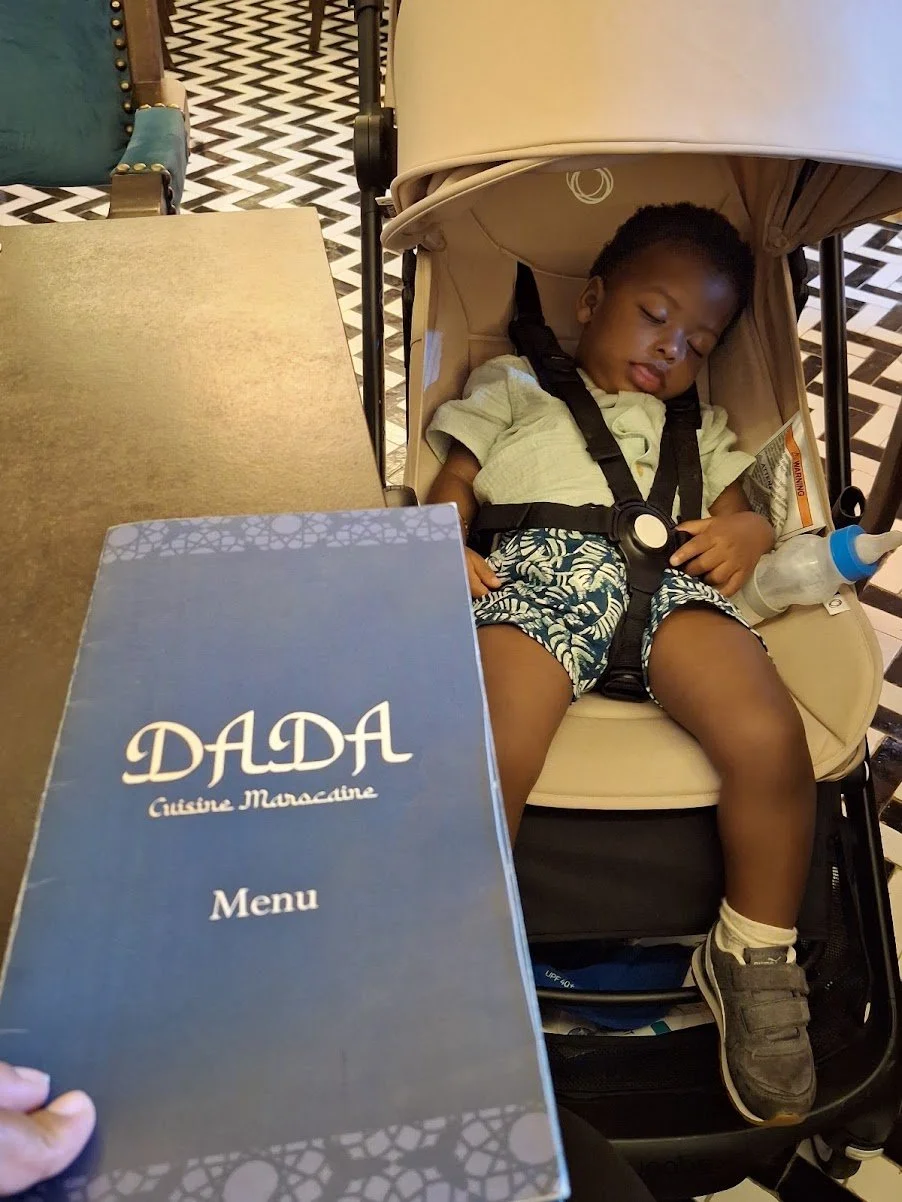
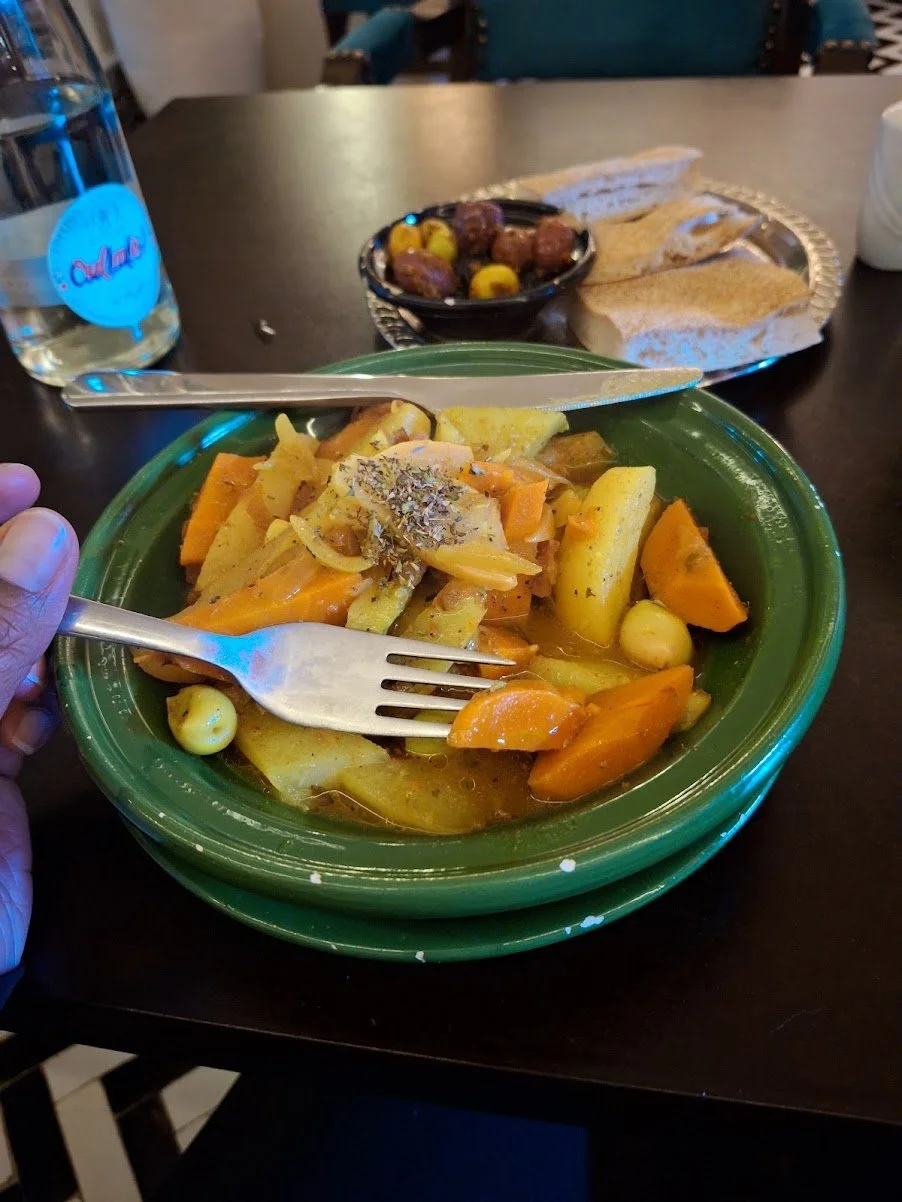
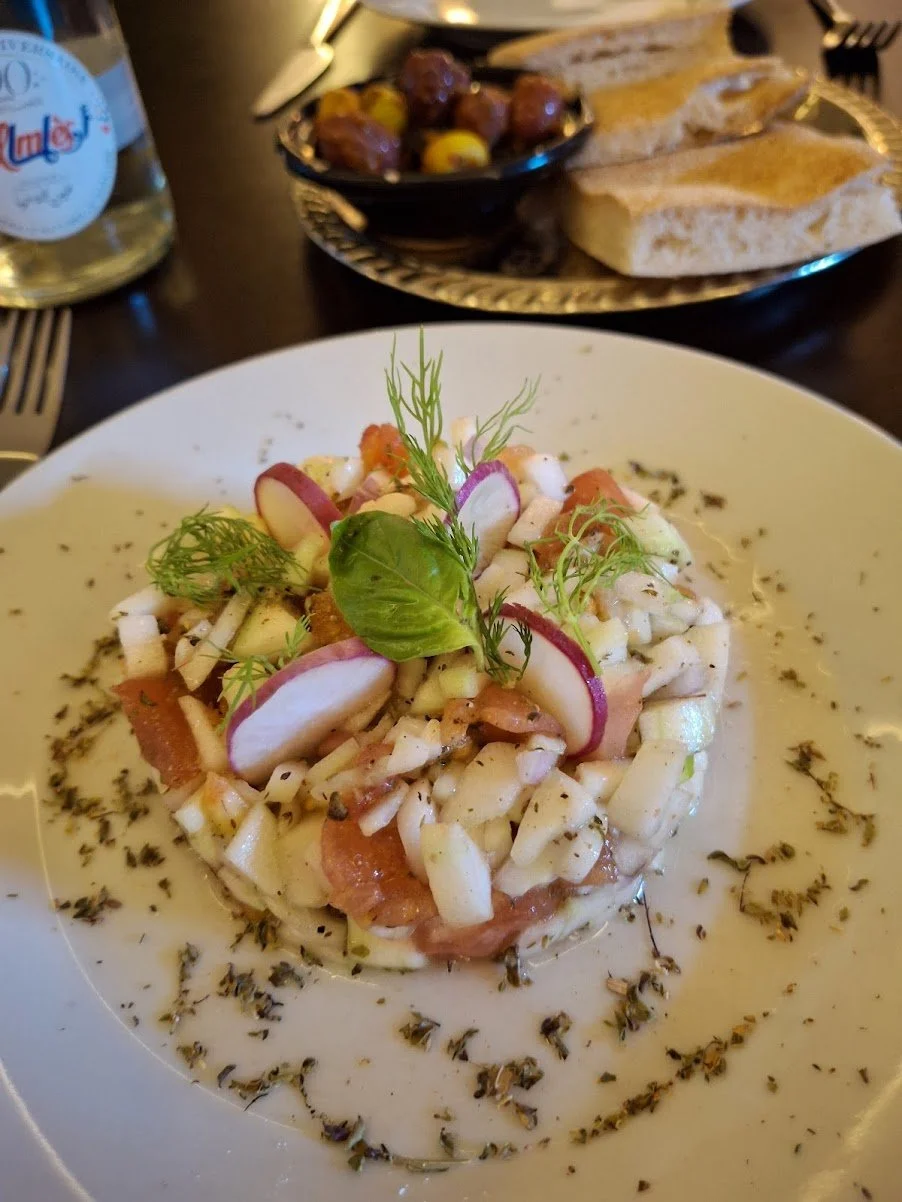
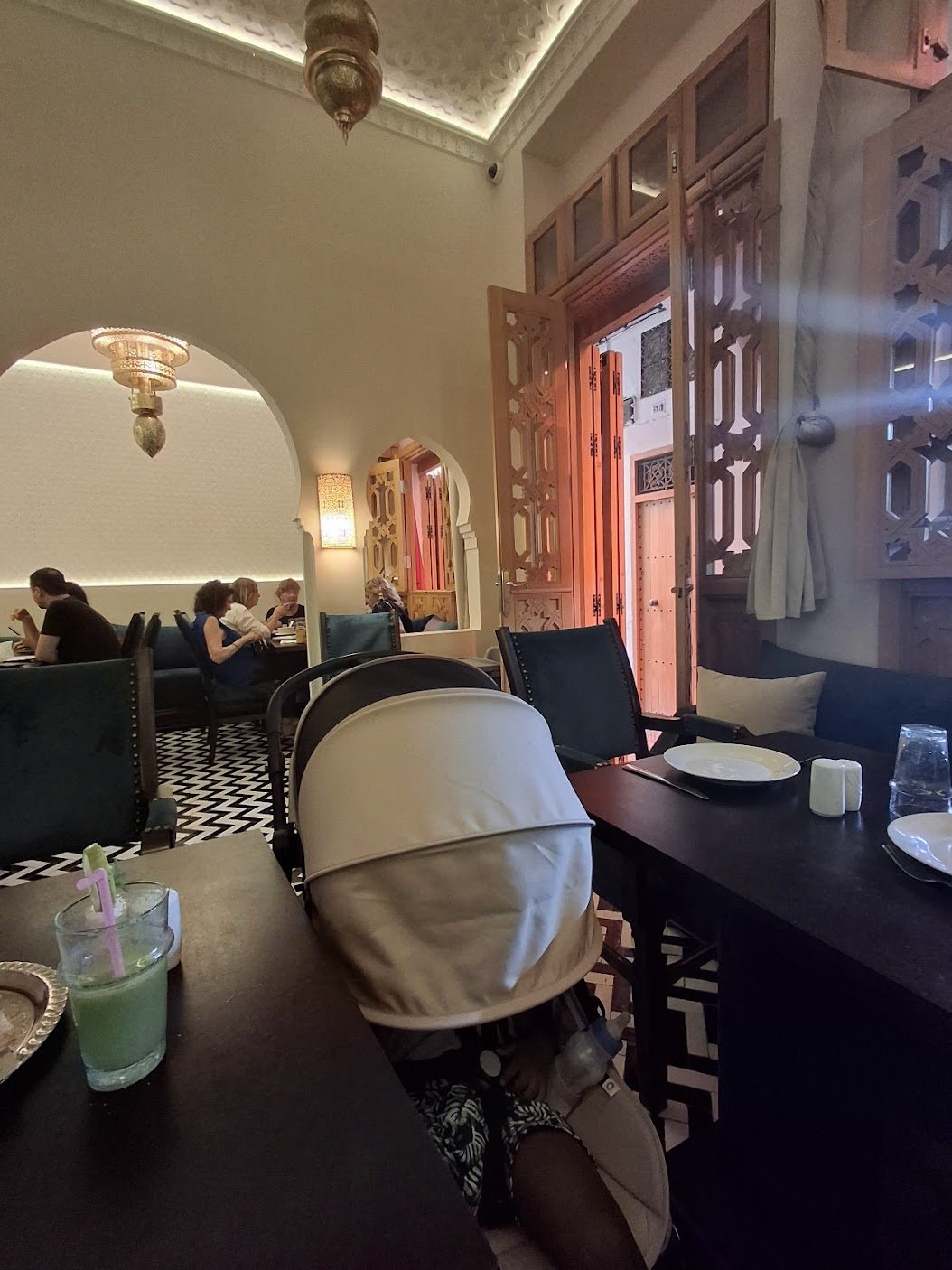
Titian was fast asleep, his body finally surrendering to the day, and I was able to eat in peace. I ordered a cucumber salad, crisp and refreshing, exactly what my body wanted in the June heat, along with a vegetable tagine that arrived warm and fragrant. I ate slowly, savoring the stillness as much as the food. When I finished, I followed Google Maps—surprisingly reliable in the medina—back past familiar corners, retracing my steps to the café Gillio had taken me to that morning, and eventually finding my way home to the riad, proud of myself for navigating it all on my own.
A Moroccan Afternoon
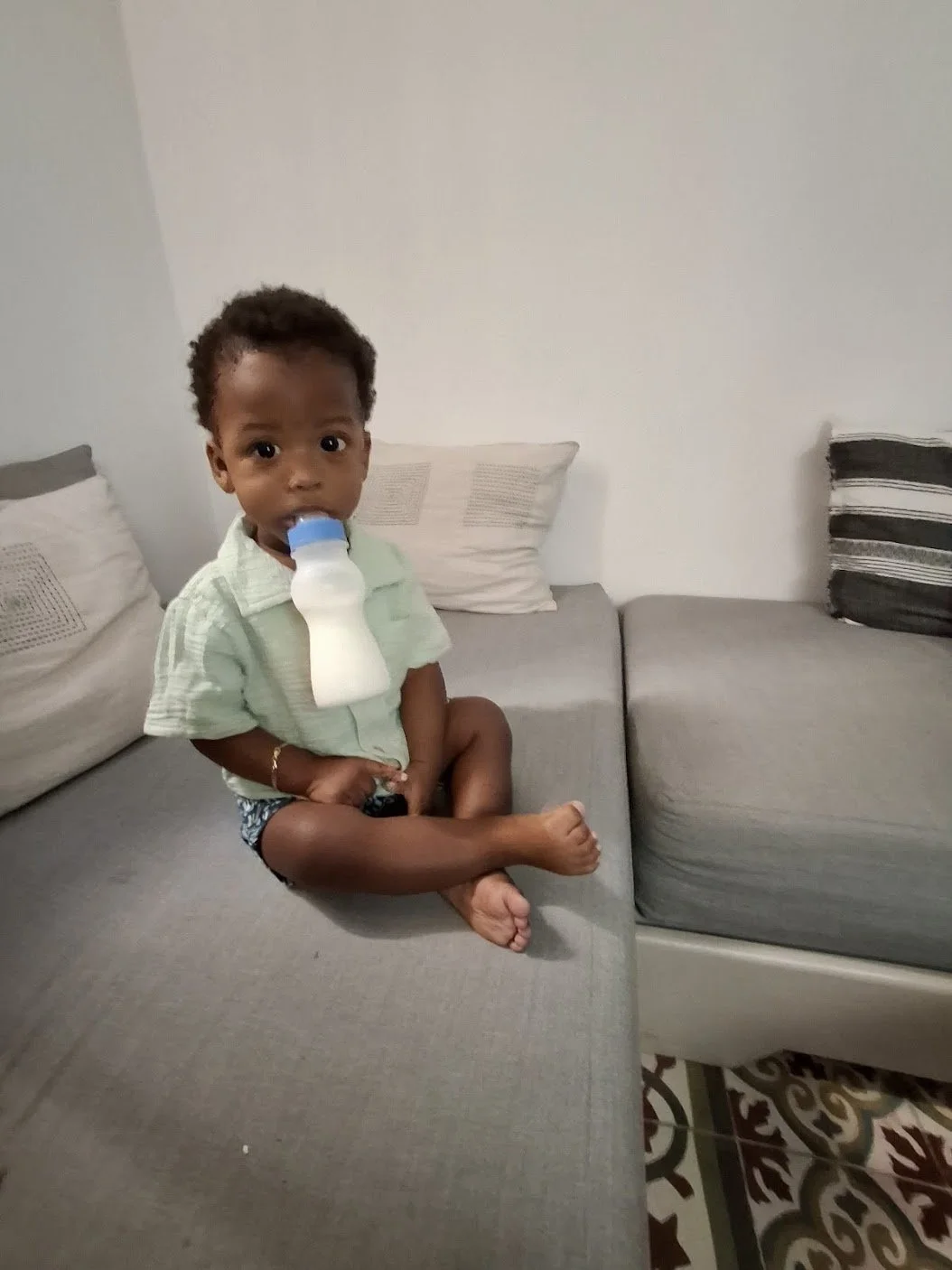
Upon our return to the riad around 3ish, Gillio was excited to hear about our day. After I changed Titian, gave him a fruit pouch and a bottle, and settled him beside me on the couch, I told Gillio where we’d gone and about the kind men who had helped us along the way. We talked easily, the house quiet in the late afternoon light. At one point, he asked if I ate fish. I replied, “Fish that swim,” which made him laugh out loud. He said in that case, he would take us to an early dinner at one of the best fish places in Tangier.
I told him it sounded perfect—I just needed a little rest first.
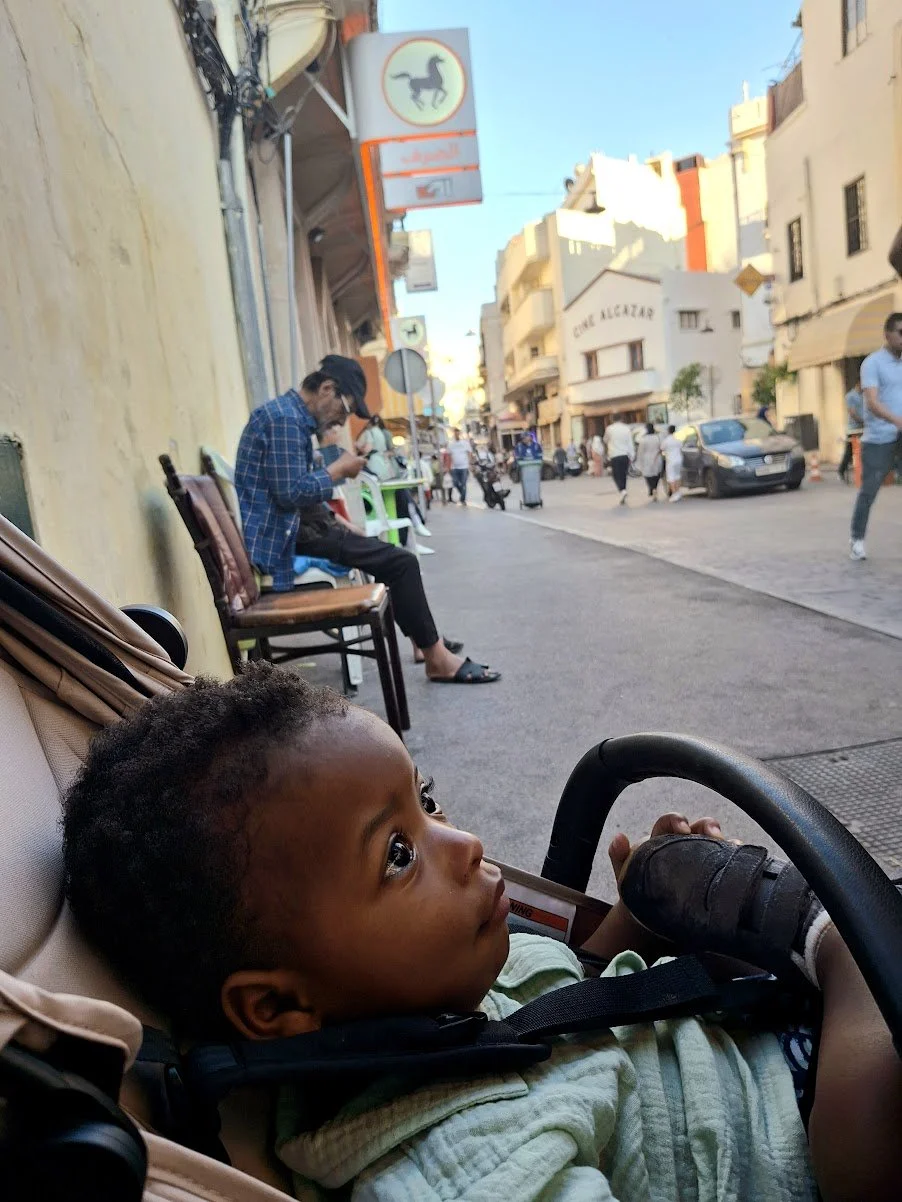
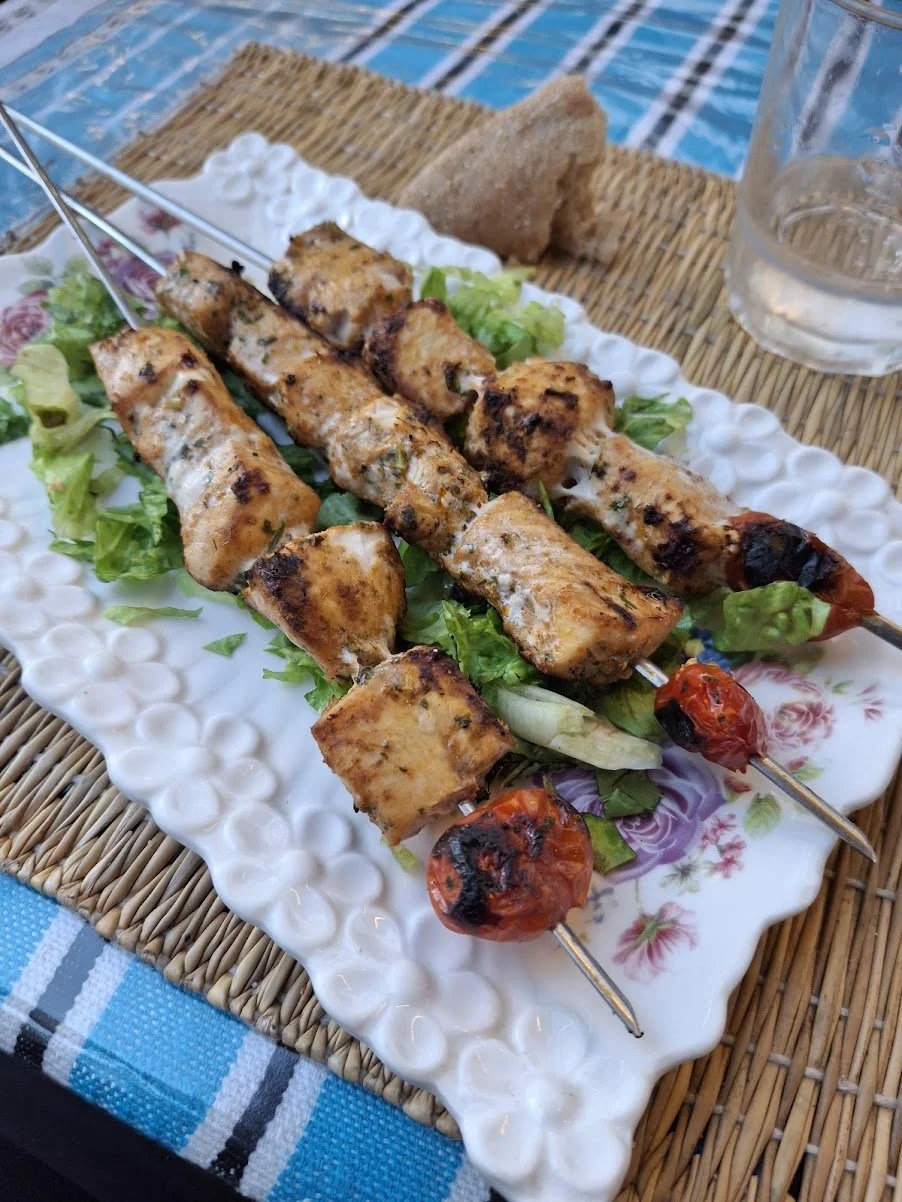
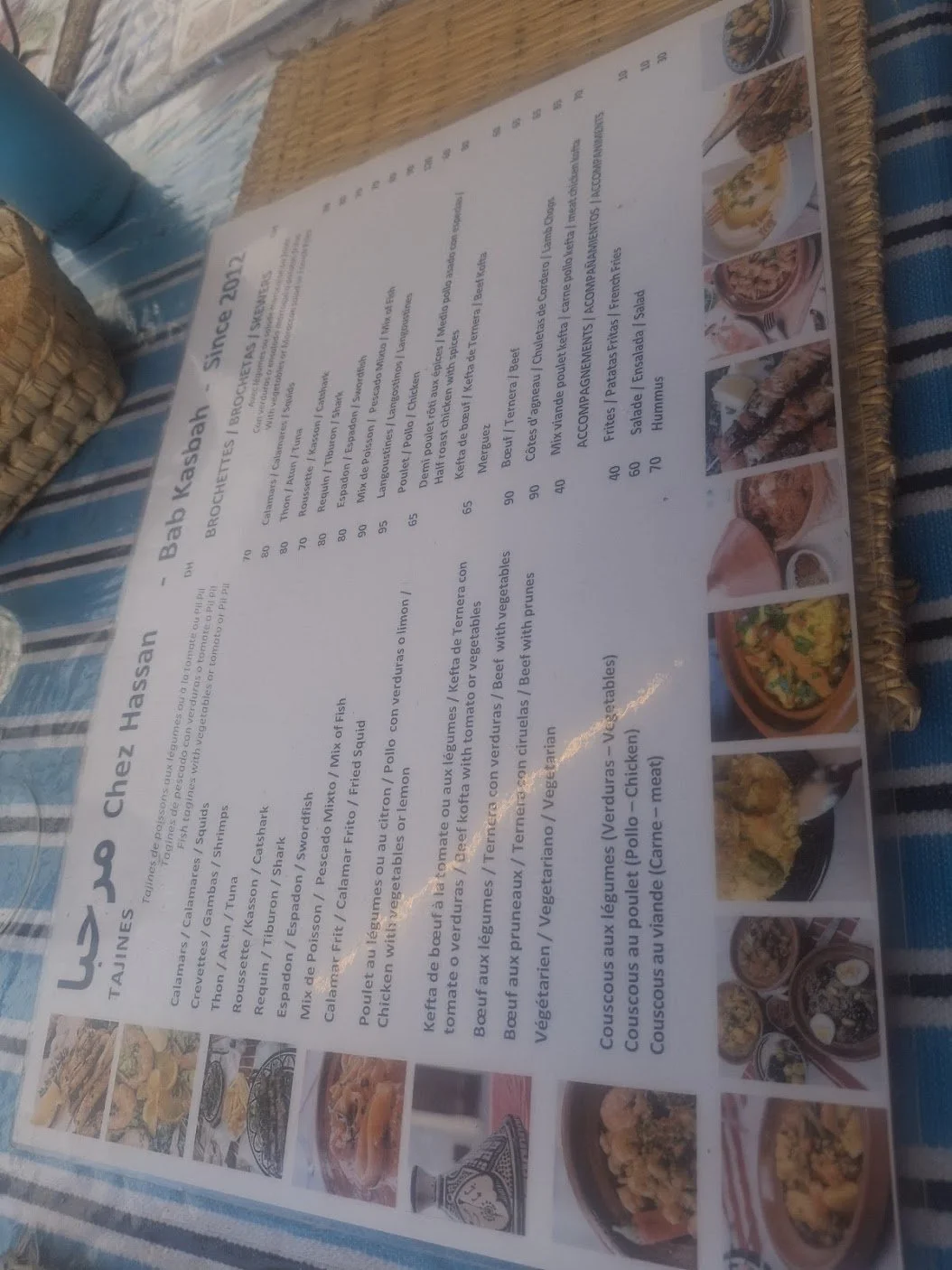
Around five in the afternoon, the four of us set out: Gillio, his dog, Titian, and me. I pushed the stroller, doing my best to keep up with Gillio’s steady pace as we walked to a different part of the city near Cine Alcazar. The restaurant was lively but relaxed, with outdoor seating that invited lingering. Gillio met a friend who was already there, and he ordered for me—no mushrooms, thankfully. The fish kebabs were fresh, perfectly seasoned, and still warm from the grill. We sipped mint tea, talked, and people-watched as the city moved around us. I remember thinking, this is a lifestyle I could get used to.
When the conversation turned to my plans for the next day, I mentioned wanting to visit the blue city of Chefchaouen. The two men pulled out their phones, speaking quickly in Italian, then switching to French. A short call later, Gillio handed me his phone with the contact information for a trusted taxi driver who could take us there and back for a fair price. I took a photo of the details and thanked them both, relieved to have the logistics sorted.
When the check came, my attempt to pay was immediately shut down. The two of them handled it between themselves. After a brief walk back, Gillio’s friend said his goodbyes, and we returned to the old medina and the riad with ease.
Upstairs, Gillio let me know he had already called the driver and arranged for an 8:00 a.m. pickup. I thanked him for the day, carried Titian down to our room, showered, and finally settled in. My son had been such a trooper. I smiled at him as he watched his show on his tablet while I charged our devices. Not long after, we both fell into a deep, well-earned sleep.
